
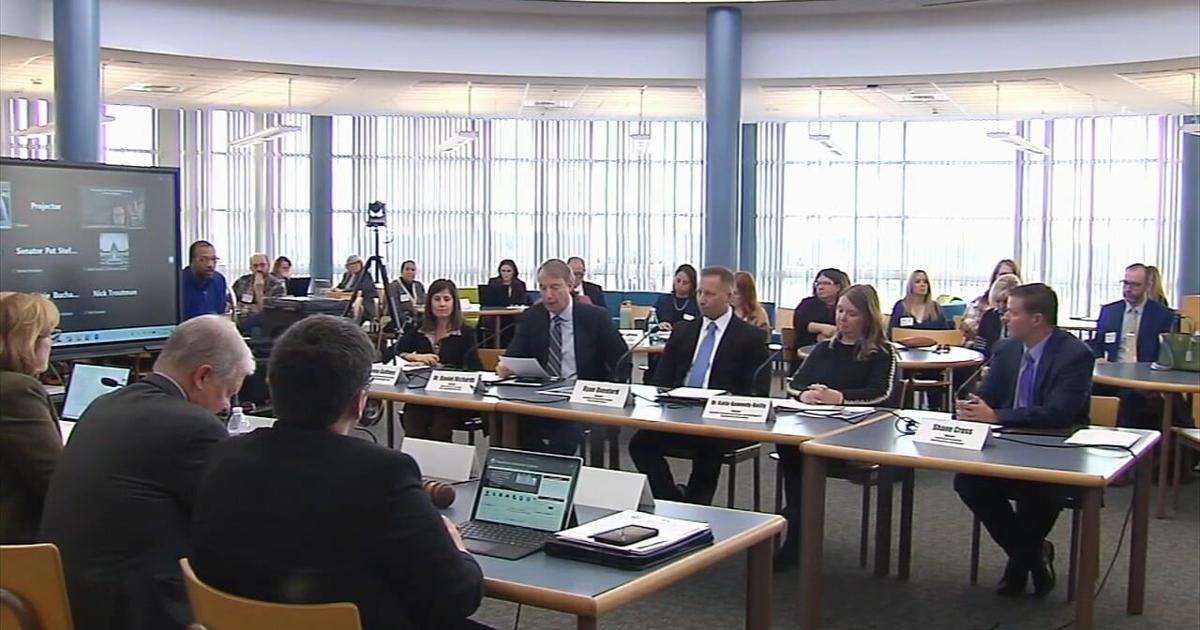
AMITY TWP., Pa. —Inside the Daniel Boone Area Middle School library, the Pennsylvania Senate Majority Policy Committee came together to talk about one question: How do we help people read better in a world that’s changing fast?
The focus in schools is on something called “structured literacy,” a phonics-based approach that helps students understand how language works.
“Structured literacy, or sometimes individuals will talk about phonics-based learning, is really helping the students to understand their letters, understand the sounds, understand fluency,” said Ashley Chambers, senior vice president of community impact at the United Way of Berks County. “So then that can help build onto comprehension.”
Chambers said the state is trying to look beyond test scores and understand what’s really happening in classrooms.
“So here in Berks County, if you’re just looking at the PSSA scores, we know that many of the children are not reading proficiently,” she said.
But literacy doesn’t stop at eighth grade.
Ryan Breisch, executive director of the Literacy Council of Reading–Berks, said his organization works with adults, many of whom are trying to improve their reading skills so they can work, support their families, and function in daily life.
“We have been helping them improve their reading skills, not only to be able to read to their children, but more importantly, to be able to get jobs,” Breisch said.
And today, he said, literacy also means understanding technology.
“Everything in our world is becoming digital, and a lot of people don’t know how to use those,” Breisch said.
The people walking into literacy classrooms have changed, too.
“Now most of the individuals coming, it’s probably almost 70% are English as a second language,” Breisch said.
People, educators say, are trying to catch up with a fast-moving world, where reading, writing and navigating technology all matter more than ever.