
PITTSBURGH — A somber locker room full of red eyes and blank stares emptied quietly. Monday night turned to Tuesday morning, leaving only one straggler behind.
Defensive captain Cameron Heyward, head in his hands, sat alone at his locker, trying to come to grips with yet another season that ended like the one before it… and the one before it… and the one before it… without a playoff win. As the longest-tenured Steeler, he’s felt the screeching halt of the postseason too many times. That didn’t make the 30-6 loss to the Houston Texans any easier to stomach.
“It’s very frustrating,” Heyward said. “You put so much into it. When you don’t get the outcome you want…”
His voice cracked and trailed off. Tears welled in his eyes. A 6-5, nearly 300-pound mountain of a man at his most vulnerable and raw.
“I think every man in here really wanted it,” Heyward finally continued.
Pittsburgh dragged one of the hottest teams in football into a low-scoring, defense-heavy rock fight for three quarters. As the game flipped to the fourth, the Steelers had gone just 1-for-9 on third down, been outgained 310-128, given up 5.5 yards per carry and produced just three points off of the three turnovers the defense created. Yet, somehow, the Texans only led by 1 point.
After a Houston field goal extended the lead to four, they needed an Aaron Rodgers signature drive. They got a game-wrecking disaster.
Will Anderson Jr. — one half of what coach Mike Tomlin called the “most dynamic edge rush tandem in the National Football League” — smacked the ball out of Rodgers’ hand and drove the 42-yard-old QB into the turf. Defensive tackle Sheldon Rankins scooped the ball and rumbled 33 yards for a touchdown.
The Steelers punted for a sixth time, after which Houston drove 87 yards for a Woody Marks touchdown. Four plays after that, safety Calen Bullock intercepted Rodgers and returned it 50 yards for a second defensive touchdown — a pass that was potentially the final one of Rodgers’ Hall of Fame career.
It was an all-too-familiar ending for a franchise stuck in football purgatory. Another non-losing season for Tomlin. Another first-round exit.
“When you don’t get it done, words are cheap,” Tomlin said. “It’s about what you do or don’t do…. People talk too much in our business. You either do or you don’t.”
The Steelers don’t, and have not for nearly a decade. They have not won a playoff game since January 2017, a span of nine seasons. Only six NFL teams have a longer drought. To put that in perspective, the last time the Steelers won a playoff game, corner Joey Porter Jr. was a sophomore at North Catholic High School… before he transferred to North Allegheny… before he spent four seasons at Penn State… and now three seasons with the Steelers.
Ahead of the game, the team made a hype video with young kids recreating famous moments in playoff history. Likely none of them were born the last time the Steelers won a playoff game. The now-predictable postseason letdowns have wasted much of T.J. Watt’s prime and left a potential Hall of Famer in Heyward with just one playoff win in which he was healthy and active.
What needs to change to end the drought?
“I haven’t had the answer for a long time,” Watt said. “So don’t ask me.”
It raises the question: If not now, then when will Tomlin finally crack through?
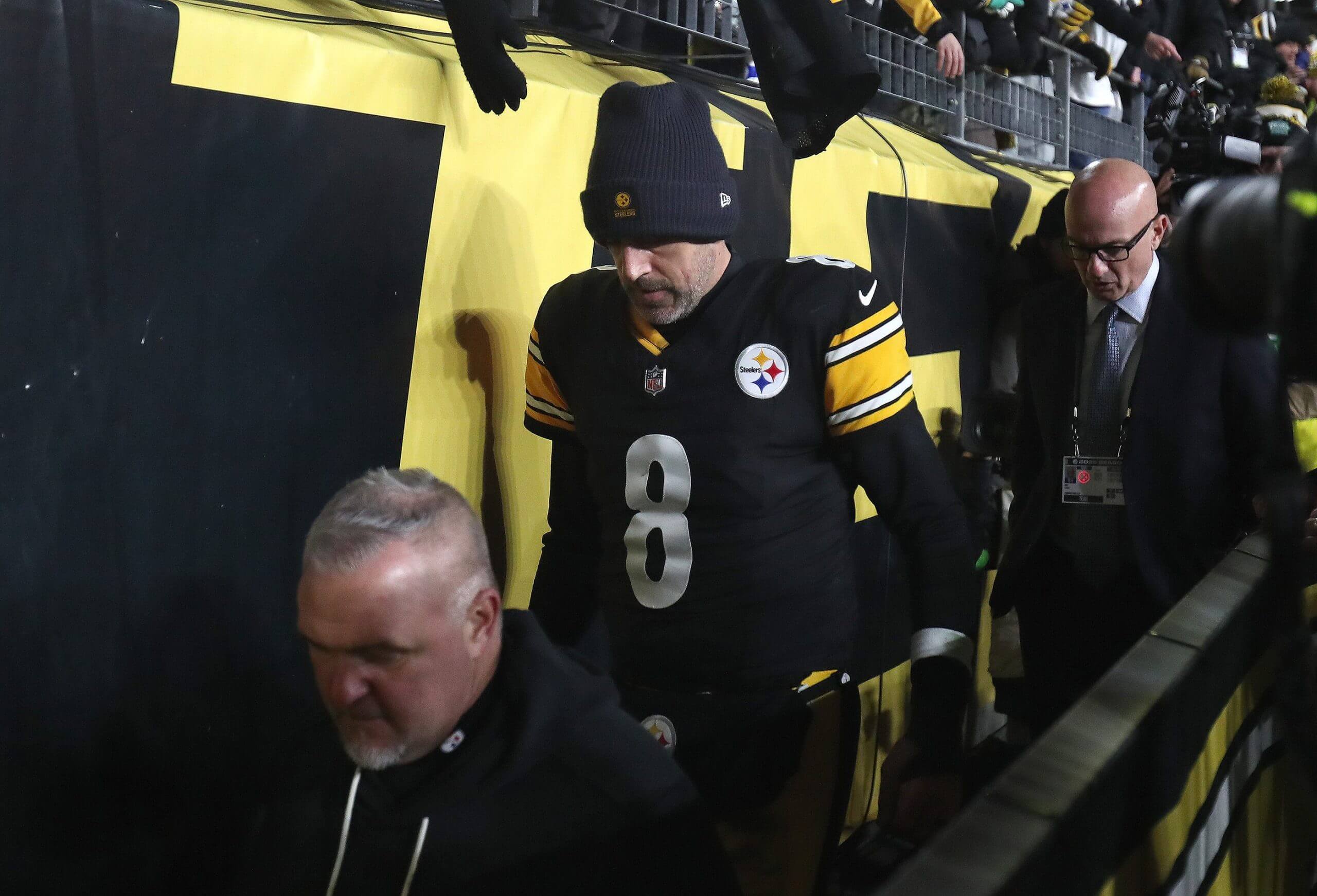
Under siege all night, Aaron Rodgers led the Steelers to just six points. (Michael Longo / Imagn Images)
Some franchises would have been willing to take a step back to take three steps forward. The Steelers, though, have often convinced themselves that they were closer to competing than they really were. Rather than developing young talent or punting on seasons to be in position to draft an early-round QB (particularly in 2019), they’ve instead worked to squeeze every drop out of right now. It has often left them scratching and clawing to nine or 10 wins, only to get bounced in the wild-card round.
This year, that was especially true. In a rather un-Steeler-like way, a patient and consecrative franchise took an aggressive — even desperate — approach. While other teams may begun planing for the next window with a potential 2026 rookie QB on the horizon, the Steelers acquired countless veterans to win right here and right now. You don’t make a blockbuster trade for a 28-year-old DK Metcalf, a 31-year-old Jalen Ramsey and a 30-year-old Jonnu Smith unless you think you’re close. You don’t re-sign a 31-year-old Watt and add incentives to the contract of a 36-year-old Heyward if you’re not trying to keep the band together for one more run. You don’t sign a now-42-year-old Rodgers if you don’t believe he can push a veteran-laden team over the top.
The Steelers weren’t necessarily “all-in,” but they did push enough chips into the pile to create that narrative pre-season. And they did it with a team that has Tomlin’s fingerprints all over it, from the veterans he’s long admired from a distance to a lopsided approach that saw the Steelers spend the most on defense for the fourth consecutive year.
And for what? Groundhog Day.
Fair or not, this season was always going to be judged by what happened in January. That’s simply the reality, given this approach to roster construction and the drought that has hung over Tomlin for nearly a decade.
Tomlin’s postseason record now stands at 8-12 (.400 winning percentage) after his seventh consecutive playoff loss. Even as he matched the legendary Chuck Noll with 193 regular season wins, his non-losing season streak has transformed from a compliment into a tongue-in-cheek jab.
It leaves the Steelers in a precarious position, somewhere between continuity and complacency: non-losing seasons and non-competitive playoff games; always competitive but never a contender; reliably around .500 yet nowhere near the Lombardi Trophy.
As Tomlin plans to meet with his team tomorrow morning, where do the Steelers go from here? If last offseason was full of indecision from their future QB, the latest playoff letdown leaves the Steelers with major uncertainty about the most important position in the game and their coach of 19 season.
Before Week 18, Rodgers acknowledged his age but also said that if he wants to play next year, he believes he’ll have “options,” suggesting that the door is still open — if not in Pittsburgh maybe elsewhere. After the game, he said he’ll need to “get away and have the right conversations” before he knows what’s next.
“I’m not going to make any emotional decisions,” Rodgers said. “I’m disappointed… It’s been a great year overall in my life in this last year. This has been a really big part of that.”
Tomlin’s future, meanwhile, is a bit more complicated.
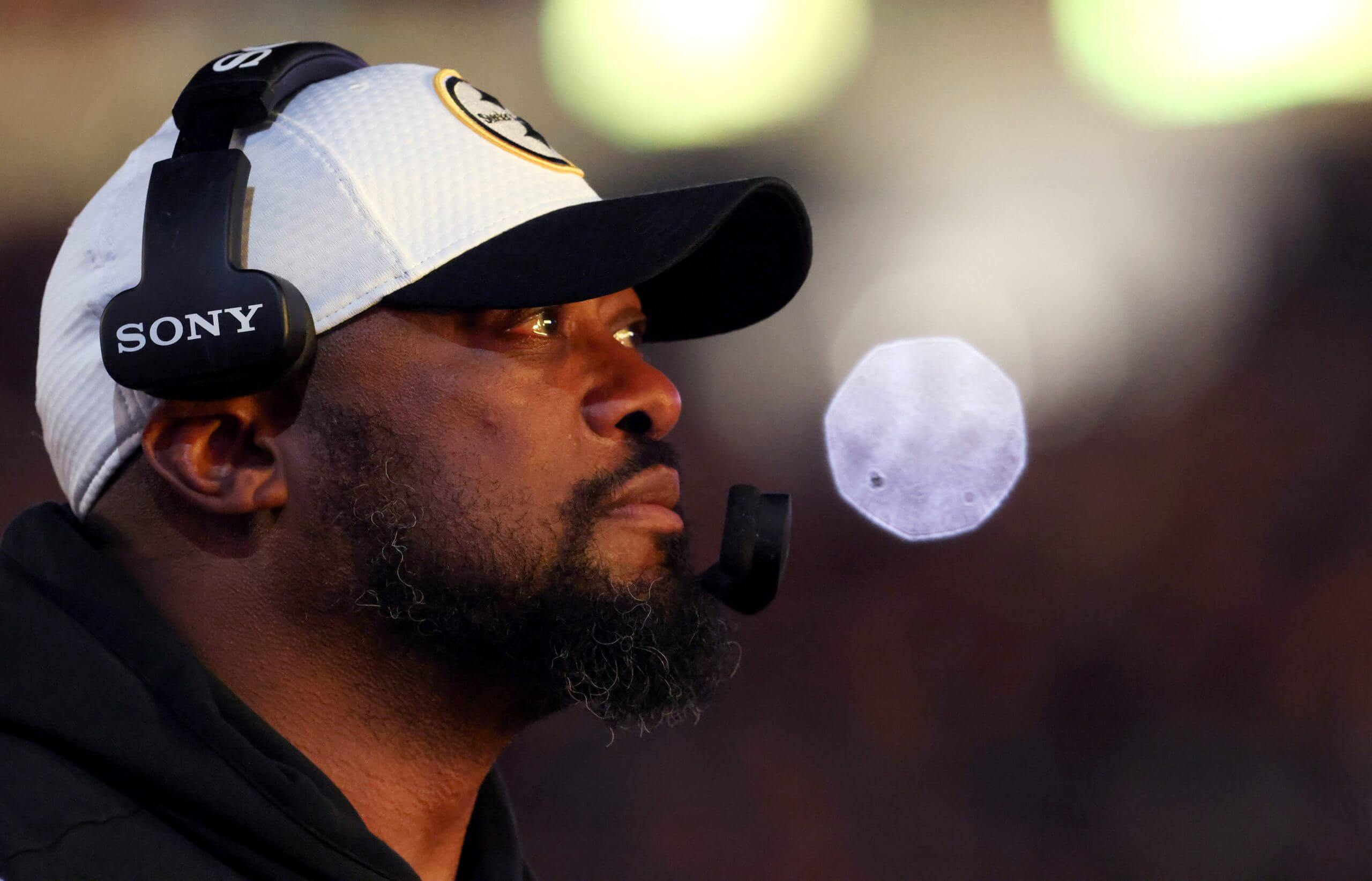
Was Monday night Mike Tomlin’s final game as Steelers head coach? (Charles LeClaire / Imagn Images)
It would be shocking if the Steelers decide to fire him, considering he’s signed through 2027 (with a team option to make 2026 his last year). At the same time, after nearly a decade without a playoff win, Tomlin’s approval rating has never been lower. He’s heard criticism from the day he took over for Bill Cowher, but not necessarily like in Week 13 when fans in his own stadium chanted “Fire Tomlin.”
Asked about the noise and speculation, Rodgers provided a minute-plus defense of Tomlin and his former coach Matt LaFleur, who is hearing similar things in Green Bay.
“When I first got in the league, there wouldn’t be conversation about whether those guys were on the ‘hot seat,’” Rodgers said. “The way that the league is covered now and the way that there’s snap decisions and validity given to the Twitter experts and the experts on TV now who make it seem like they know what the hell they’re talking about, to me that’s an absolute joke. To me, for either of those guys to be on the hot seat is really apropos of where we’re at as a society and a league.
“Mike T’s had more success than damn-near anybody in the league for the last 19-20 years. More than that, though, when you have the right guy and the culture is right, you don’t think about making a change,” Rodgers continued. “But there’s a lot of pressure that comes from the outside. That sways decisions from time-to-time. But that’s not how I’d do things and not how it used to be.”
Heyward, similarly, stumped for the only coach he’s known in 15 NFL seasons.
“They don’t know what Mike T puts into us,” Heyward said. “They don’t know how he goes out of his way to prepare every man. They don’t know the countless nights he’s in there studying film. Coaches can only do so much. Players have to play better. In those critical moments, our players have to step up.”
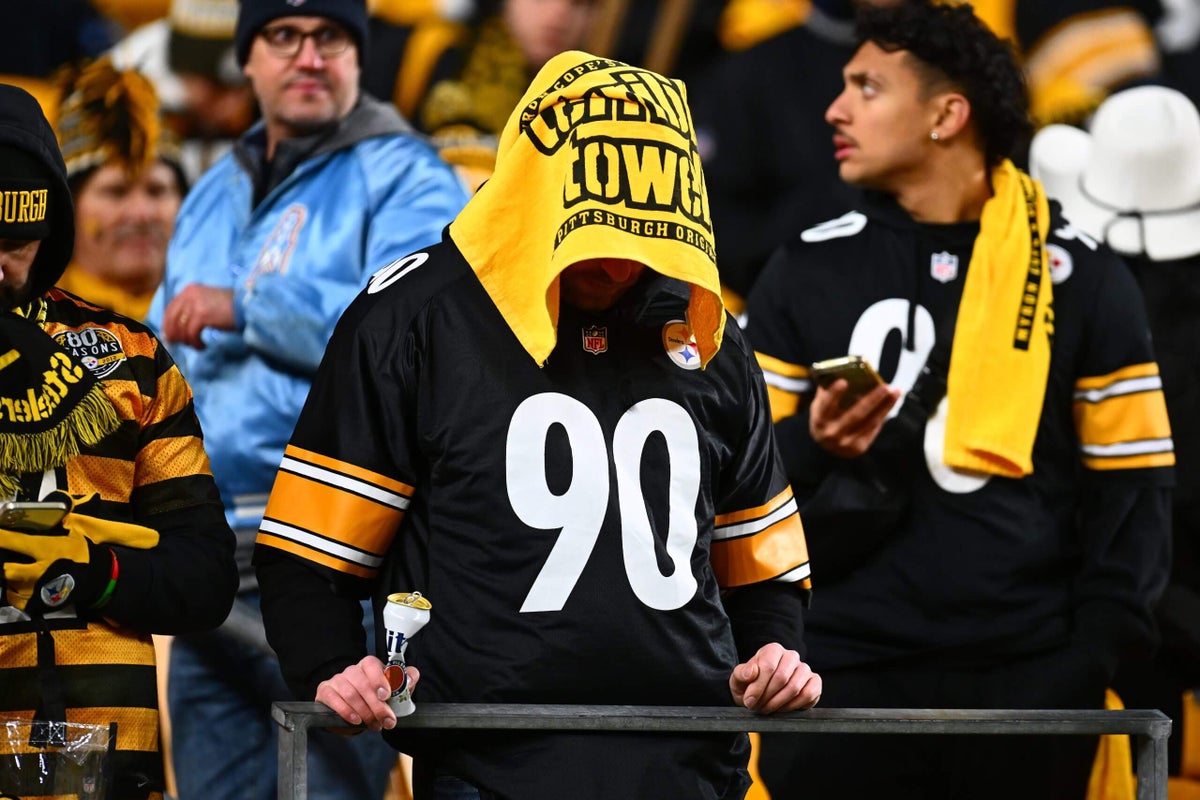
As the one-point game turned to another postseason blowout, the majority of fans trudged toward the exits with their heads down. Some of the ones who stayed tried to start a half-hearted “Fire Tomlin” chant like the one that broke out earlier in the year. Even for Tomlin’s most staunch supporters, patience seems to be running thin.
Because of the way the Steelers do business, the coach himself still likely has the greatest say in where this near-two-decade union goes from here.
“I’m not even in that mindset as I sit here tonight,” Tomlin said when asked broadly about his future. “I’m more in the mindset of what transpired in this stadium and certainly what we did and didn’t do. Not a big-picture mentality as I sit here tonight.”
He is, at his core, a competitor who, when backed into the corner, takes pride in fighting his way out. Still, as the chorus of criticism grows louder with every playoff letdown, could Tomlin decide he no longer wants to coach in a city and for a fan base that doesn’t seem to appreciate him like they once did?
That’s a question only he can answer.