
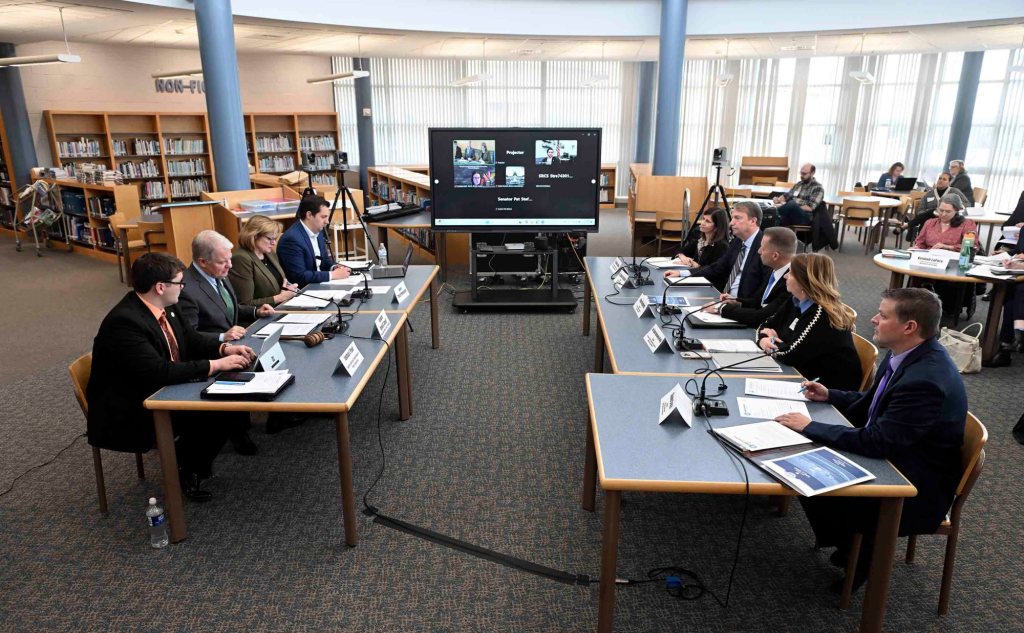
The setting was ideal.
State officials and education experts from Berks and Montgomery counties gathered inside the library at Daniel Boone Middle School for a discussion on literacy on Monday afternoon.
Surrounded by shelves of books, they talked about recent steps the state has taken to improve literacy across the commonwealth and what more needs to be done.
As part of the state’s 2025-26 budget, Pennsylvania school districts are required to adopt evidence-based reading curriculum by the 2027-28 school year and institute new literacy instruction training for teachers. The budget provided $10 million for literacy instruction and initiatives.
During Monday’s meeting, a hearing of the Senate Majority Policy Committee hosted by state Sen. Tracy Pennycuick, the need to address literacy was made crystal clear.
“If a student can’t read, that causes trouble for the rest of that person’s life,” said Sen. David Argall, a Schuylkill County Republican and chair of the committee.
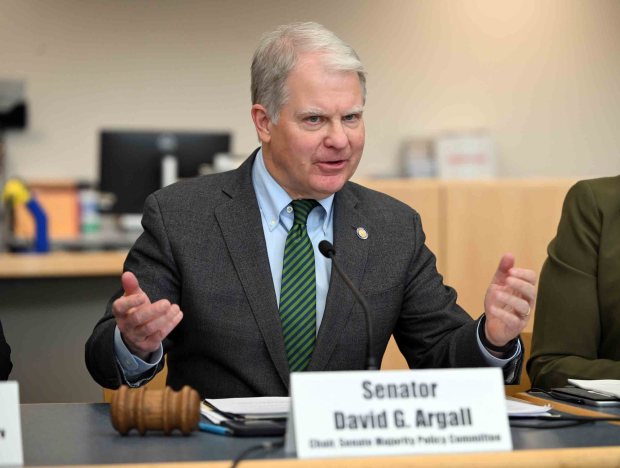 State Sen. David G. Argall, chairman of the Senate Majority Policy Committee, says during a public hearing on improving reading outcomes at the Daniel Boone Middle School in Amity Township on Monday, Jan. 12, 2026, that a student’s inability to read impacts the rest of their life. (BILL UHRICH/READING EAGLE)
Pennycuick said much the same, saying that when students struggle to read it impacts all other aspects of their education.
“Reading is not a topic for kids, it is a building block for everything,” said the Montgomery County Republican who represents parts of eastern Berks.
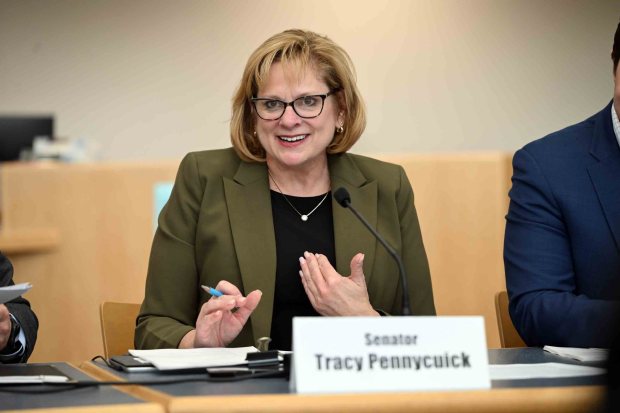 State Sen. Tracy Pennycuick, during a public hearing of the Senate Majority Policy Committee on improving reading outcomes, says that when students struggle to read it impacts all other aspects of their education. (BILL UHRICH/READING EAGLE)
Determining next steps
Many of the dozen of education experts in attendance echoed that sentiment and applauded the state’s recent moves aimed at improving literacy.
They added their insight regarding the next steps state officials should take to ensure things move in the right direction.
Two of the main issues are providing educators with proper training and delivering the resources needed to implement new curriculum and initiatives.
Shane Cross, director of curriculum and instruction for the Daniel Boone School District, said trying to implement the newly required curriculum can put a financial strain on districts already dealing with fiscal challenges.
He suggested the state create a centralized spot where districts can get curriculum documents.
“That would allow us to share each other’s work,” he said.
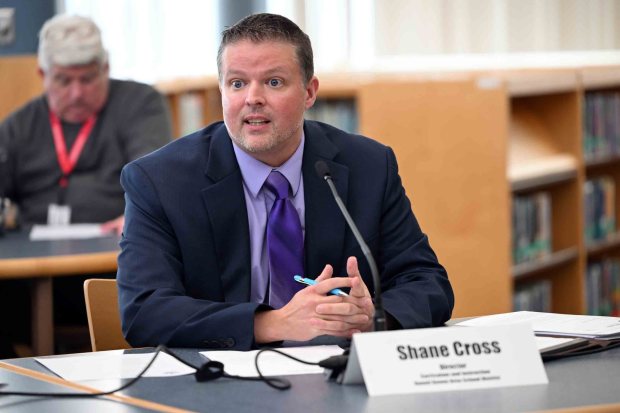 Shane Cross, director of curriculum and instruction at the Daniel Boone School District, says trying to implement the newly required reading curriculum can put a financial strain on already strained districts. (BILL UHRICH/READING EAGLE)
Cross also asked that the state provide funding for the resources needed to update curriculum, for literacy coaches and for intermediate units to provide training for teachers.
Dr. Katie Kennedy-Reilly, director of curriculum, instruction, assessment and technology for the Souderton School District, stressed that how reading is taught is a key to those efforts being successful.
“Reading is not born into us, it’s a human invention,” she said.
Kennedy-Reilly said kids don’t learn to read by chance, rather they learn when the conditions are right.
“Learning to read is not magic, it’s craft and care,” she said.
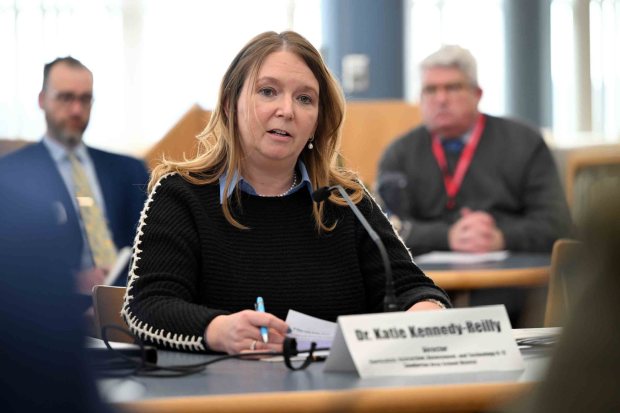 Dr. Katie Kennedy-Reilly, director of curriculum, instruction, assessment and technology at the Souderton School District, speaks during a public hearing with the Senate Majority Policy Committee on improving reading outcomes at the Daniel Boone Middle School in Amity Township on Monday, Jan. 12, 2026. (BILL UHRICH/READING EAGLE)
And that, she said, means educators need the resources and training to guide students into the world of reading.
Financial impact
Ryan Oxenford, director of curriculum and educational programs for the Pottstown School District, focused on the financial impact of the changes.
He said about 69% of students in his district live below the poverty line, and that the district itself long has been underfunded by as much as $13 million per year.
“We’ve had to be resourceful, we have to do more with less,” he said.
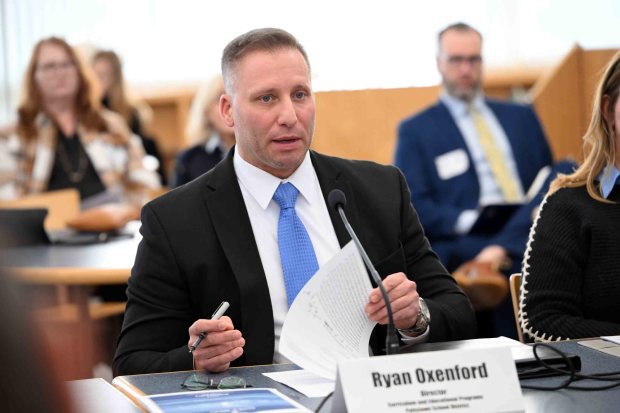 Ryan Oxenford, director of curriculum and educational programs at the Pottstown School District, speaks during a public hearing with the Senate Majority Policy Committee on improving reading outcomes at the Daniel Boone Middle School in Amity Township on Monday, Jan. 12, 2026. (BILL UHRICH/READING EAGLE)
Oxenford cautioned state officials about how they assess the success of literacy programs. In large part, he said, students are judged by their performance on the annual Pennsylvania System of School Assessment exams. He said reading books is far different than answering questions on a standardized test.
“We risk misdiagnosing both students and teachers,” he said of relying too heavily on PSSA data.
For example, Oxenford said, 20% of third graders in his district who did not test proficient on the PSSA did test proficient on internal testing.
Oxenford added that PSSA data is received by districts too late, as data from tests given in the spring aren’t received until the fall.
“That’s too late to make changes,” he said.
He said he worries about state-set goals of having 70% of students test proficient or better on PSSA exams, saying that can cause districts to focus too much on students on the bubble and overlooking those who need more help.
“You can hit that 70% mark, but it’s going to come at a cost,” he said.
Dr. Daniel Richards, director of the office of professional learning for the Berks County Intermediate Unit, used his time testified on professional development.
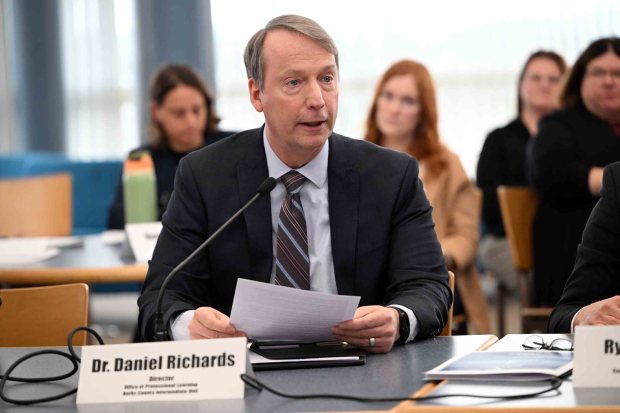 Dr. Daniel Richards, director of the office of professional learning at the Berks County Intermediate Unit, says there needs to be ongoing mentoring and coaching to help improve literacy. (BILL UHRICH/READING EAGLE)
He said one-time workshops won’t be enough to ensure educators are prepared to tackle new literacy curriculum. He called for ongoing mentoring and coaching, which would require continued funding.
Early learning an issue
Dr. Donna Gaffney, director of organizational and professional learning for the Montgomery County Intermediate Unit, spoke about the need for access to early learning.
She said the path to literacy begins long before students arrive in kindergarten. When students don’t get high-quality early education, schools welcome new students who are already behind.
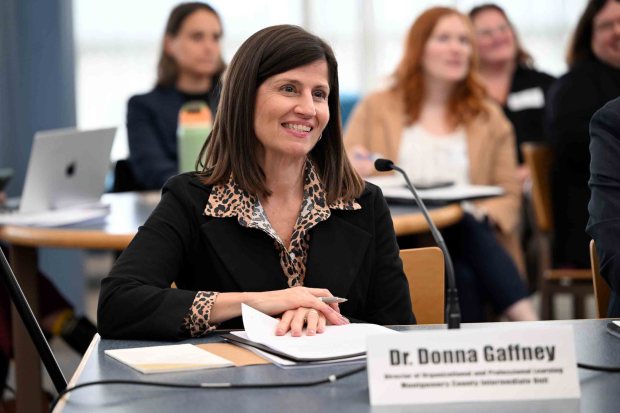 Dr. Donna Gaffney, director of organizational and professional learning at the Montgomery County Intermediate Unit, speaks during a public hearing with the Senate Majority Policy Committee on improving reading outcomes at the Daniel Boone Middle School in Amity Township on Monday, Jan. 12, 2026. (BILL UHRICH/READING EAGLE)
“Schools are face with remediation, not learning,” she said. “They’re playing catch-up.”
She urged an increase in funding for early learning so providers can expand their reach.
“It is the starting point,” she said.
Ashley Chambers, senior vice president of community impact for the United Way of Berks County, said many Berks student arrive in kindergarten behind in learning.
“These gaps don’t start in school, they start years earlier,” she said.
Chambers said students struggling with reading need help way before they take PSSA exams in third grade. And in many cases they need help even before kindergarten.
She called for more state funding for early education.
Adult literacy
Ryan Breisch, executive director of the Literacy Council of Reading-Berks, explored the opposite end of the spectrum.
He said his organization works to improve adult literacy, as an inability to read effectively locks people out of services and opportunities.
He said there are 90,000 adults in Berks who are functionally illiterate, creating challenges in everything from signing a lease to following directions at work to filling out job applications to helping their kids with their homework.
Breisch asked state officials to, at minimum, maintain current levels of funding for adult literacy programs.
Candance Hall, a board member of the International Dyslexia Association, Pennsylvania chapter, said that while she applauds the state efforts to improve literacy, mandated initiatives often fail. She said about 70% of them are unsuccessful, often because of a lack of resources and clear planning.
“Our children deserve more than good intentions,” she said.
She said there should be a statewide implementation roadmap, providing step-by-step guidance on how districts implement and support literacy initiatives.
Rachael Garnick, Pennsylvania Coalition Manager for Teach Plus, said the keys to making sure literacy efforts succeed are funding and leadership.
She called for $50 million in state funding this year to provide schools with training, coaching and materials, followed by another $50 million down the road to help ease financial barriers to implementation.
“Districts are being asked to meet high standards without funding,” she said. “That will create different outcomes across the state.”
Kendall LaPora, senior research associate for Research for Action, said it is clear what works when it comes to teaching reading. How to scale it and implement it across the state is the question.
She said teachers often aren’t given enough time to learn new curriculum and prepare to teach it. She called for efforts to recruit and retain quality teachers.