
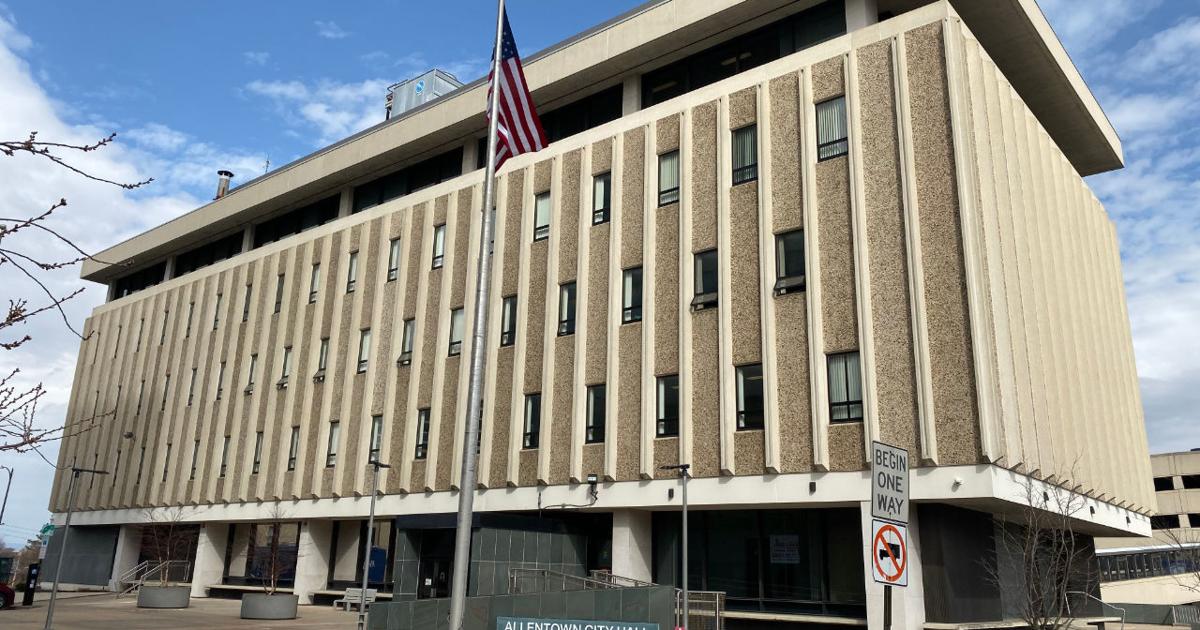
ALLENTOWN, Pa. – Allentown finally has a budget.
Allentown City Council voted 4-3 during a special meeting Tuesday night to approve Mayor Matt Tuerk’s proposed spending plan.
The $245 million budget, that Tuerk submitted to council on Oct. 16, includes a 3.96% tax increase.
Council members Ce-Ce Gerlach, Natalie Santos and Cynthia Mota voted “no.”
In December, council split on a decision to adopt the spending plan without any tax increase.
At that time, three council members opposed that budget because they favored reinstating the administration’s recommendation for a 3.96% tax increase in return for lowering the trash fees by $50.
But because the four other members of council approved the budget with no tax increase, it was presumed to be the spending plan for 2026.
But that budget without a tax increase was vetoed by Tuerk.
Since January 1, the city has been issuing payments based on Tuerk’s proposed budget from October, as the mayor said the budget reverts to his original plan since council had failed to adopt a budget that was supported by the administration.
Council’s solicitor did not agree with that assessment based on the city’s Charter.
The Allentown Home Rule Charter was amended in 2019 to prevent a tax increase from going into effect by default and requires the adoption of a budget by Dec. 31 with a vote of at least four council members.
Because the now-adopted budget is the original version, it does not include a reduction in trash fees, which are increasing $140 this year, bringing the annual residential trash bill to $740.
There was some discussion of council members about amending the budget to include the $50 reduction in the trash fees, but in the end, it was not included in the ordinance.
New councilman Jeremy Binder made a lengthy statement saying it is unfortunate that council was in this position.
“We’re here because the administration and City Council failed to fulfill a core obligation to the residents of Allentown, which is to pass a balanced budget,” Binder said. “In 2019, after another challenging state budget season, Allentown voters overwhelmingly passed a referendum that gave the City Council more authority in its budget process. As I understand it, the purpose of this referendum was to remove the ability to default the budget into effect. Unfortunately, it did not include guidance on what would happen if no agreement was reached.”
“From a governance perspective, Bill 1 (the ordinance adopted Tuesday night) is effectively a lose-lose scenario,” Binder explained. “Voting ‘yes’ on this bill violates the will of the voters, addressing the desire to have two bodies work together to create a budget. Voting ‘no’ on this bill places us in direct violation of the State of Pennsylvania’s requirements for a balanced budget to be completed by December 31. As such, voting ‘no’ on this bill would be a violation of state law and the oath that many of us took just last week.”
“For that reason, I will be voting yes, however, at the next City Council meeting on January 21, I will be presenting a resolution that is focused on two key questions that need to be clearly defined moving forward,” Binder said.
Binder said the questions need to address what happens procedurally if the same situation occurs again and what the consequences would be for not reaching an agreement.
“I ran for this opportunity to be on council with the understanding that voters across the city were frustrated with the lack of cooperation and compromise between the administration and City Council,” Binder said. “We are dealing with a 2025 issue right now. It’s 2026. I would encourage my colleagues and the administration to begin anew. We have the opportunity to do great things, but we need to work together.”