
As we enter 2026, I want to share a neuroscience-based perspective on solving Philadelphia’s economic mobility crisis. I beat the odds — rising from poverty in inner-city Philadelphia to Harvard and Wharton — by learning to rewire my brain and break the survival patterns that keep people trapped. What I figured out instinctively, we can now teach systematically.
First, let’s grapple with the facts. Our city ranks dead last among the nation’s 50 largest metropolitan regions in economic mobility, according to research led by Harvard economist Raj Chetty. This means children have less chance of escaping poverty here than almost anywhere else in America. What’s worse, half of Philadelphia’s children — 152,000 kids — live in households that can’t meet their basic needs.
While our poverty rate has dropped to 19.7 percent, the lowest since 1979, we remain the second-poorest big city in America. What’s missing from our interventions is an understanding of poverty’s impact on the brain.
Research by economists Sendhil Mullainathan and Eldar Shafir reveals why the problem runs deeper than economics. Experiencing scarcity can temporarily reduce a person’s IQ by up to 14 points — almost a full standard deviation. This ‘bandwidth tax’ degrades cognitive capacity precisely when people need it most to navigate challenges and create better lives.
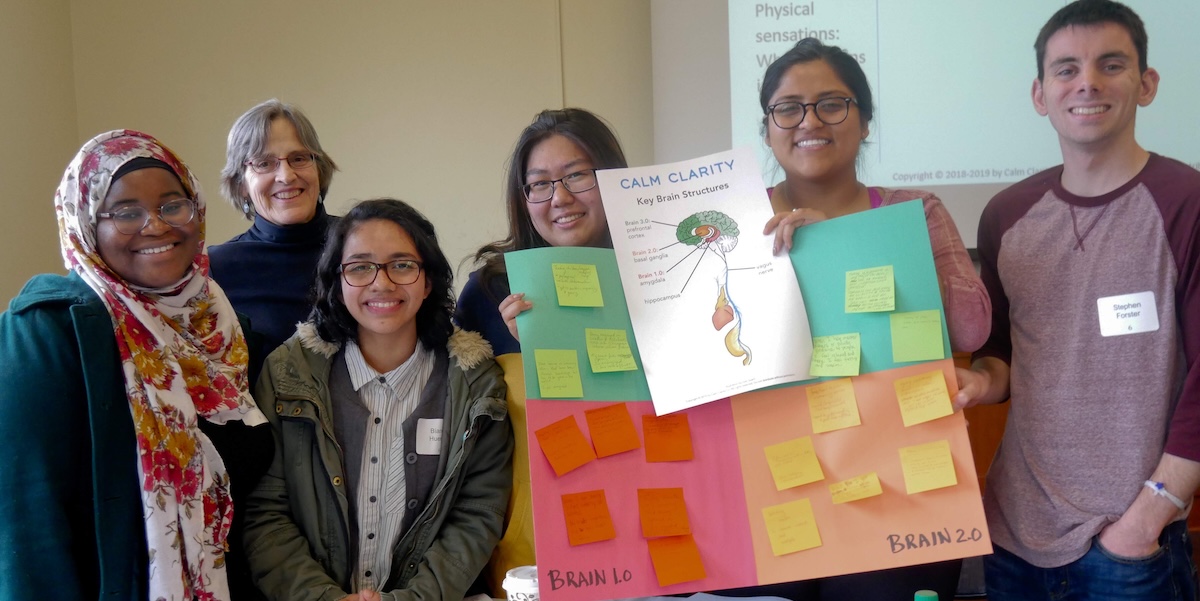
What I observed in my own life, my extended family, and my community is that chronic stress from poverty, economic instability, and scarcity forces our brains into two survival modes — what I call Brain 1.0 and Brain 2.0.
In Brain 1.0, the threat system hijacks our thinking. We become hypervigilant, seeing change as dangerous and potential allies as threats. Blood flow diverts from our prefrontal cortex to our limbs, preparing us for fight-or-flight while leaving us vulnerable to poor judgment and brain fog. We focus on surviving rather than thriving.
Brain 2.0 offers temporary escape through dopamine hits — drugs, social media, consumerism, external validation — that distract us from solving underlying problems. We chase short-term relief and gratification in ways that divert attention, energy, and resources from investments and actions that could actually improve our lives and communities.
Environments that bring people into Brain 1.0 and Brain 2.0 make it much harder for people to come together to collaborate, engage in dialogue, and create community-based solutions that would foster economic mobility.
To do that, we need to be in Brain 3.0 — a state where our full cognitive and creative potential is accessible, where we can open our minds and hearts to connect, process complex information, see multiple perspectives, and respond to change with agility.
While our poverty rate has dropped to 19.7 percent, the lowest since 1979, we remain the second-poorest big city in America. What’s missing from our interventions is an understanding of poverty’s impact on the brain.
Chetty’s research shows that neighborhoods with less segregation, greater income equality, better schools, and stronger social connections produce better outcomes for children born into poverty. If we look at this through the lens of neuroscience, the reason these environments create better outcomes is because they provide more opportunities to develop the neural systems of Brain 3.0 — something that doesn’t easily happen in neighborhoods plagued by disinvestment, gun violence, housing insecurity, and drug addiction.
My personal experience in Philadelphia has been that our education system, workforce development programs, youth programs, community centers, and poverty intervention strategies are more likely to trigger and strengthen Brain 1.0 and Brain 2.0 than support stakeholders to build Brain 3.0.
Too often, I have seen a negative spiral unfold when leaders and organizations get pulled into Brain 1.0 and Brain 2.0. As they react in survival mode, a mindset of time scarcity causes them to put off activities that restore and build their capacity to operate more effectively in Brain 3.0. Their decisions and actions focus on compliance and control, reinforcing the very systems and processes that keep people stuck in Brain 1.0 and Brain 2.0.
Then, the organization stagnates and burns people out because they are not cultivating the capacity for executive function and emotional intelligence in Brain 3.0 that enables leaders, their teams, and the people they serve to learn, grow, innovate, and thrive.
Building Brain 3.0 requires strengthening four key neural systems: resilience (to regulate stress and recover from setbacks), attention (to discern where to focus energy and concentrate despite distractions), meta-awareness (to recognize when survival patterns are hijacking our thinking), and connection (to build the social capital Chetty identifies as crucial for mobility).
Since 2013, my organization, Calm Clarity, has guided thousands of people to strengthen these systems using neuroscience-based tools, training, and short practical exercises. For anyone who wants to start building Brain 3.0, free resources are available at calmclarity.org.
First, take a 10-15 minute online assessment to learn how Brain 1.0, 2.0, and 3.0 manifest in your everyday life, and see which is your dominant mode. Then download a summary guide with five simple exercises to strengthen the key neural systems of Brain 3.0, or take our online course A Mind-Hacker’s Toolkit to Calm Anxiety that teaches 10 science-based techniques to calm Brain 1.0 and Brain 2.0. Anyone can use the full-scholarship code provided to take the course free.
Once you recognize how your brain moves between these states, start conversations with your team, family, and organization to apply this framework together. Observe what situations trigger Brain 1.0 or 2.0 reactions and what situations elevate you into Brain 3.0. Then meet regularly to discuss these patterns with curiosity and compassion, brainstorming practical and constructive ways to support each other in activating Brain 3.0 to make decisions that move you towards the future outcomes you want.
I made it out of poverty in Philadelphia because I taught myself to use Brain 3.0 to navigate a dysfunctional system without adding to the dysfunction. However, I am tired of being an exception. Philadelphia must align our investments — in schools, workforce programs, and community services — with what neuroscience tells us actually works: building Brain 3.0 capacity from childhood forward. Only then can we fulfill our aspiration to be a city that generates love and prosperity for all.
Due Quach is the author of “Calm Clarity: How to Use Science to Rewire Your Brain for Greater Wisdom, Fulfillment, and Joy” and founder of Calm Clarity, a social enterprise in Philadelphia that helps organizations worldwide develop neuroscience-based leadership capacity.
The Citizen welcomes guest commentary from community members who represent that it is their own work and their own opinion based on true facts that they know firsthand.
 BETTER LIVING THROUGH SCIENCE
Calm Clarity’s collaboration with Villanova University’s campus ministry team to through weekend workshops with first-generation college students across the Philadelphia area.