
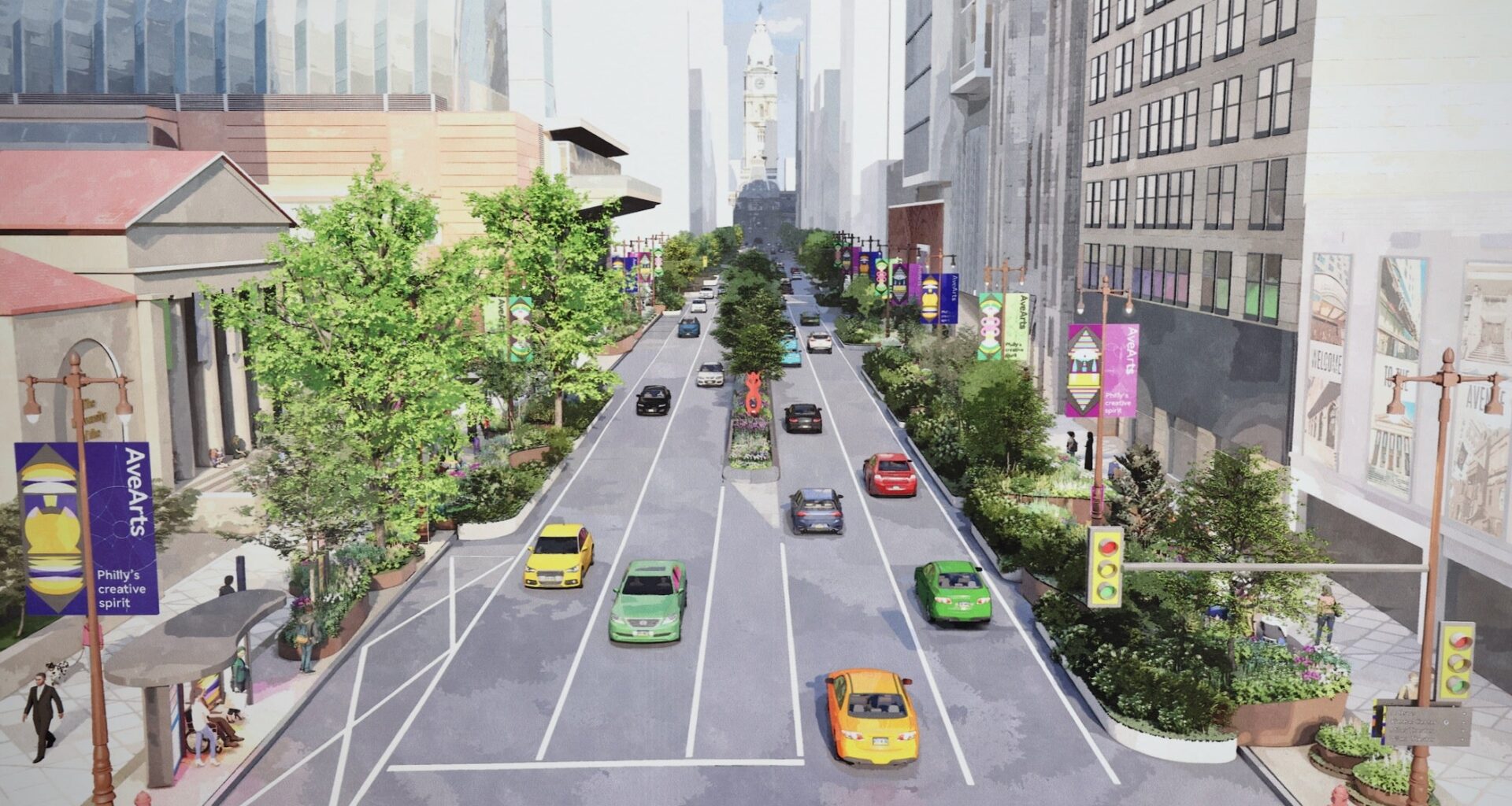
What’s happening now?
The whole 10-block project will be done iteratively, one $15 million block at a time.
It is starting small. Later this month, work will begin to demolish and rebuild the median strip in front of the Kimmel Center on the 300 block of the avenue.
That work is expected to be completed by this summer, then pause. Work on the surrounding sidewalks is expected to resume in 2027.
“It’s a small but important beginning because it shows everybody what a profound difference it will make to drive or walk down the Avenue of the Arts and see flowering trees and shrubs and green,” Dranoff said. “It’s a proof of concept on what we’re talking about.”
The design plan for each block will be unique depending on their individual requirements. The existing infrastructure gives each block a different set of programming circumstances.
Avenue of the Arts is a deeply complicated corridor, a common ground for many overlapping spheres of influence. It is a state highway and a city street. It is the border of two City Council districts. Two subway systems run underneath. Its sidewalks are stewarded by both the city and private property owners. A web of gas, electrical and water lines criss-cross the avenue.
“What you see in the end in the public space doesn’t give justice and testimony to the complications of doing this below-grade work,” said Oliver Schaper, design director at Gensler, the company doing much of the design work for “Avenue of the Arts 2.0.”
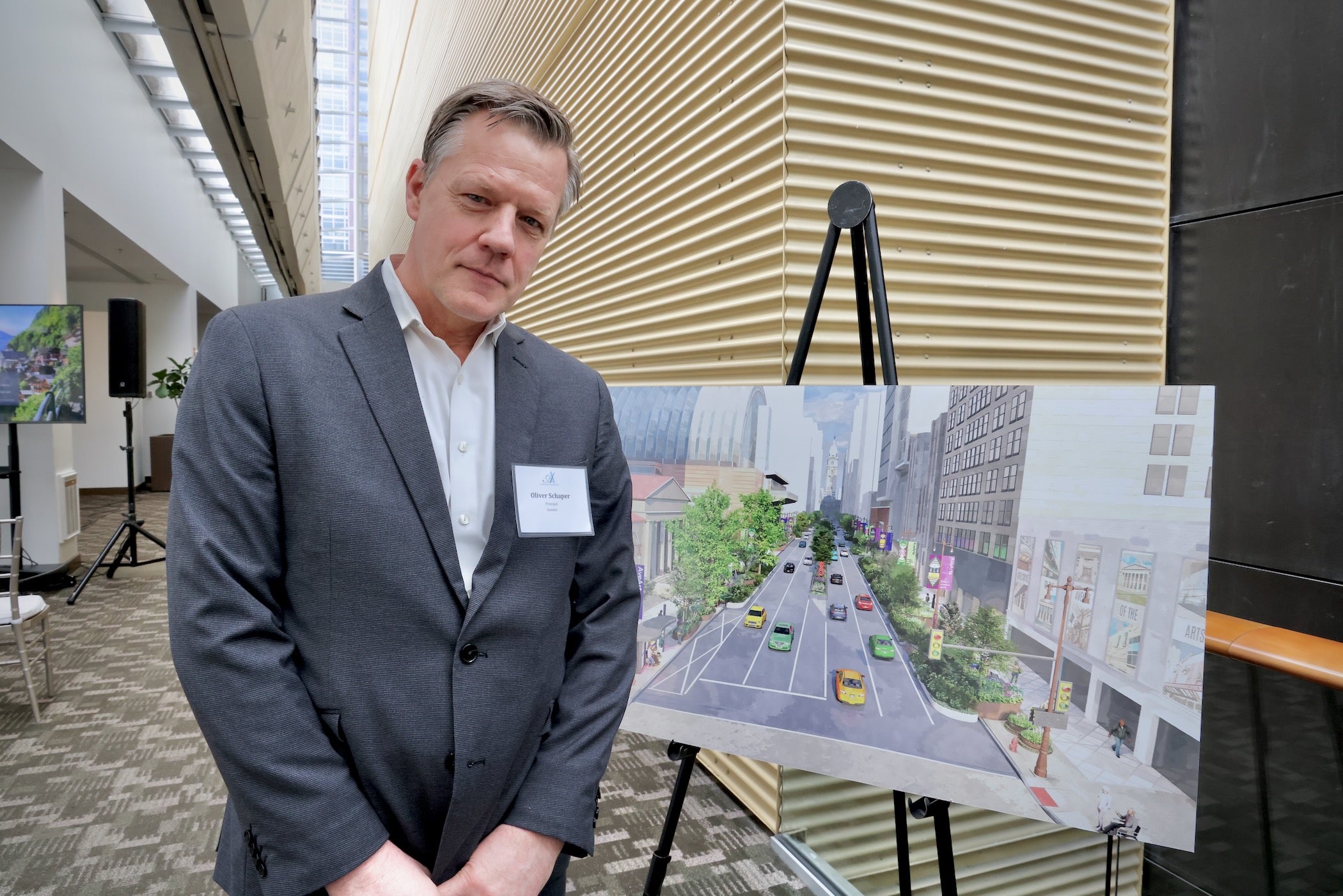 Oliver Schaper is a principal at Gensler, the firm that designed the improvements for Philadelphia’s Avenue of the Arts. (Emma Lee/WHYY)
Who’s going to pay for it?
The cost of the project has already jumped from a preliminary estimate of $100 million in 2024 to the current estimate of $150 million.
So far, the city of Philadelphia has contributed $3 million. State Rep. Jordan Harris, D-Philadelphia, used the ceremonial groundbreaking Tuesday to announce the commonwealth is chipping in an additional $500,000, bringing the state’s contribution to $1.5 million.
As chair of the state appropriations committee, Harris said an investment in the Avenue of the Arts is an investment for the whole state.
“The southeastern part of Pennsylvania is the economic engine of the commonwealth,” he said. “Sometimes my friends in Harrisburg forget that, but the money that is going out to Carbon and Cameron County, it is generated right here in Southeastern Pennsylvania.”
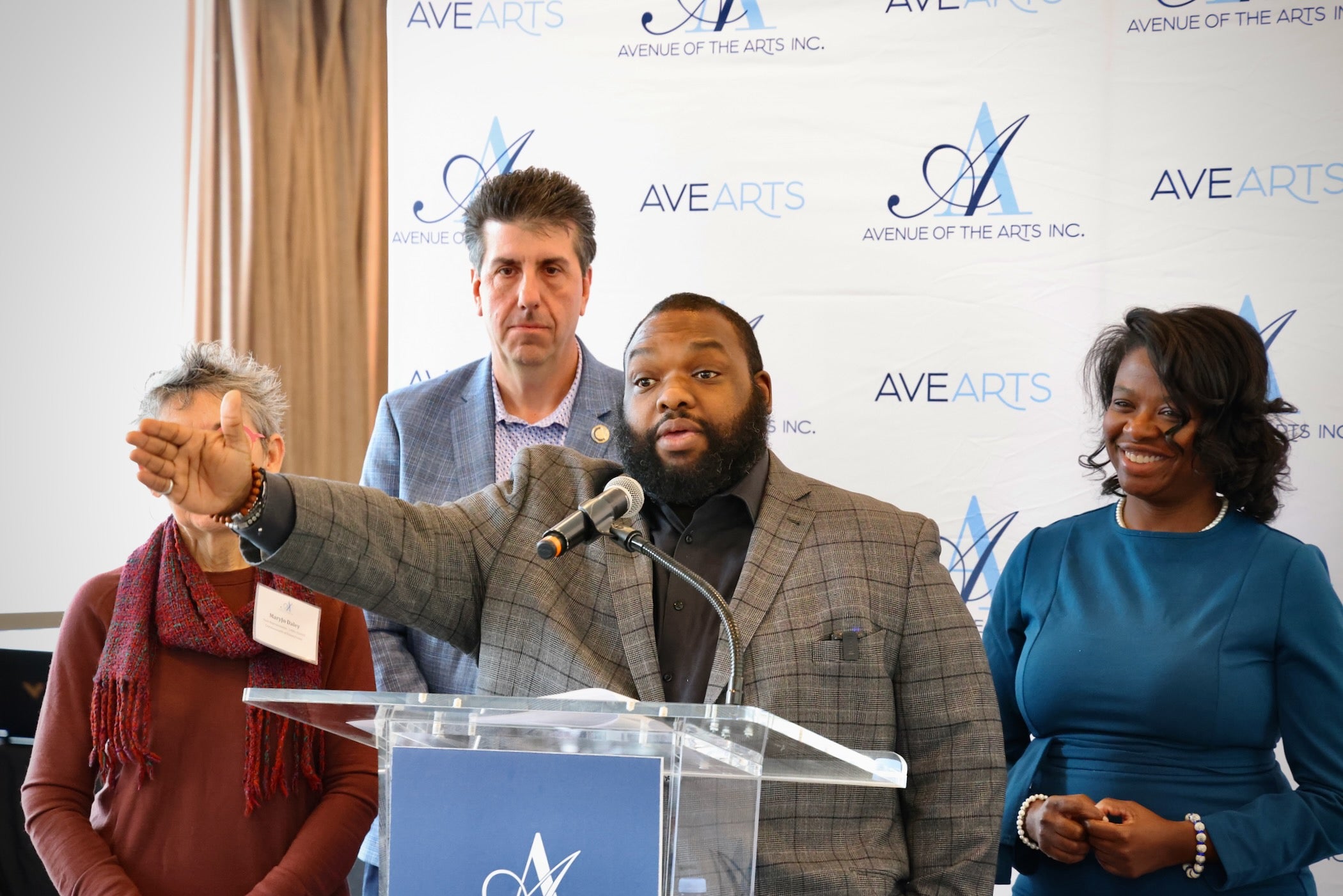 Pennsylvania state Rep. Jordan Harris announces an additional $500,000 state grant for improvements to Avenue of the Arts. (Emma Lee/WHYY)
The project will be fundraising as it progresses. Dranoff commissioned an economic impact report that indicates every dollar spent on the cultural attractions on the Avenue of the Arts triggers an additional $256 in spending.
“It’s a multiplier effect,” he said.