
By SUSAN JONES
There has been some positive news lately surrounding federal research funding, both for Pitt and other universities.
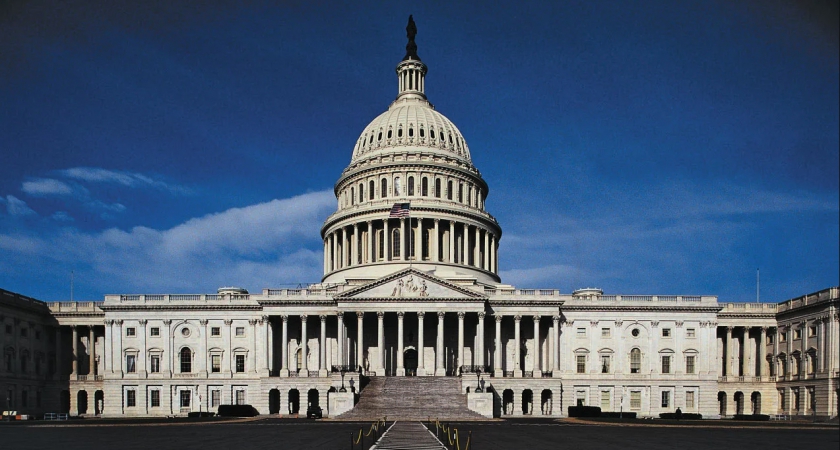
On Jan. 15. the Senate voted to provide billions of dollars more to the National Oceanic and Atmospheric Administration, NASA and the National Science Foundation than the president had asked for, according to NBC News.
In an 82-15 vote, the Senate approved a minibus budget bill to fund agencies involved in science and the environment, among other issues, through Sept. 30. The bill passed in the House last week by a vote of 397 to 28.
While the final numbers reflect a small cut — around 3% from last year — that’s much less than the Trump administration had requested. The administration proposed cuts of 57% for NSF; 47% for the portion of NASA dedicated to science research; and 27% for NOAA, which oversees the National Weather Service.
The bill now goes to the president to sign. Lawmakers are supposed to approve all spending by Jan. 30, when the stopgap funding measure that ended last fall’s 43-day government shutdown expires
Other research-related news
Indirect costs: A federal appeals court this week upheld a lower court’s ruling that blocked the National Institutes of Health from unilaterally capping research funding for indirect costs.
The ruling cited a longtime provision in the congressional spending bill that prevents NIH from displacing negotiated indirect cost reimbursement rates with a uniform rate, Science reported.
And on Jan. 5, a key congressional spending panel included a similar provision in the bipartisan bill to fund several federal agencies, which blocks the NSF, NASA, and the Department of Commerce from changing how they set cost rates for the rest of the 2026 fiscal year that ends in September.
When the second Trump administration came into office in January 2025, one of the first actions was to propose cutting indirect cost reimbursements from several federal agencies to research universities to 15%. These pay for costs that can’t be specifically attributed to a single research project, such as utilities, specialized laboratory equipment, clinical space and some support staff.
The proposed reductions were challenged by several schools and higher education organizations — including ones in which Pitt is an active member — and courts quickly placed temporary injunctions to prevent the cuts. Since then, courts have ruled against most of the cuts.
For now, Pitt’s indirect rate remains the same, after the office of Pitt’s chief financial officer last summer negotiated a renewal of Pitt’s 59% rate for the next three years. This is a process that all research universities go through every three to four years.
Delayed funding: The NIH also settled a lawsuit with 16 states after it halted the decision-making process on thousands of grants earlier this year. The large-scale freeze came after internal NIH guidance sought to direct funds away from topics the Trump administration disfavored, like diversity, equity and inclusion. The administration did not admit wrongdoing in the settlement, but NIH must commit to the usual grant review process and cannot apply its anti-DEI directive.
Pitt research: The HERD (Higher Education Research and Development) funding report, which details research expenditures at U.S. colleges and universities, showed Pitt’s total R&D expenditures in fiscal year 2023-24 reached $1.5 billion, Pitt Research said. This is a $106.6 milling, or 7.6%, increase in spending, which allowed Pitt to maintain its ranking at 17th out of 900 in the country.
Pitt’s annual research report, which came out this week, also shows the University ranked 10th in expenditures from federal sources and 25th in spending from nonfederal sources, moving up two spots from FY 2022 in both categories.
Spending from Department of Health and Human Services funding grew by 11.6%, solidifying Pitt’s rank at fifth. The University’s ranking for spending from Department of Defense funding now stands at 21st, two places higher than last year. Pitt also ranked in the top 10 in two life sciences categories: health sciences (ninth) and biological and biomedical sciences (eighth).
In addition, preliminary data from the National Institutes of Health showed that Pitt saw no decline in research funding from the NIH in fiscal year 2024-25, despite well-publicized efforts by the Trump administration to cut spending.
The Blue Ridge Institute of Medical Research (BRIMR) will provide final numbers on NIH funding and rankings in February.
Susan Jones is editor of the University Times. Reach her at suejones@pitt.edu or 724-244-4042.
Have a story idea or news to share? Share it with the University Times.
Follow the University Times on Twitter and Facebook.