
The holiday season brings with it a host of happy things.
There’s the friends and family, the gathering for festive parties and meals. There’s Santa’s sleighride and the smiles on children’s faces from the presents he delivers.
There’s joy and merriment and goodwill.
But there’s something else the holidays bring: sickness.
All of those office parties, all of those family feasts, all of those trips to the store for holiday shopping, all of those ball-drop watch parties are perfect breeding grounds for infectious disease. The result is a post-holiday spike in cases of influenza.
According to the state Department of Health, flu cases began to tick upward around Thanksgiving. They hit a peak early this month, with just over 14,500 reported cases statewide for the week ending Jan. 6.
The situation has tapered off a bit, with only just under 10,500 cases reported the week ending Jan. 10, the most recent week for which data is available.
Local health experts say the numbers in Berks County mirrored those statewide but warned the recent decrease doesn’t mean people should let down their guard.
The local picture
“After the holidays, we definitely saw cases go up,” said Dr. Debra Powell, chief of the division of infectious disease at Reading Hospital. “The good news is, we saw a peak last week and the numbers have come back down.”
Powell said Reading Hospital last week had 20 patients hospitalized with flu, down from 40 the previous week.
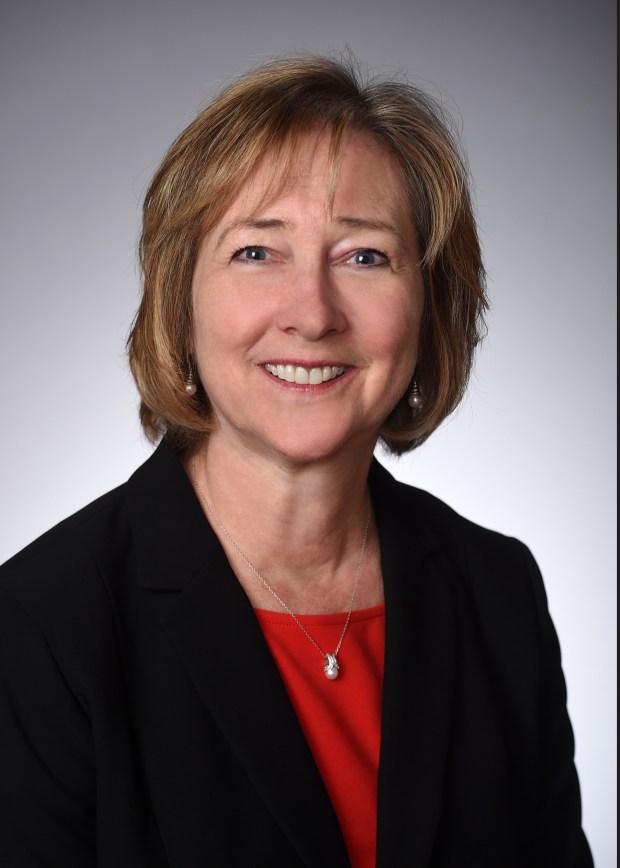 Dr. Debra Powell
“It’s a normalish spike, it seems fairly typical,” she said of the post-holiday numbers. “It’s not unexpected.”
Dr. Rutul Dalal, medical director for infectious diseases at Penn State Health St. Joseph Medical Center, said his hospital has seen much the same.
“We are seeing a lot of respiratory viruses, as would be expected,” he said, explaining that cases of COVID and RSV also saw increases following the holiday.
Dalal said the stretch from Dec. 23 to the new year had been the worst, with flu cases exceeding what St. Joseph saw during the past two seasons.
One of the likely reasons for that is the current dominant substrain, Influenza A, was not included in this year’s vaccine.
“It came from Europe, and it came in June after the vaccine was already made,” Dalal said, explaining the vaccines for the Northern Hemisphere are created based on the strains predominant during the Southern Hemisphere’s earlier flu season.
Powell said that more than 90% of current flu cases are from the A substrain. Statewide data bears that out, showing that during the week ending Jan. 10 there were 9,956 flu A cases and just 514 flu B cases.
A long road ahead
Despite improving recent numbers, Powell and Dalal cautioned that doesn’t mean flu season is over.
“We’re not out of the woods yet,” Powell said.
Powell said the flu season typically stretches to March and sometimes even April. Which means there is plenty of time for cases to head back up.
Dalal concurred, saying the recent dip in cases likely won’t last.
“It can still come up again,” he said, adding that health experts are predicting another spike in the next week or two.
Powell and Dalal said the likelihood of the flu cases — along with those of RSV and COVID — shooting back up means people should continue to be cautious.
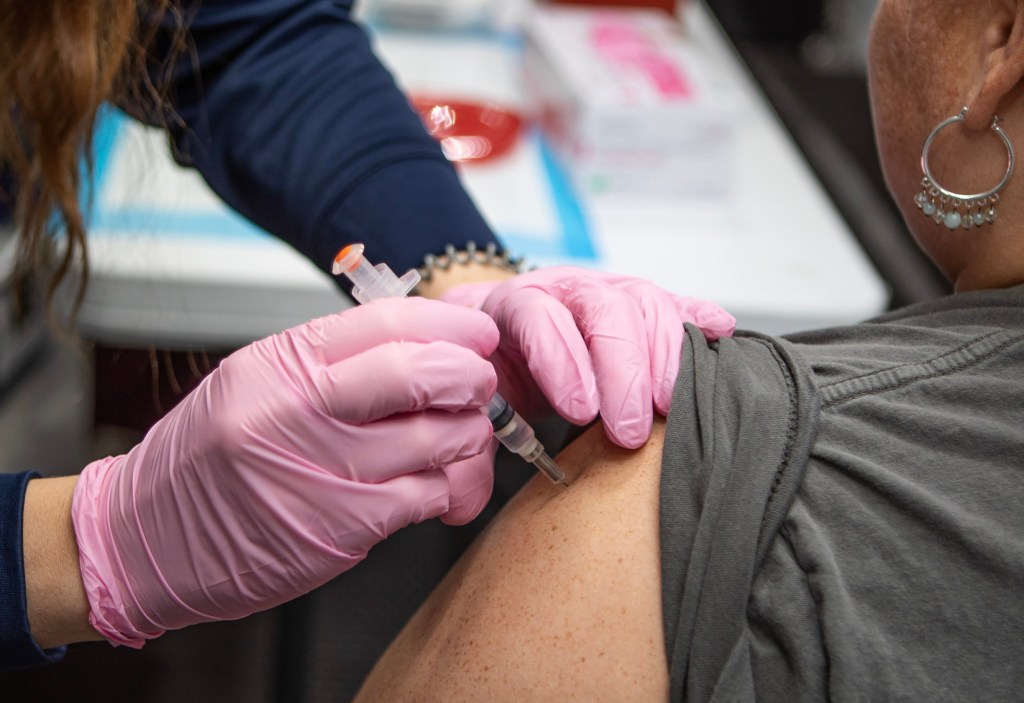
Each stressed that anyone who hasn’t received the flu vaccine yet still has time to do so. Even though it specifically cover the current predominant strain, they said, it still can make an impact.
“The flu shot isn’t a perfect match, but it does provide some protection for hospitalization,” Powell said.
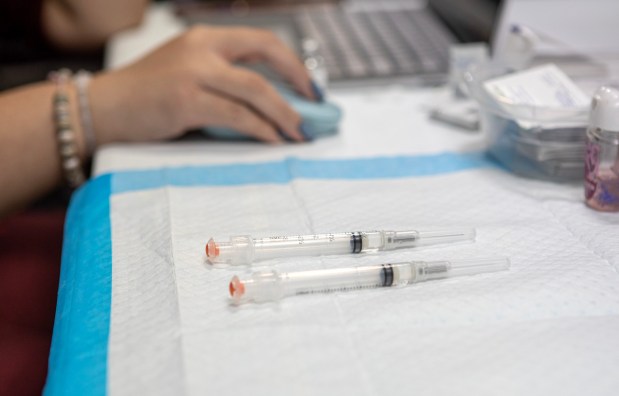 Berks health officials stressed that anyone who hasn’t gotten the flu vaccine yet still has time to do so. (Jane Therese/ Special to The Morning Call)
Dalal said the vaccine protects against other subtypes and can help prevent severe symptoms from flu B.
“Even if you do get this new subtype, it will diminish the worsening of symptoms and severe outcomes,” he said. “I would still recommend people getting the vaccine. It will take the edge off of the infection.”
Dalal warned that it takes about two weeks for the vaccine to fully take effect, which means people should plan ahead if they’re thinking about getting it.
 Dr. Rutul Dalal
“If you’re planning on meeting with family, going on vacation, getting on an airplane — especially if you’re high risk — you should plan to take it two weeks prior,” he said.
Along with getting vaccinated, Powell and Dala urged people to practice good hygiene, making sure to wash their hands, cover the mouths and noses when they sneeze or cough and practice social distancing if they’re sick.
“If you’re sick, stay home,” Powell said.
Powell also recommended using sanitizing wipes on items you frequently touch, like cellphones, keyboards, door knobs or grocery cart handles. She said the flu is spread through droplets that can hide on those types of things.
Powell and Dalal also suggested stocking up on flu tests so that people feeling under the weather can determine if they’re infected.
“They’re commercially available at grocery stores and drugstores,” Dalal said, adding that they should be purchased ahead of time so someone doesn’t have to go in public when they’re already sick.
To track statewide and regional data for the flu visit pa.gov/agencies/health. For national data visit the U.S. Centers for Disease Control and Prevention website at cdc.gov.