
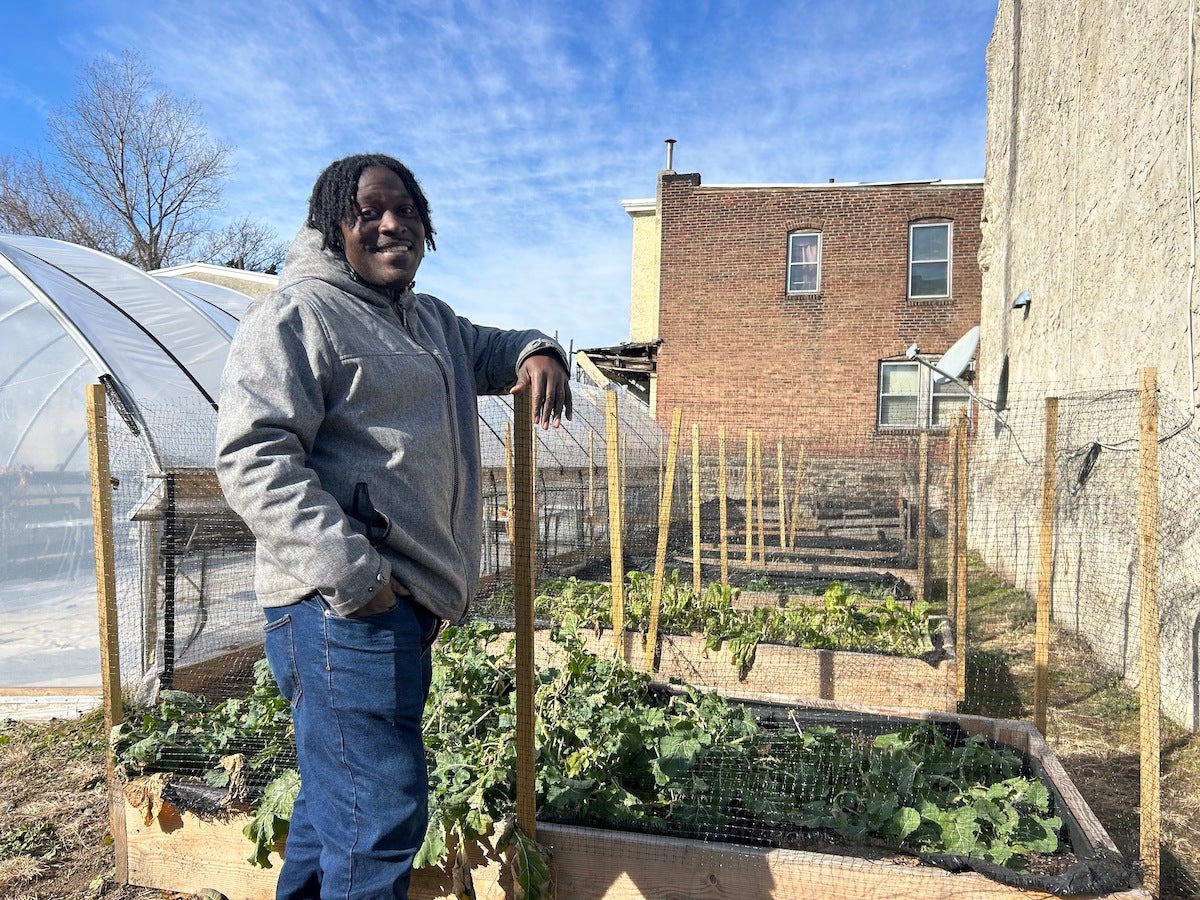
The organization also aims to teach nearby residents, especially kids, basic gardening and carpentry skills. Community events last year featured archery and botanical art. Haley leads workshops on how to build raised garden beds.
“Hopefully this will spark creativity or even spark a career for some of the younger ones that come through, just to see how cool it is to be able to build something and use it,” Patterson said.
Purchasing lots from the Land Bank
Until last year, the Original American Foundation did not own the vacant land it farms on. That’s the case for many community gardens in Philadelphia, which are considered at risk of being lost to development.
That started to change for the Original American Foundation last year. The nonprofit purchased six lots from the Philadelphia Land Bank last spring — five along S. Allison Street and one on Paschall Avenue, where the greenhouse now stands.
The land bank can transfer vacant lots to community gardens at discounted or nominal prices. But Patterson said the process was complicated and took years to complete.
In 2022, City Council passed a resolution approving the land bank to dispose of the properties Patterson had applied for. Almost two years later, he testified before a City Council committee that he was still waiting for the process to move forward.
“We got the resolution for [the lots], but it just stopped at the resolution,” he said. “We’re still confused as to what happens next.”
Land bank spokesperson Jamila Davis said it took over a year for the city-owned parcels to be transferred into the land bank after the project was approved, then the Original American Foundation required time to review the purchase agreement before signing it.
“The application itself was very, very complicated,” Patterson said. “I speak English, but I don’t speak legalese.”
The nonprofit turned to the Public Interest Law Center for help navigating the legal documents, Patterson said.
The Original American Foundation then found a title company familiar with the land bank’s process through another community garden, the César Andreu Iglesias Community Garden in the Norris Square neighborhood of North Philadelphia.
While the land itself cost just a few dollars, Patterson said paying the title company and closing costs totalled around $4,000. He said the organization used grants from William Penn Foundation and the city’s Community Resilience & Environmental Justice Fund.
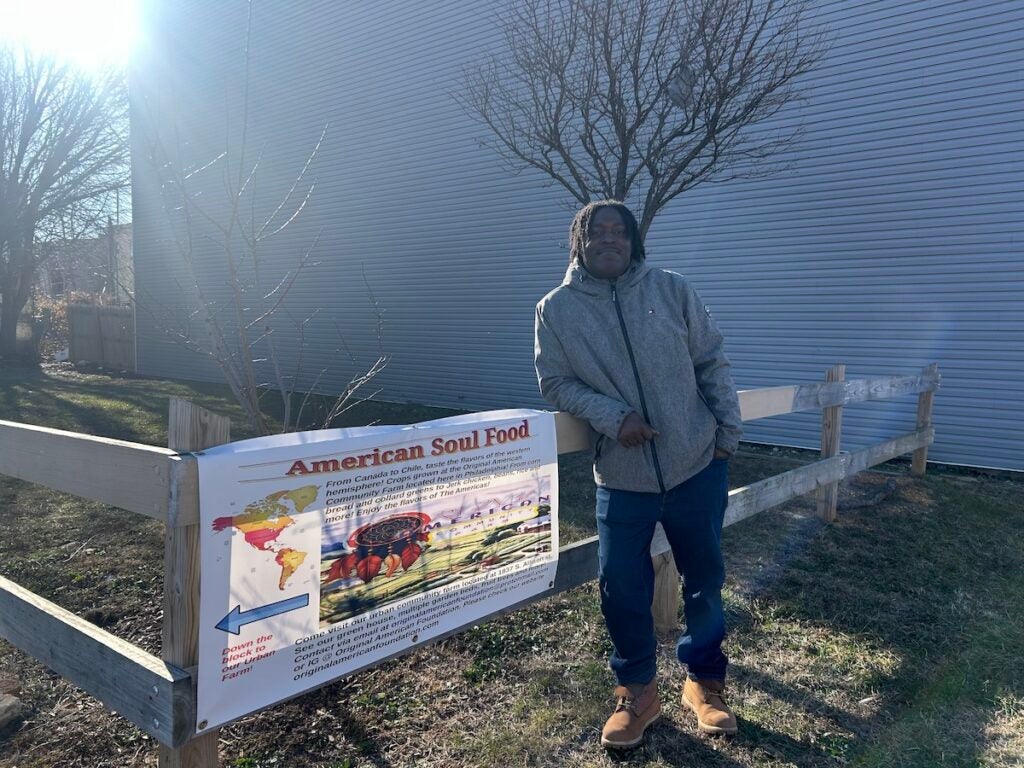 Original American Foundation co-founder Jovian Patterson stands next to a lot the nonprofit uses for events. (Sophia Schmidt/ WHYY)
Patterson’s advice for other organizations looking to replicate their success in purchasing land: Do your homework about the land bank’s processes on the front end, have several thousand dollars in a business bank account before starting the process and connect with other gardeners to exchange resources and information.
“Getting in the network of the gardeners and the farmers within Philadelphia, I would say, it’s almost a must,” Patterson said.