
CLEVELAND, Ohio – Plummeting temperatures over the past several days have caused Lake Erie to start freezing again, and quite rapidly at that.
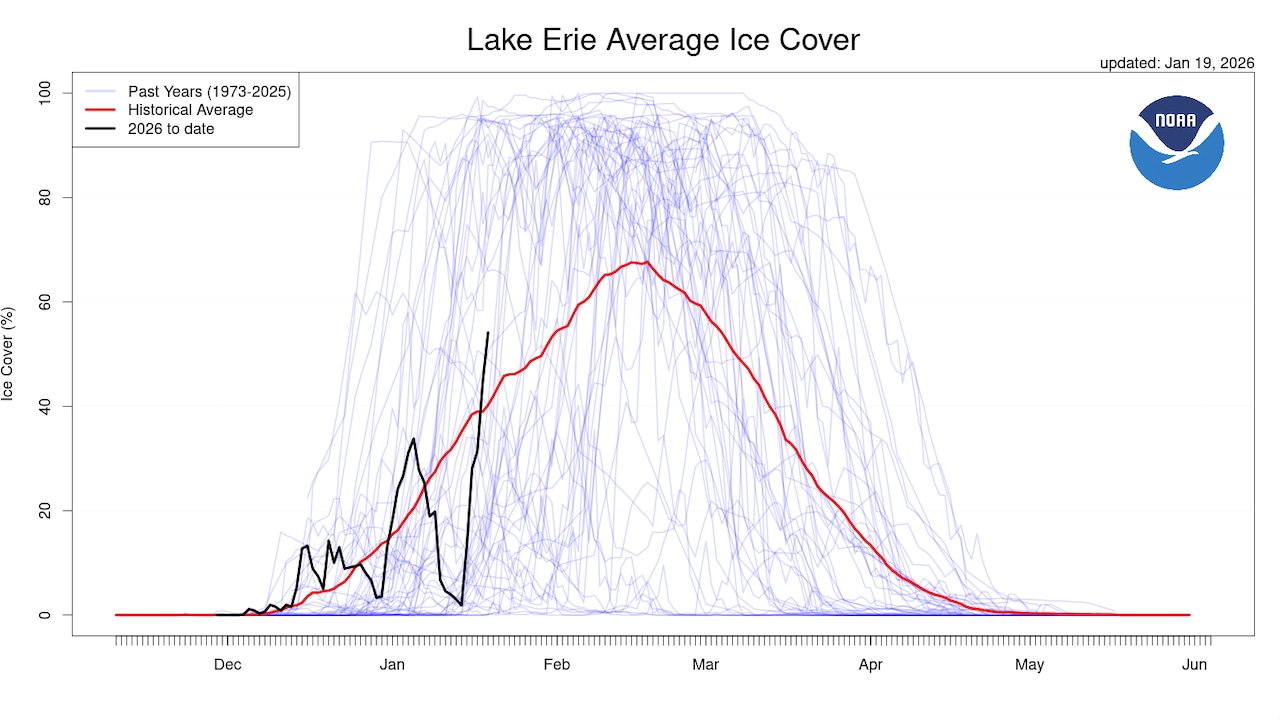
After previously peaking this season at nearly 34% coverage on Jan. 5, unseasonably warm temperatures – including a Jan. 9 high of 64 degrees – brought Lake Erie’s ice coverage back to below 2% on Jan. 14.
But with the arrival of extremely cold air from Canada, ice coverage has ramped up to 54% as of Monday and is expected to continue rising through the week.
Total coverage on Lake Erie by the end of the month should be in the range of 80% to 90%, said Jonathan Edwards-Opperman, ice analyst with the National Ice Center in Maryland.
The Western Basin, which is the shallowest section of the lake and loses heat the fastest, is pretty well iced over now, said James Kessler, an ice data analyst with the National Oceanic and Atmospheric Administration.
There are also high concentrations of ice along the coastlines, he said, while the middle of the Central Basin was only about 5% covered as of Monday.
The Eastern Basin toward Buffalo is the deepest part of the lake and was mostly open water as of Monday, Kessler said.
The next several days, however, will bring more freezing. There will be a brief break in the weather on Wednesday, when highs could reach the the mid-30s, “but beyond that things get really cold again,” said National Weather Service meteorologist Brian Mitchell.
Highs on Thursday will be in the upper 20s, then from 10 to 15 degrees on Friday and around 10 degrees on Saturday.
The National Ice Center’s most recent forecast shows the Western Basin, and the Lake Erie coastline along Ohio’s North Coast, to be 90-100% covered by Jan. 31, with an area near the center of the lake and a section off Canada in the Eastern Basin at 40-60% coverage.
The thickness of the ice in much of the Western Basin and along most of the coastline, with the exception of an area along the Canadian shore, should range from nearly 2 inches to almost 12 inches by the end of the month, said Angela Ottoson, analyst with the National Ice Center.
Kessler said it’s not unusual for the lake to freeze and thaw with big swings in the air temperature.
The other four of the Great Lakes have much less ice coverage, with Lake Huron the highest at nearly 24%. The average across all the lakes is not quite 18%.
Lake St. Clair, which is fed by the St. Clair River from the north and then empties into Lake Erie by way of the Detroit River, is more than 93% ice-covered.
The Soo Locks, which allow ore boats from Lake Superior reach steel mills in the lower Great Lakes, closed for shipping on Thursday.
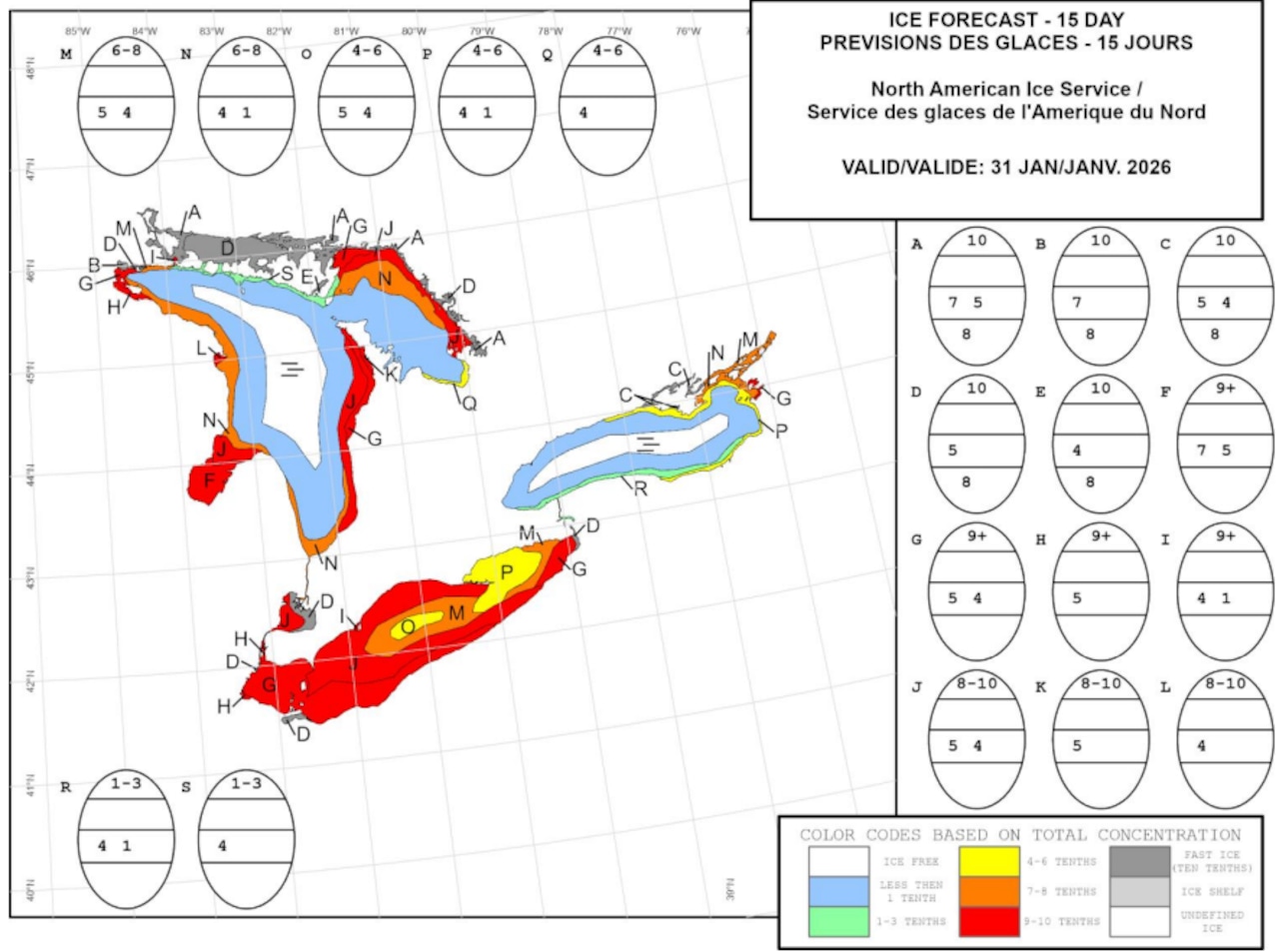 The ice foreast for Lake Erie on Jan. 31.National Ice Center