
SCRANTON — Employers’ strict standards for entry-level positions are among the toughest challenges recent college graduates face in obtaining a job.
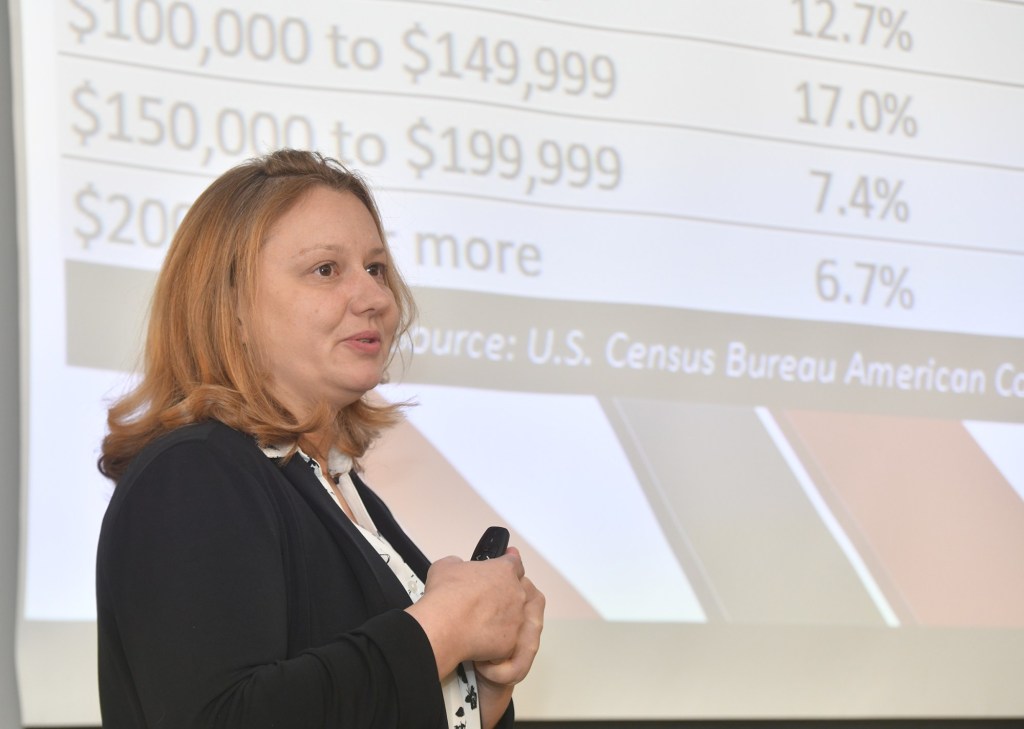
Kirsten Smith, director of career services for the Fortis Institute in Scranton and Forty Fort, addressed the issue during a State of the Workforce presentation Tuesday morning, hosted by the Greater Scranton Chamber of Commerce. Jill Avery-Stoss, president and CEO of the Institute, a regional data analysis, research and consulting organization, led the event.
Smith said despite efforts to prepare job seekers for in-demand careers, employers rule them out based on other factors.
“We get them certified, our CDL students come out with not only a license but they could potentially come out with different endorsements,” Smith said. “Our trade (students) come out of the HVAC program with the EPA Universal Certification, they come out with credentials, but the employers have these strict standards for entry-level (positions) that are causing us to face barriers to employment. We’re finding the jobs, they’re going to interviews, and then the requirements for the jobs are keeping them from getting hired. I’ll give them potential CDL candidates and even if the 20-year-old did exceptionally well in the program, they don’t get the job because they’re under 23, or because they don’t have the 500 hours that are required, so that precludes them.”
Smith added some students become discouraged and look elsewhere for employment.

President and CEO of The Institute Jill Avery-Stoss speaks at the Scranton Chamber of Commerce in Scranton Tuesday, January 20, 2026. (SEAN MCKEAG / STAFF PHOTOGRAPHER)

President and CEO of The Institute Jill Avery-Stoss speaks at the Scranton Chamber of Commerce in Scranton Tuesday, January 20, 2026. (SEAN MCKEAG / STAFF PHOTOGRAPHER)
Show Caption
1 of 2
President and CEO of The Institute Jill Avery-Stoss speaks at the Scranton Chamber of Commerce in Scranton Tuesday, January 20, 2026. (SEAN MCKEAG / STAFF PHOTOGRAPHER)
“The reality for us is just having such a hard time getting them into jobs, regionally, and then they’re leaving,” she said. “They’re going to Virginia, Delaware and other places.”
Bob Durkin, president and CEO of the Greater Scranton Chamber of Commerce, stressed the organization must continue to prepare job seekers for in-demand careers.
“Among the key elements we’re trying accomplish are talent retention, talent attraction and recognizing that within our schools, both K-12 and higher education, the jobs we have need certain skillsets and we need to be able to see where those job opportunities are,” he said.
An influx of new people into the region since the COVID-19 pandemic helped lessen the blow of workers retiring at a higher rate.
“We’ve seen some population growth, in Lackawanna County, since the pandemic and that growth is projected to continue over the next several years,” Avery-Stoss said. “It’s not necessarily due to natural population change, with births outnumbering deaths, it’s because people are moving here. That’s something we really need because our population is getting older. There are fewer people to fill jobs, so we need folks to come fill our positions and participate in all the different ways that help keep the economy vibrant.”
Avery-Stoss believes the area has shed the perception that there are not a lot of quality, high-paying jobs here.
“We’re seeing that change,” she said. “We have a ton of jobs, and they are not only low-level or high-level jobs; there is a lot of diversity and plenty of entry points for folks with all sorts of backgrounds.”
She added there is a growing need for workers in health care roles such as nurses, certified nursing assistants, licensed practical nurses, dental hygienists and personal care and home health aides.
“We’re looking at a deficit of about 20,000 registered nurses, and with our aging population, we have a relatively high population of people with disabilities compared to similarly sized regions,” she said.
The region also continues to grapple with barriers to employment that include child care, transportation and housing.
While it has improved, transportation presents a challenge for people attempting to get to work.
“Our biggest sectors are manufacturing, logistics and health care and those are not 9 to 5 positions, they are around the clock and bus routes aren’t really active in those times,” Avery-Stoss said.
She labeled housing as a “massive concern” for residents trying to find and keep jobs.
“The housing crisis is a national thing, but it’s also a little bit unique in our region,” she said. “It was an issue before the pandemic, but it’s been exacerbated since then somewhat due to the influx of population.”
The Scranton/Wilkes-Barre/Hazleton metro area experienced a 42% increase in the typical market rate for rent from 2019-2024, Avery-Stoss noted. Additionally, the typical home value increased by more than 70% in Lackawanna County and more than 90% in Luzerne County during the same time period, she said.
“Research indicates people who are not stably housed or face any kind of housing insecurity are much less likely to perform well academically and much less likely to maintain employment,” Avery-Stoss said.
Despite some of the challenges, Avery-Stoss believes the state of the workforce remains strong locally.
“I think it’s going to look a little bit different as different jobs come to the area,” she said. “There’s going to be a little more competition amongst employers, which could be good in terms of wage growth.”