
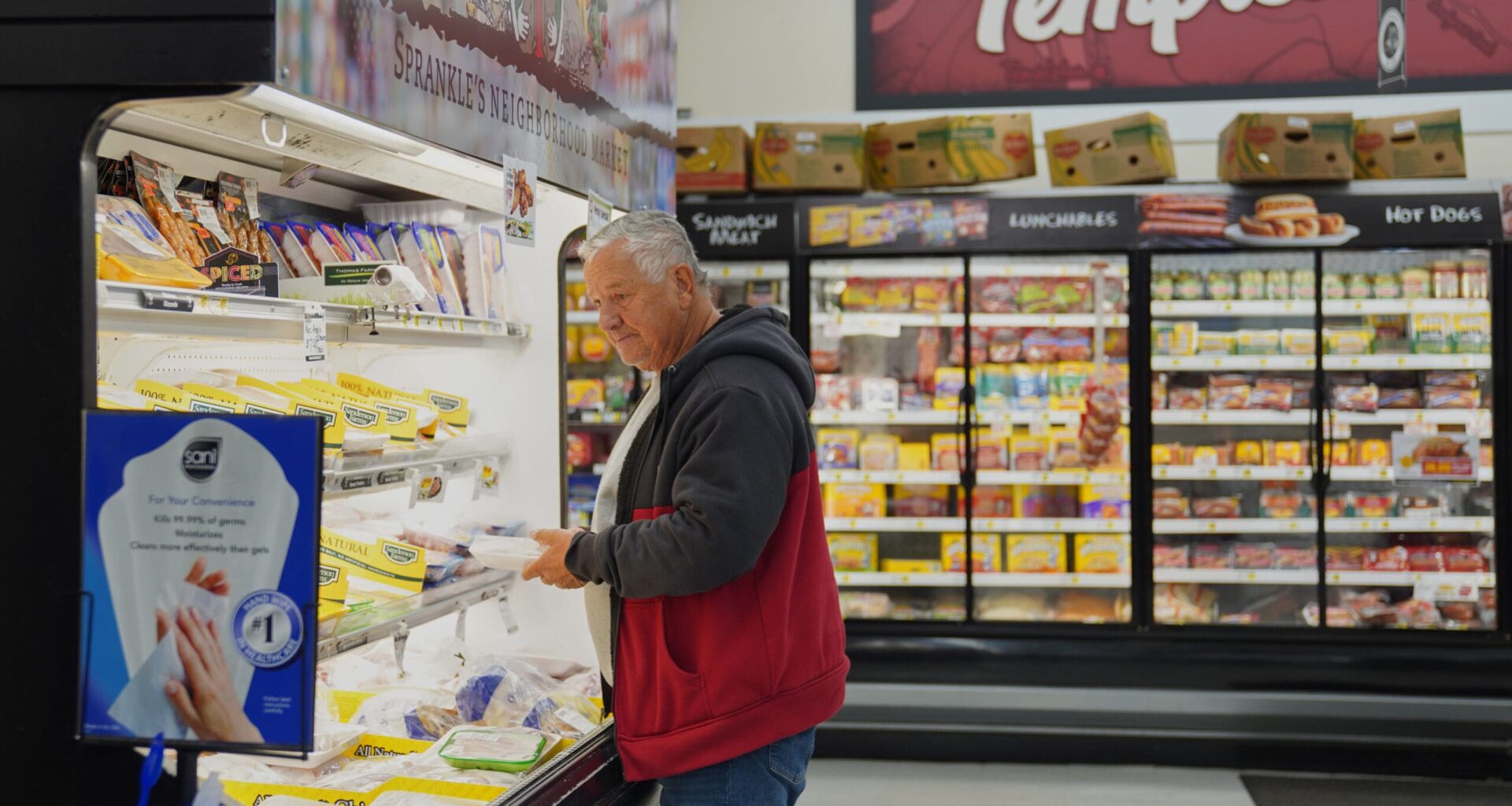
One year after President Donald Trump took office on Jan. 20, 2025, Pennsylvanians are seeing their living expenses rise, and they’re not happy about it.
Health care premiums are increasing, hundreds of thousands of people across the commonwealth are expected to lose health coverage, families are spending more money due to inflation and tariffs, and unemployment is up.
As prices rise, Pennsylvanians report being unhappy with the president and the direction of the country. A poll conducted earlier this month by the Harrisburg-based Bravo Group found that 57% of Pennsylvania voters disapprove of Trump and 56% say the country is headed in the wrong direction. Those numbers reflect voter sentiment nationwide, with nearly six in 10 Americans saying they disapprove of Trump, according to an AP-NORC poll from January.
“Pennsylvanians are not in a good mood regarding the economy, the direction of the nation as a whole,” Christopher Borick, a political science professor at Muhlenberg College in Allentown and the director of the college’s Institute of Public Opinion, told NPR in December.
“They don’t feel good about a lot of things,” Borick continued. “They don’t feel good about electricity prices. They don’t feel good about housing prices in the area. They certainly don’t feel good about health care.”
Rising health care costs and loss of coverage
Over the summer, congressional Republicans slashed about $1 trillion from Medicaid in their One Big Beautiful Bill Act, and they failed to extend now-expired tax credits that helped Americans purchase health insurance through Affordable Care Act marketplaces. State officials reported in July that about 300,000 Pennsylvanians could lose Medicaid coverage, and nearly half a million people in the state are expected to see their health insurance premiums rise in 2026. KFF, a nonpartisan group that analyzes health policy, reported that the One Big Beautiful Bill Act could cause about 450,000 Pennsylvanians to lose health coverage due to Medicaid cuts and the loss of the ACA tax credits.
Lynn Weidner, an Allentown resident who works 80 hours a week as a caregiver and receive health insurance through the Affordable Care Act marketplace because her job does not offer health insurance, told the Pennsylvania Independent in December that she doesn’t know if she’ll be able to afford her health coverage without the tax credit. Her plan was expected to skyrocket from $400 a month last year to $700 in January.
In order to pay for her rising health coverage costs, Weidner said she has to cut back on groceries and drive less because of gas prices.
“I stopped buying beef because it’s too expensive, which isn’t great because I’m anemic, but I do what I gotta do, right?” Weidner said. “It’s not easy, definitely not easy.”
It’s not just individuals who are facing a loss of health coverage due to Republican cuts to Medicaid. More than 330 rural hospitals, 100 urban hospitals, 570 nursing homes, and nearly 200 Planned Parenthood health centers across the country could close because of the decreased Medicaid funding, according to a new report from Protect Our Care, a progressive health care advocacy group. Thirteen hospitals, 26 maternity wards, and 150 clinics have announced their closure since Trump signed the One Big Beautiful Bill into law on July 4.
In the commonwealth, Planned Parenthood of Western Pennsylvania has had to close three of its four clinics. Twenty-five rural hospitals in Pennsylvania could also shutter due to the Medicaid cuts, according to Gov. Josh Shapiro’s administration.
“After one year of deliberate attacks on American health care, Trump and Republicans have made it abundantly clear where their priorities lie: enriching billionaires and corporations while leaving millions of families without the care they need,” Protect Our Care Chair Leslie Dach said in a prepared statement. “They have stripped away coverage and driven premiums through the roof, all while pretending they are lowering costs. This is a calculated agenda that forces families to choose between losing coverage or risking bankruptcy from medical debt.”
Inflation, tariffs and unemployment
In addition to rising health care costs, Pennsylvanians are spending more due to inflation and tariffs.
Pennsylvanian families spent about $733 more from February through September 2025 due to inflation under the Trump administration, according to a November report from Democratic members of the congressional Joint Economic Committee.
“Families are now paying higher prices despite Trump’s claims last year that ‘inflation will be in FULL RETREAT’ by August 2025 and that he would ‘bring the cost of everything way down,’” the Democratic committee members wrote in their report.
According to an analysis from the Democratic National Committee, Pennsylvania families are slated to lose $1,060 annually due to financial fallout from the One Big Beautiful Bill Act and Trump’s tariffs. Democratic members of the Joint Economic Committee reported in December that the average American family has paid about $1,200 in tariff costs since the beginning of Trump’s second term.
These increased costs come as unemployment is on the rise in Pennsylvania.
In December, the Pennsylvania Department of Labor and Industry reported that Pennsylvania’s unemployment rate was at 4.1% in September, four-tenths of a percentage point above the September 2024 level of 3.7%. The U.S. rate was up three-tenths of a point from last September.
“The numbers don’t lie: Trump’s first year back in office has been a complete disaster for Pennsylvania families,” Tim Hogan, the DNC senior advisor for messaging, mobilization and strategy, said in a statement sent to the Pennsylvania Independent.
“Trump broke his promise to lower costs on Day One and instead has made life far more expensive for Pennsylvania families.”