
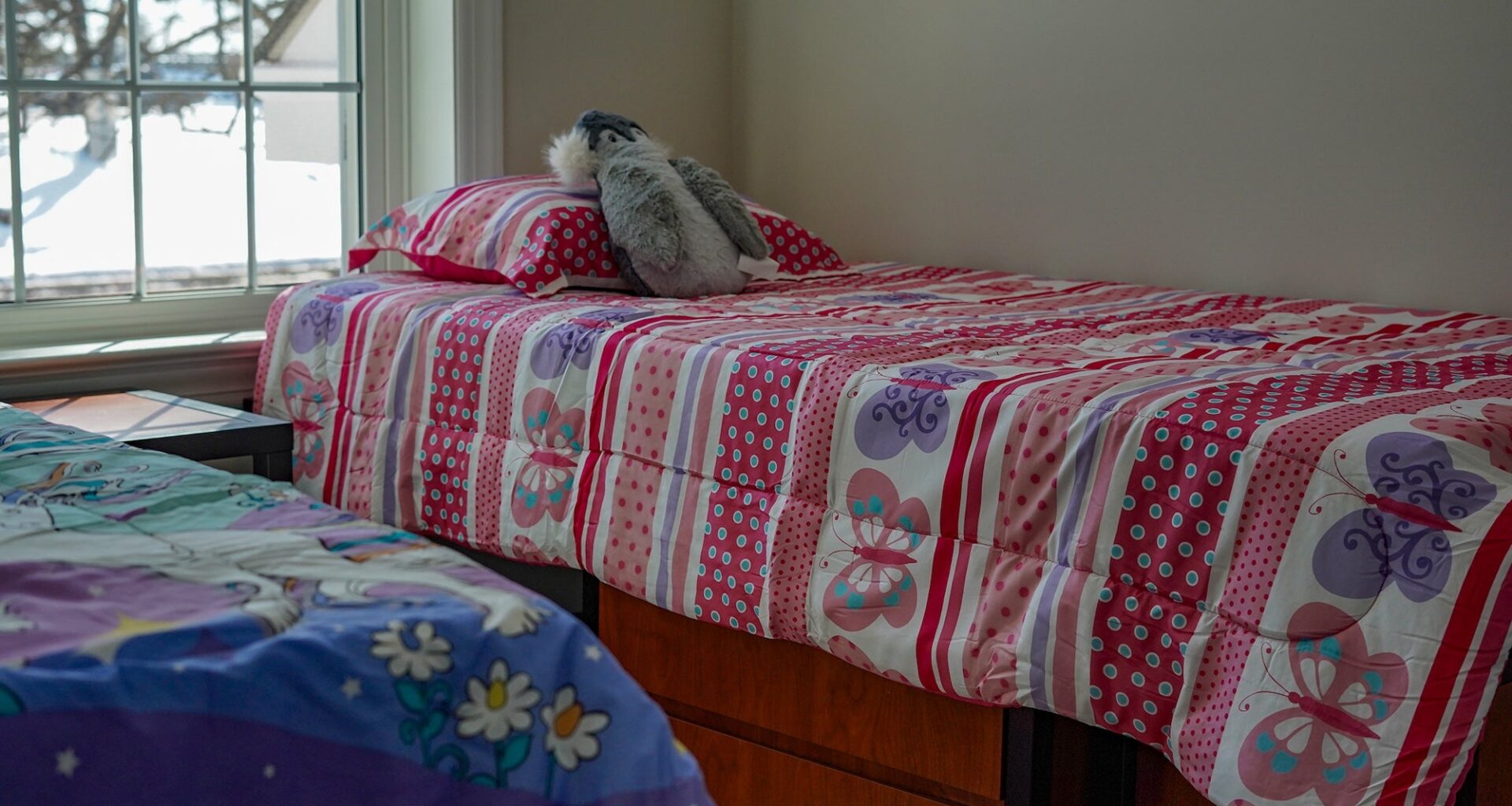
“It is our intent that this facility will alleviate any street homelessness for families,” said Dolores Colligan, director of the county Department of Community Development. “We should not have any family in Chester County sleeping outside in a car or in a place not met for human habitation. So, we’re very proud of this.”
Anyone experiencing homelessness in the county enters the coordinated entry system — the Human Needs Network of Chester County. Accessing that point is as simple as dialing 211.
Resource navigators engage callers with a set of questions to figure out where to place them. Chester County tries to connect each person with a matching set of resources, using a “person-centered approach,” Colligan said. However, there is a long line to get into permanent supportive housing.
“We might have 70 people on that list at any given time that needs to get into a shelter,” Commissioner Eric Roe said.
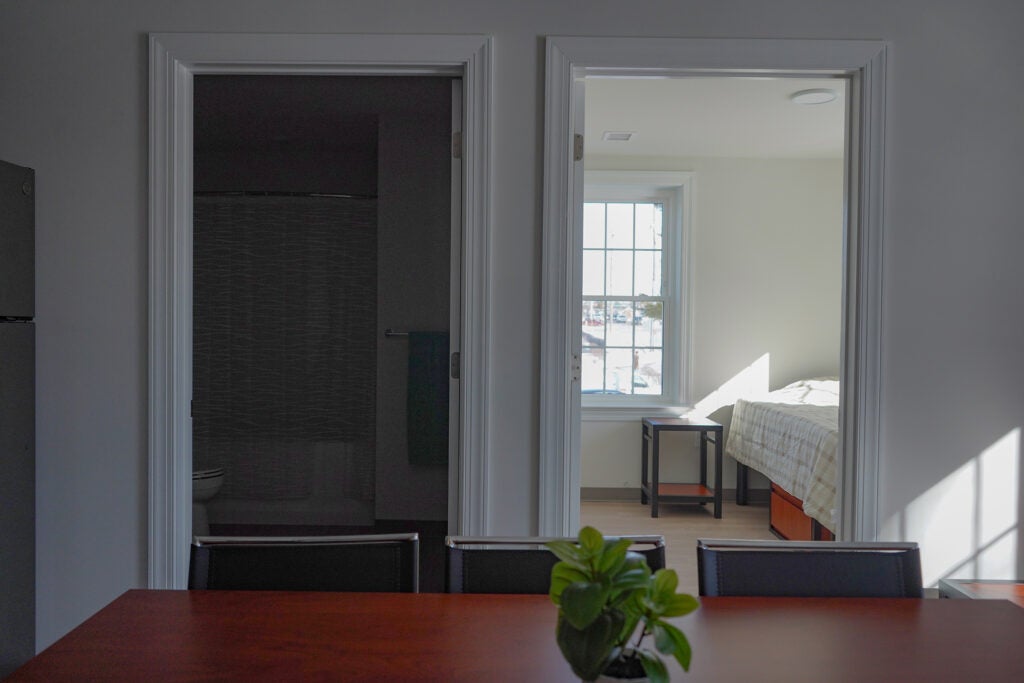 The new family shelter at 825 Paoli Pike, West Chester consists of 10 multi-bedroom, fully-furnished apartment units. (Kenny Cooper/WHYY)
Colligan told WHYY News that there is not enough affordable housing anywhere in the country, let alone Chester County. Changes at the federal level could put an additional squeeze on capacity.
The U.S. Department of Housing and Urban Development allocates $2.4 million in Continuum of Care program funding annually to Chester County, according to Colligan. The county spends about $1.8 million of those dollars on permanent supportive housing assistance for roughly 75 households.
Under the Trump administration, HUD has proposed capping the amount counties can spend on permanent housing solutions at 30% — which, if implemented, would severely hamper Chester County’s ability to provide assistance.
“If that funding were cut at 1.8 that goes into [permanent supportive housing] would come down to like $650,000,” Colligan said. “So, a significant loss of funding just for permanent housing and then you got to figure that could mean up towards 40 of those families losing housing that they have been in for many, many, many, many years.”
For now, HUD has shelved those proposed changes to its guidelines.