
The amount of ice cover has just recently started to really grow on the Great Lakes. Most of the lakes still have less ice than normal for this date. Also, look at Lake Erie’s ice chart. It’s a straight line upward.
Here is the easiest map to see the amount of ice cover. Right now the overall ice percentage on all of the Great Lakes is measured at 22.5 percent.
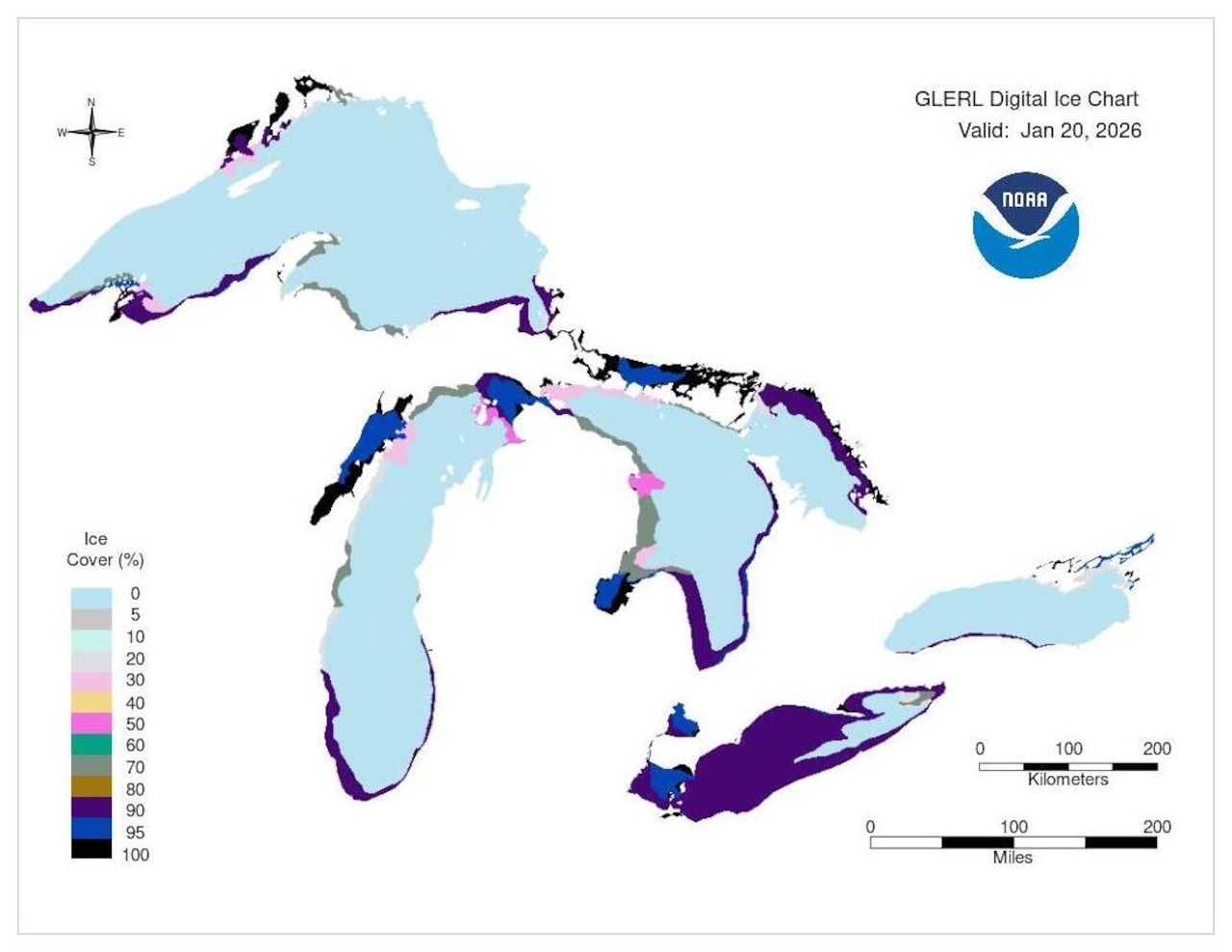 Map showing just the areas of ice on the Great Lakes.NOAA
The overall Great Lakes’ ice amount has grown from 10 percent to 22.5 percent in the past week of cold weather.
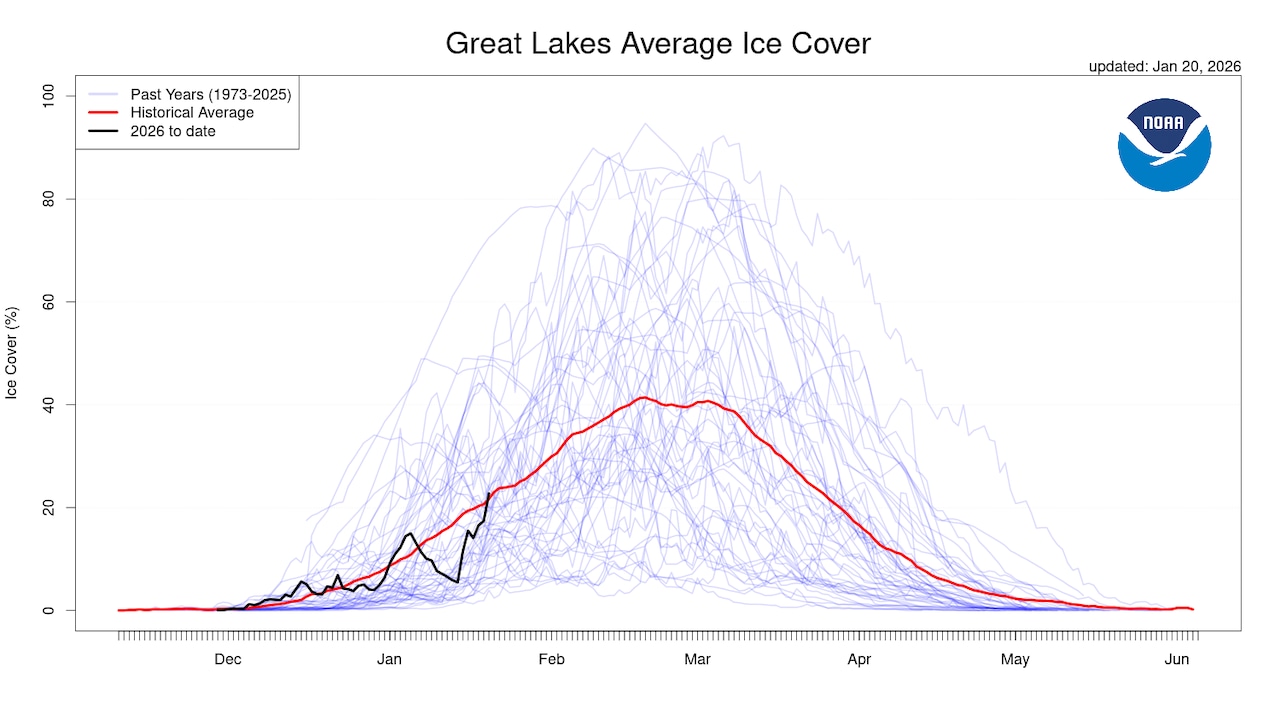 Total Great Lake’s current ice cover (Black) versus long term average(red) and other years (faint lines)NOAA
Look at Lake Erie’s ice chart. Today Lake Erie is 85 percent covered with ice. That is up from just one percent ice cover just eight days ago.
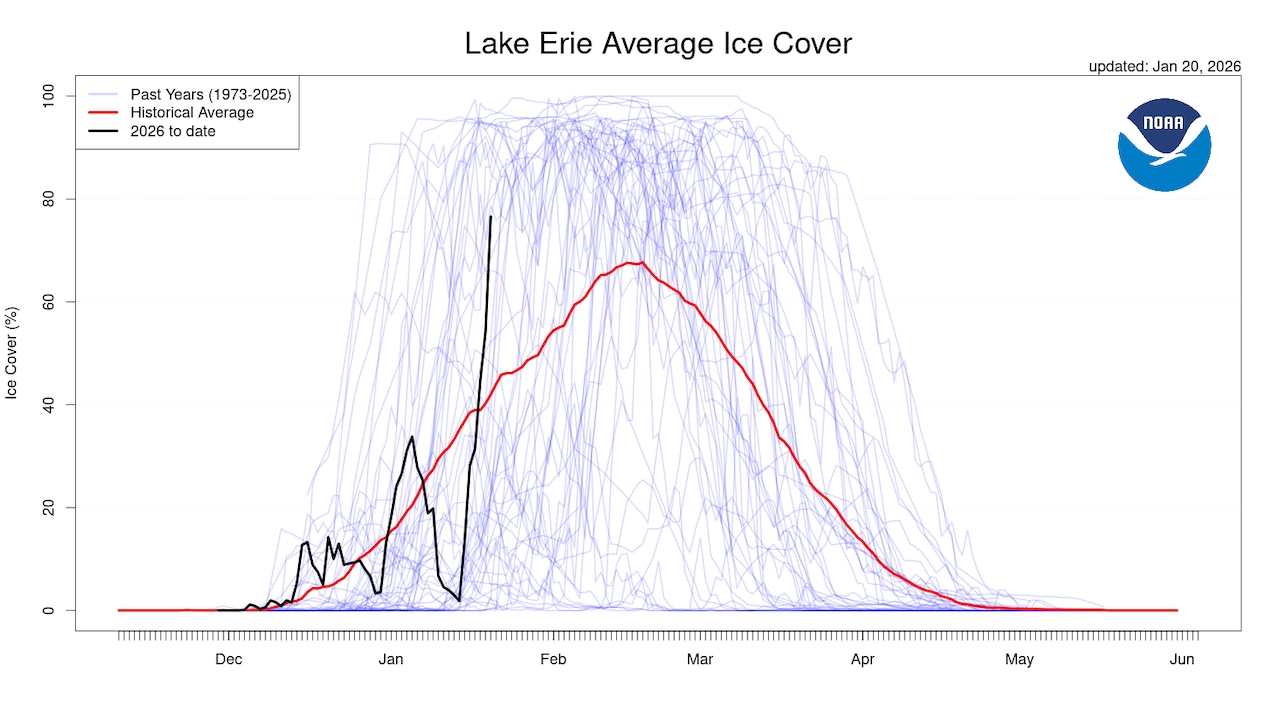 Lake Erie’s current ice cover (Black) versus long term average(red) and other years (faint lines)NOAA
All of the Great Lakes now have quickly growing ice cover. Lake Huron has just reached its historical average amount of ice for January 20.
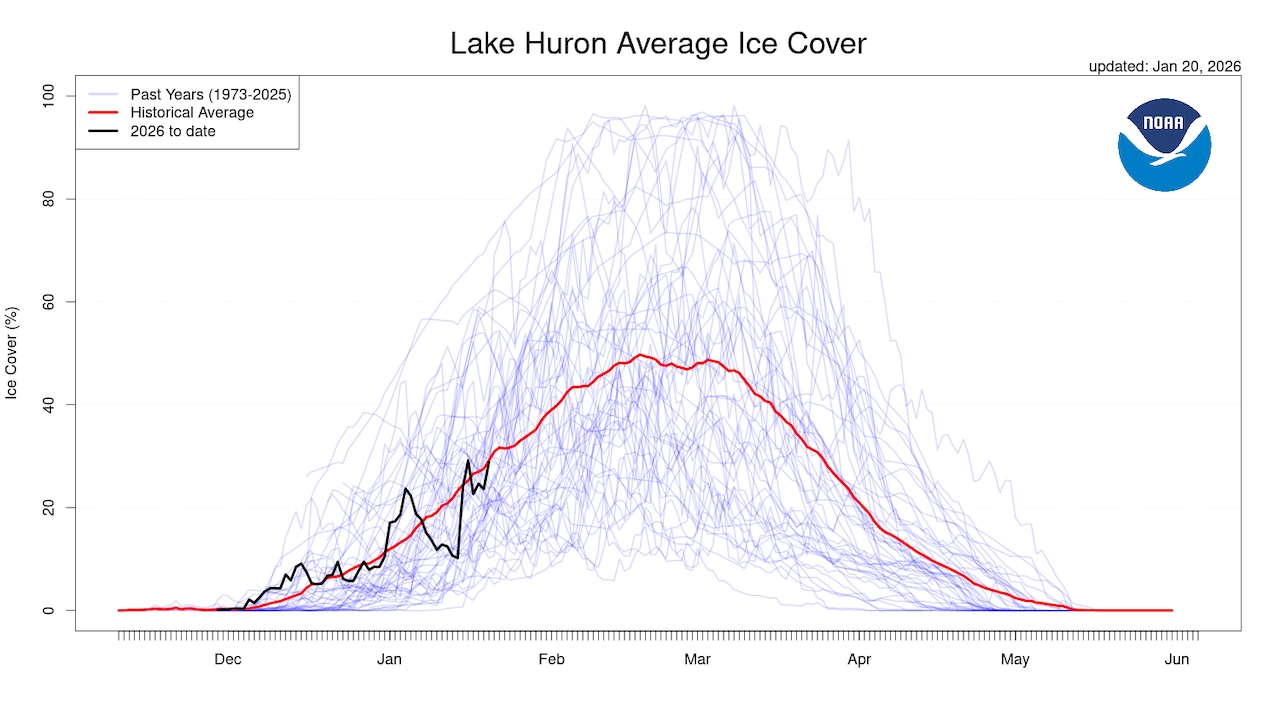 Lake Huron’s current ice cover (Black) versus long term average(red) and other years (faint lines)NOAA
Lake Michigan’s ice cover graph shows the trajectory and the coming cold will take it on an above-normal amount of ice in the next week.
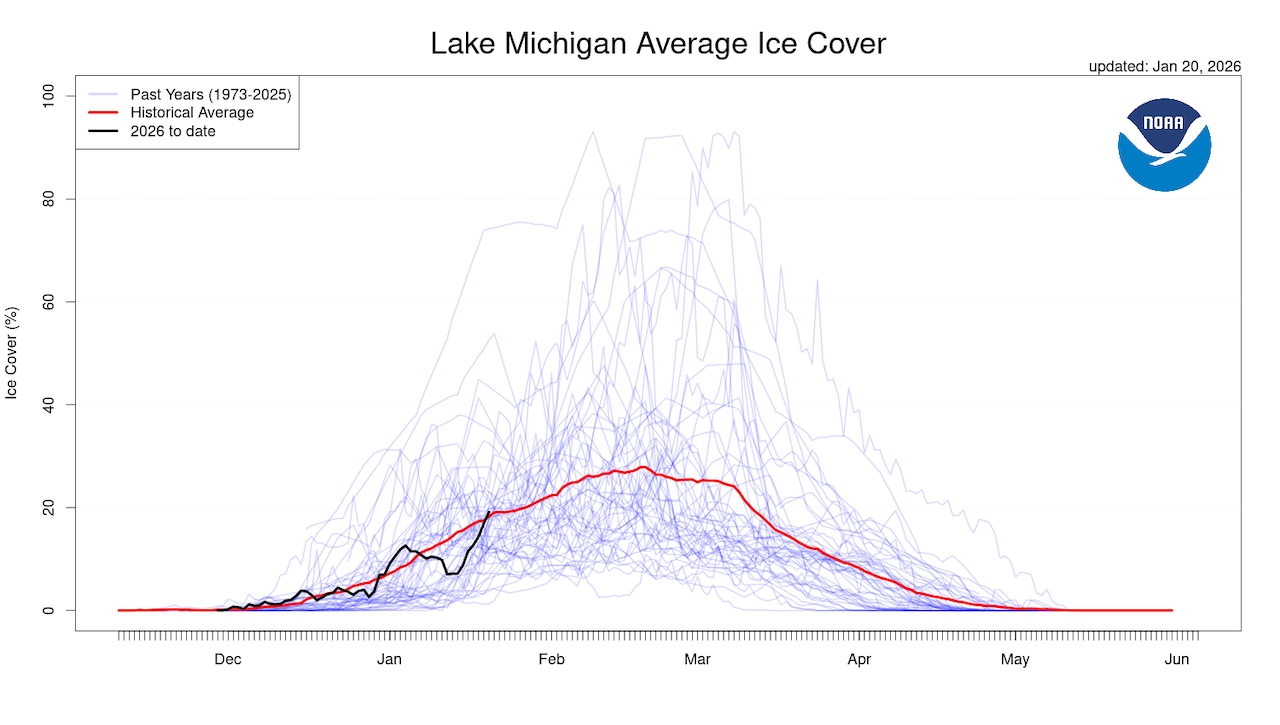 Lake Michigan’s current ice cover (Black) versus long term average(red) and other years (faint lines)NOAA
Lake Ontario usually has the least amount of ice, and that’s the case right now with only six percent ice cover.
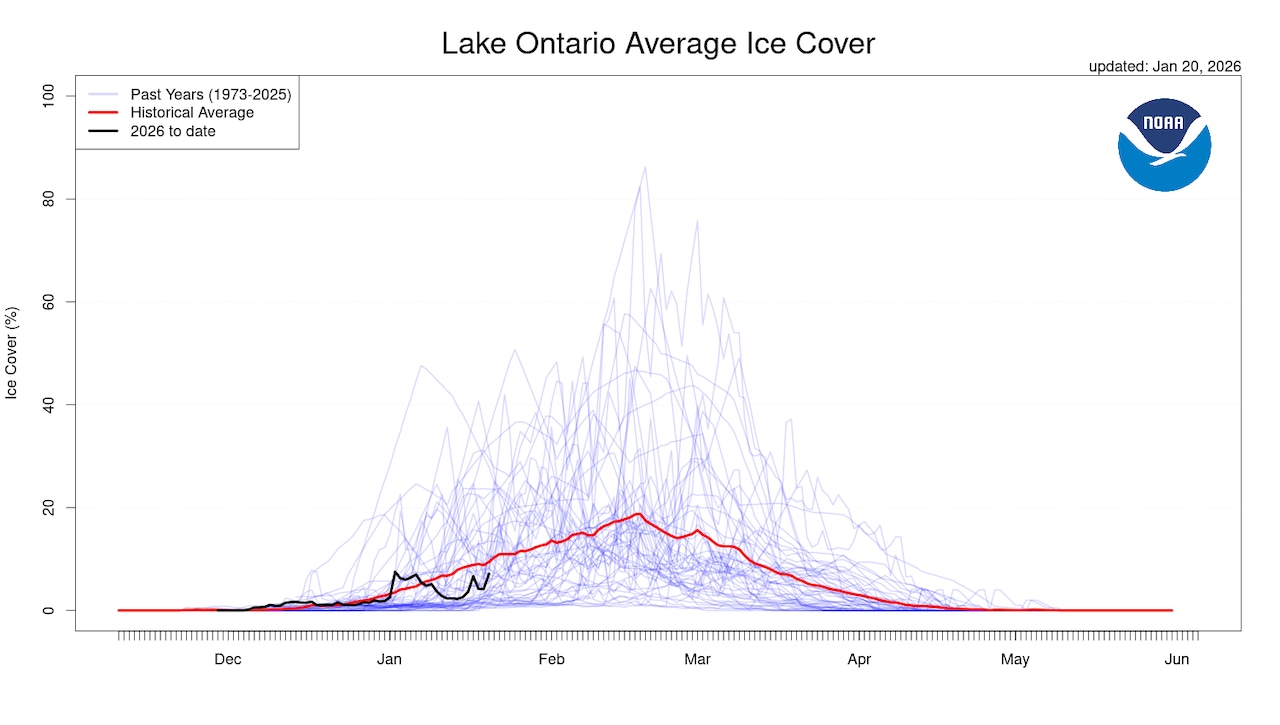 Lake Ontario’s current ice cover (Black) versus long term average(red) and other years (faint lines)NOAA
So far this winter, Lake Superior doesn’t have a whole lot of ice. That will change over the next week.
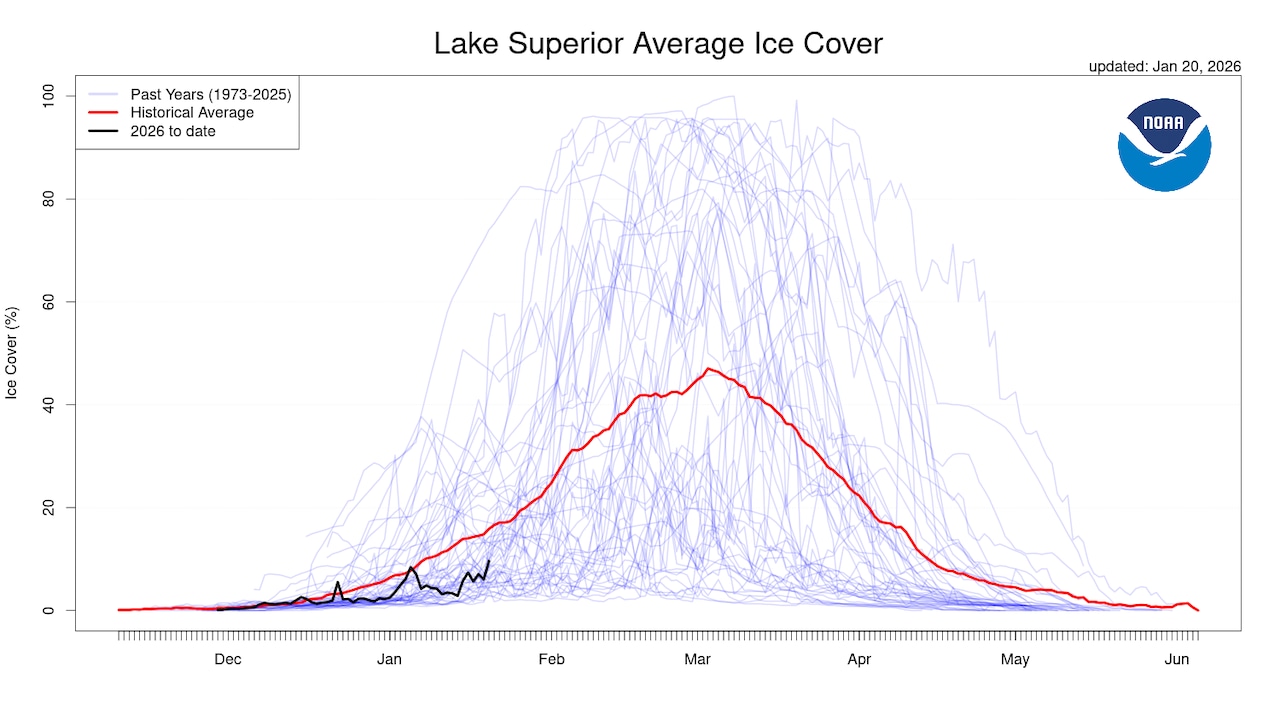 Lake Superior’s current ice cover (Black) versus long term average(red) and other years (faint lines)NOAA
We are just seeing the ice rapidly expanding on the Great Lakes. The Arctic air for the next week to 10 days will cause a big growth in ice. Lake Erie may even be frozen over by the end of next week.
Stay updated with Michigan’s weather and the Great Lakes ice growth at MLive.com/weather.