
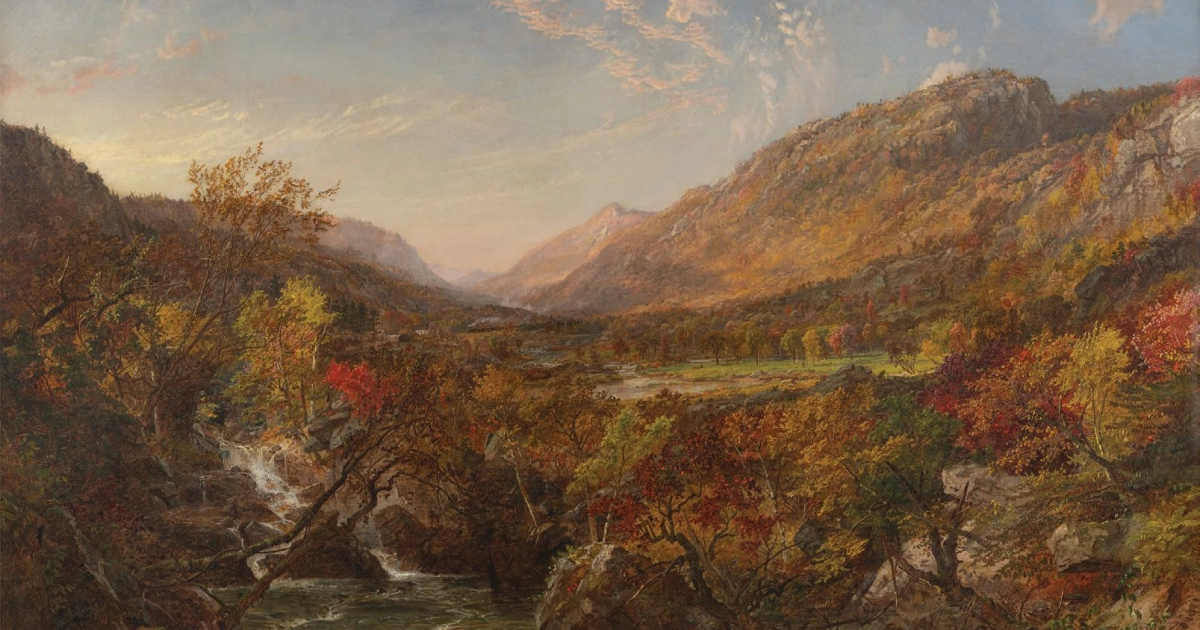
Tucked away in a private British collection, “Autumn in the Ramapo Valley, Erie Railway” was hidden from the public eye since its 1873 debut. The nearly seven-foot-long painting wows with autumnal hues and a train passing in the distance. Commissioned by an Irish-American railroad magnate, Jasper Francis Cropsey’s treasured work is on view through May 31. The exhibition Cropsey, Wyeth, and the American Landscape Tradition features pieces by many acclaimed artists, exploring the 19th-century landscape painting boom and its relationship to industrialization. Here, Wyeth Foundation curator William L. Coleman dives deeper into the exhibit.
Why is Cropsey’s piece so celebrated? For art lovers, it’s a spectacular statement of the ambition and complexity of American landscape painting. For art historians, it’s a missing link in the tale of art’s entanglement with industry in general and the railroad business in particular.
How does the exhibit examine the boom in landscape painting? Between roughly 1825 and 1875, talented artists in a young, ambitious country found support from the tycoons of new industries. They competed with their peers in commissioning paintings of monumental scale that demonstrated their taste and often depicted the lands and industries that were the sources of their wealth.