
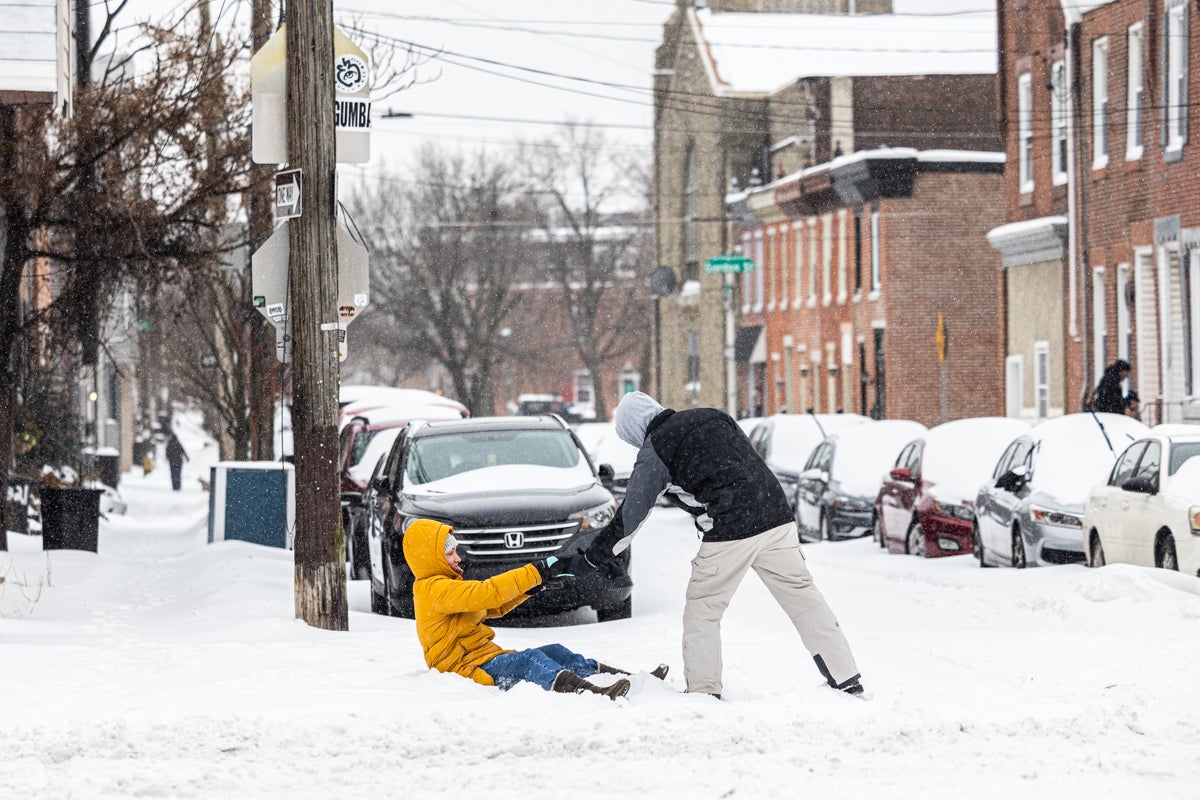
In fact, it may seem like a paradox, but Barlow said that scientists think the biggest winter storms — like the one that hit a large swath of the U.S. this past weekend — are becoming more intense due to climate change.
A warmer atmosphere can hold more water, so that increases precipitation overall, Barlow said.
When conditions are right, snow is still possible. And in some cases, climate change can even drive heavier snowfall.
“There’s more water coming down,” he said. “If we also manage to get some old-fashioned cold, then you have the potential for more snow.”
“The upper limit on snow is higher, because you’ve increased the water side of it,” he added. “But you’re decreasing the temperature side, so getting that upper limit is harder.”
Barlow said scientists are trying to figure out whether climate change could also turbocharge the biggest winter storms indirectly by disrupting the circulation in the stratosphere.
“Sort of helping them stay cold — colder than they would otherwise be in a warming environment,” he said.
The combination of rare but intense winter weather events could mean communities are less prepared, Barlow said.
“In terms of … how familiar people are with these events and how much cities have reasonably budgeted for snowplows and snow removal and ice and all that, it hits differently,” he said. “If you’re unfamiliar with them, they hit harder.”