
The pending eviction of Homeland Security Investigations from its Lehigh County office has alarmed Bloom for Women, a nonprofit agency that provides essential services to survivors of human trafficking and other forms of exploitation.
HSI, part of the Department of Homeland Security, works with local law enforcement agencies and has had notable success against traffickers, according to Lehigh County District Attorney Gavin Holihan.
HSI, however, is an arm of Immigration and Customs Enforcement — the agency responsible for mass deportation operations that have led to the shooting deaths of two protestors at the hands of ICE agents in Minnesota and chaos in other cities.
Lehigh County Executive Josh Siegel on Jan. 20 ordered HSI evicted from its county-owned office, citing a three-year history of unpaid rent but also the effect its presence has on public perception.
ICE has a “national reputation for recklessness, chaos and public disorder,” Siegel said when he announced the eviction, shortly after Controller Mark Pinsley disclosed that HSI owes the county more than $115,000 in back rent.
Siegel gave HSI 30 days to vacate. It is unclear whether the agency plans to find another office. ICE has not responded to repeated requests for comment.
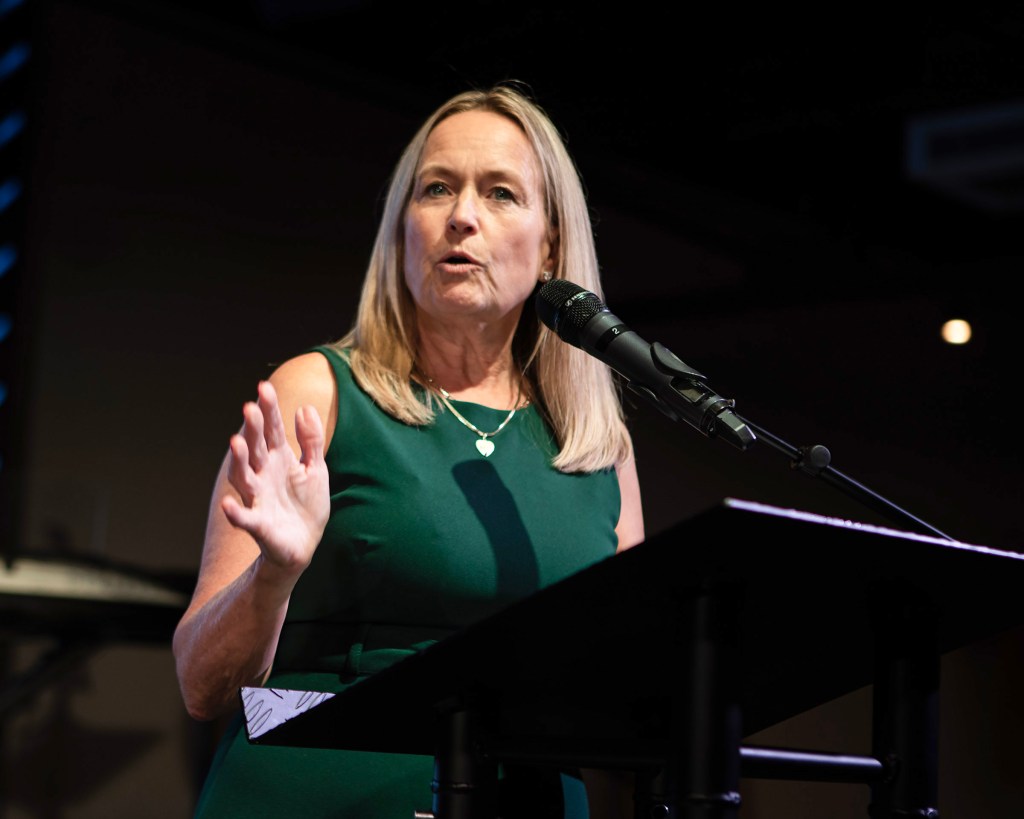
Bloom CEO Carol Andersen said in an email that losing HSI would be a blow to her organization and lamented that the agency seems to be falling victim to a political dispute. Among its other roles, HSI is the lead agency in the Lehigh County Anti-Human Trafficking Task Force.
“Survivors do not care about party lines,” Andersen said.
“Removing the HSI team from the region weakens the entire ecosystem of response,” she said, noting that the Lehigh Valley “geographically and economically” has become a hub of trafficking activity.
In saying so, she echoed the concerns of Holihan, who said after Siegel’s announcement that disrupting HSI’s work would only harm community safety.
Indeed, Holihan is so supportive of HSI that he offered to pay its back rent out of his office’s drug forfeiture fund — money seized from drug operations that can be used for any crime-fighting purpose Holihan sees fit.
Broadly, the issue comes down to the perception that HSI agents are no different than the masked, body-armored enforcement officers operating in Minnesota and elsewhere.
Normally, their roles are quite different, though the Department of Homeland Security in its efforts to ramp up deportations has enlisted HSI agents in those operations.
It is unclear if any local HSI agents have made deportation arrests. Even so, Siegel said the agency is an arm of ICE and will be perceived so by a community made fearful by the images of armed agents breaking down doors, smashing car windows and wrestling people into custody.
That this perception is a problem is not just Siegel’s opinion. In a 2021 report, HSI agents said their affiliation with ICE “significantly impedes investigations and HSI’s ability to fulfill its mission.”
The internal report identified scores of instances where it hurt relations with community groups and efforts to build trust with crime victims.
“The report is one of the most detailed accounts of the extent to which the ICE acronym has become a scarlet letter for the agents tasked with targeting terrorists, former Nazis, human traffickers, drug smugglers and purveyors of stolen antiquities,” The Washington Post reported.
“I have to return to the facts that are driving this decision, and reiterate this was done to preserve the trust, credibility and legitimacy of Lehigh County with our residents, particularly our most vulnerable,” Siegel said in an email.
“I can’t dispute that they’ve certainly aided local investigations in the past, but I would ask any resident that values public safety and community trust to look at the reality of the current situation.”
Siegel said many human trafficking victims are immigrants, and the fear around immigration raids “significantly reduce(s) the willingness of victims, especially Latinos, to report crimes.”
“I believe that HSI’s local work is a casualty and unfortunately has been undermined by a broader public reputation,” Siegel said. “A formal relationship with DHS is more of a liability now as it will drive victims away from us and undermine the individual legitimacy of the work we do from social services to law enforcement.”
Andersen, however, says the issue must transcend politics. Local HSI agents have earned the trust of Bloom, its service providers and survivors themselves.
Indeed, the agent in charge of the Lehigh County office, Brent Morral, was invited to be the keynote speaker at Bloom’s annual fundraising dinner in September. A month later, he recorded a YouTube video with Andersen to discuss the agency’s activities.
“Disrupting [the HSI] presence disrupts trust, coordination and momentum,” Andersen said. “When investigators are embedded in the region, cases move faster. Victims are identified sooner. Exploitation is interrupted earlier. That is not theoretical. We have seen it in real lives changed and real harm prevented.”
Siegel said he isn’t dismissing the possibility of ever partnering with HSI, but that won’t happen soon.
“I believe under a different president with a different strategy and more human immigration enforcement we should,” he said. “HSI should be separated from ICE and operate independently and restored to its original focus.”