
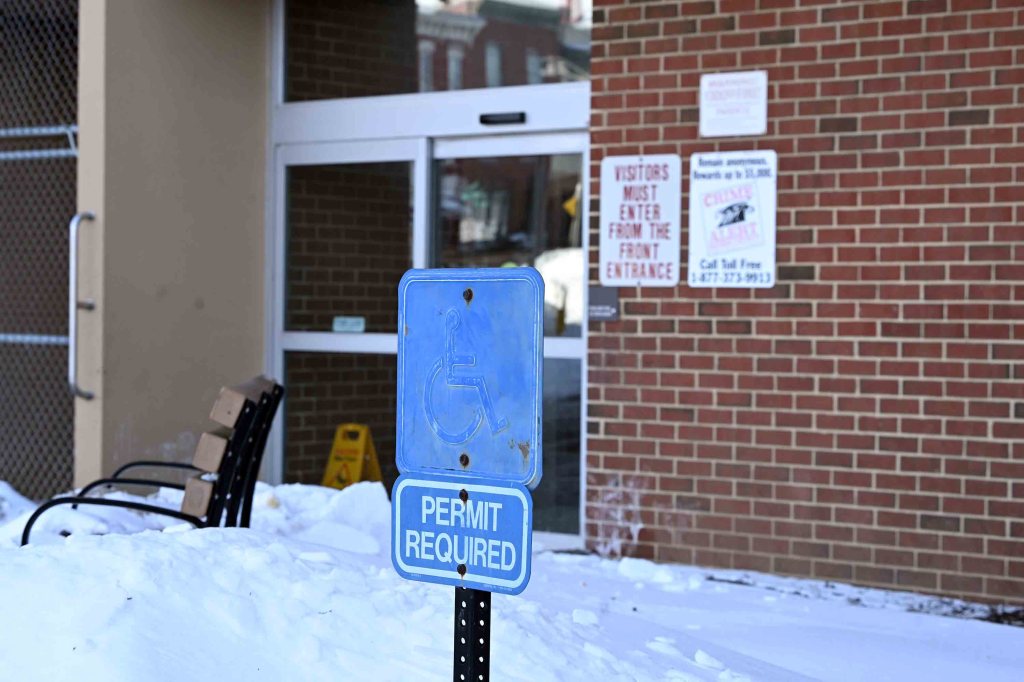
The Commonwealth Court of Pennsylvania has upheld a final order from the Pennsylvania Human Relations Commission finding that the Reading Housing Authority violated state law by denying a reasonable accommodation to a tenant with a disability who requested accessible parking.
In a decision in Reading Housing Authority v. Pennsylvania Human Relations Commission, the court agreed with the commission’s determination that the authority failed to make necessary and reasonable accommodations and that the prolonged denial of accessible parking caused the complainant embarrassment, humiliation and emotional distress.
The court also rejected the authority’s statute of limitations and damages arguments, concluding the discrimination was a continuing violation and that a $20,000 compensatory damages award was supported by substantial evidence.
Commission Chairperson Joel Bolstein said the ruling reinforces that disability accommodations are a matter of civil rights.
“The Commonwealth Court’s decision powerfully affirms that reasonable accommodations for people with disabilities are not optional, nor are they favors. They are enforceable civil rights,” Bolstein said. “This ruling reinforces the commission’s authority to ensure that housing providers comply with the law and that individuals with disabilities are afforded full and equal access to their homes and communities.”
Commission Executive Director Chad Dion Lassiter echoed that message, emphasizing the broader implications of the case.
“Accessible parking is a matter of dignity, safety and equal opportunity,” Lassiter said. “The affirmation of this order sends a clear message across the commonwealth: When the rights of people with disabilities are violated, the Pennsylvania Human Relations Commission will act, and the courts will uphold justice.”
A public hearing in the case was held in Berks County on Nov. 3, 2023. The complainant was represented by Commission Assistant Chief Counsel Dana Prince. The parties agreed to have a single commissioner preside over the hearing, which was conducted before Dr. Raquel O. Yiengst, commission vice chair, and with Tamara Shehadeh-Cope, commission hearing examiner, serving in an advisory role.
As affirmed by the court, the commission’s order requires the housing authority to cease and desist from denying reasonable accommodations to tenants who have followed its accommodation process to request accessible parking. The authority must also complete Fair Housing training within 60 days of the effective date of the order and pay the complainant a lump sum of $20,000 in compensatory damages for the embarrassment and humiliation she suffered.
Neither the woman’s name nor the housing authority building in which she lived were released.
In a statement issued Monday, the authority disputed the underlying claim and said it intends to seek further legal review.
“Reading Housing Authority’s mission is to help residents find a home of hope and achieve their aspirations, and we take that responsibility seriously, including in our service to residents with disabilities,” the statement said.
The authority said it has long provided accommodations so residents with disabilities can fully enjoy their housing.
“We have a longstanding history of providing physical modifications and policy and procedural accommodations to ensure that residents with disabilities can equally enjoy their housing, not as a favor, but because we are both legally and morally obligated in accordance with our mission, vision and values,” the authority said in the statement.
The property involved in the case has on-site parking available to only about one-tenth of the total resident population and that those limited spaces are already used exclusively by elderly households or households that include a person with a disability, the authority said.
Those spaces are assigned on a first-come, first-served basis, the authority noted, a longstanding practice supported by the property’s resident association as the most equitable approach given the community’s composition.
“It is also important to note that RHA’s primary responsibility is the provision of safe, affordable housing, not the guarantee of parking availability, particularly in an urban environment where parking limitations affect residents citywide,” the statement said.
Authority President and CEO Stacey Keppen said the agency remains focused on its broader mission.
“We are at a housing affordability crisis point, where the intersection between shelter and disability has never been more apparent,” Keppen said. “While we will continue to focus on our mission to help individuals and serve communities, time and resources spent on lawsuits that do not advance the common good — along with inflammatory rhetoric — ultimately divert attention and capacity away from the work that most benefits the people we serve.”
The authority said it continues to have concerns that the matter was not fully or fairly evaluated in light of broader operational realities and intends to exercise its right to further review through appropriate legal channels.
In the meantime, the authority said it remains focused on accountability, continuous improvement and fostering a community where every resident feels respected and supported while balancing real-world constraints.