
The record-setting Arctic cold over the past week has caused ice to rapidly form on all of the Great Lakes. Each Great Lake now has more ice cover than the long-term average amount of ice.
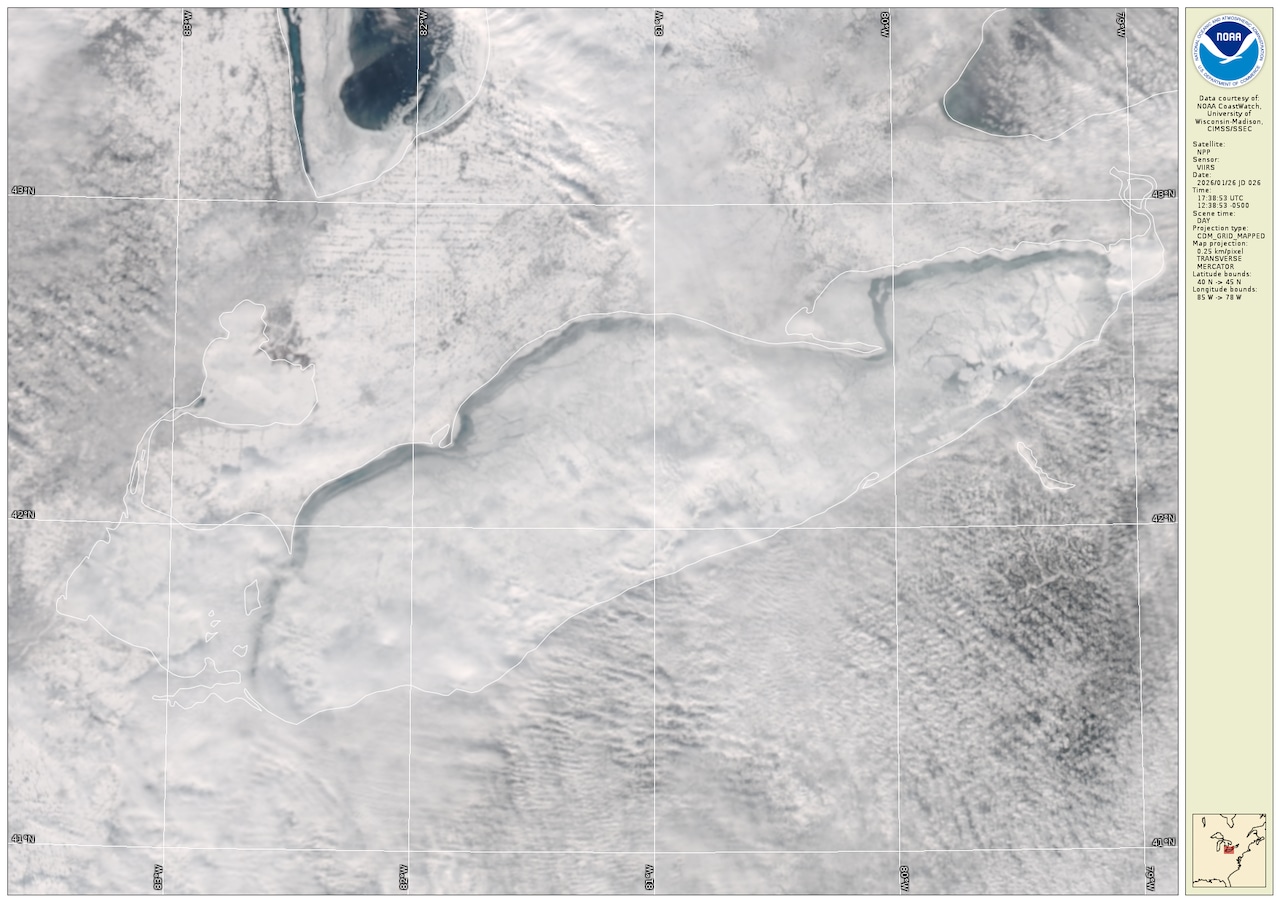 Lake Erie on January 25, 2026 is almost frozen over.NOAA
Lake Erie’s ice cover has shot up to 94 percent of the lake being covered with ice. With the continued Arctic cold of this week and the coming weekend, Lake Erie should freeze over entirely.
Lake Michigan’s ice cover has increased 21 percent in the past week, and is now 16 percent higher than the long-term average ice cover for this date.
Lake Superior, while in the coldest air more consistently, has a tougher time increasing ice cover rapidly. The graph shows ice is expanding on our largest Great Lake.
Lake Huron has a larger area of sheltered, shallower water compared to Lake Michigan. The ice percentage increases quickly on Lake Huron when Arctic cold takes over.
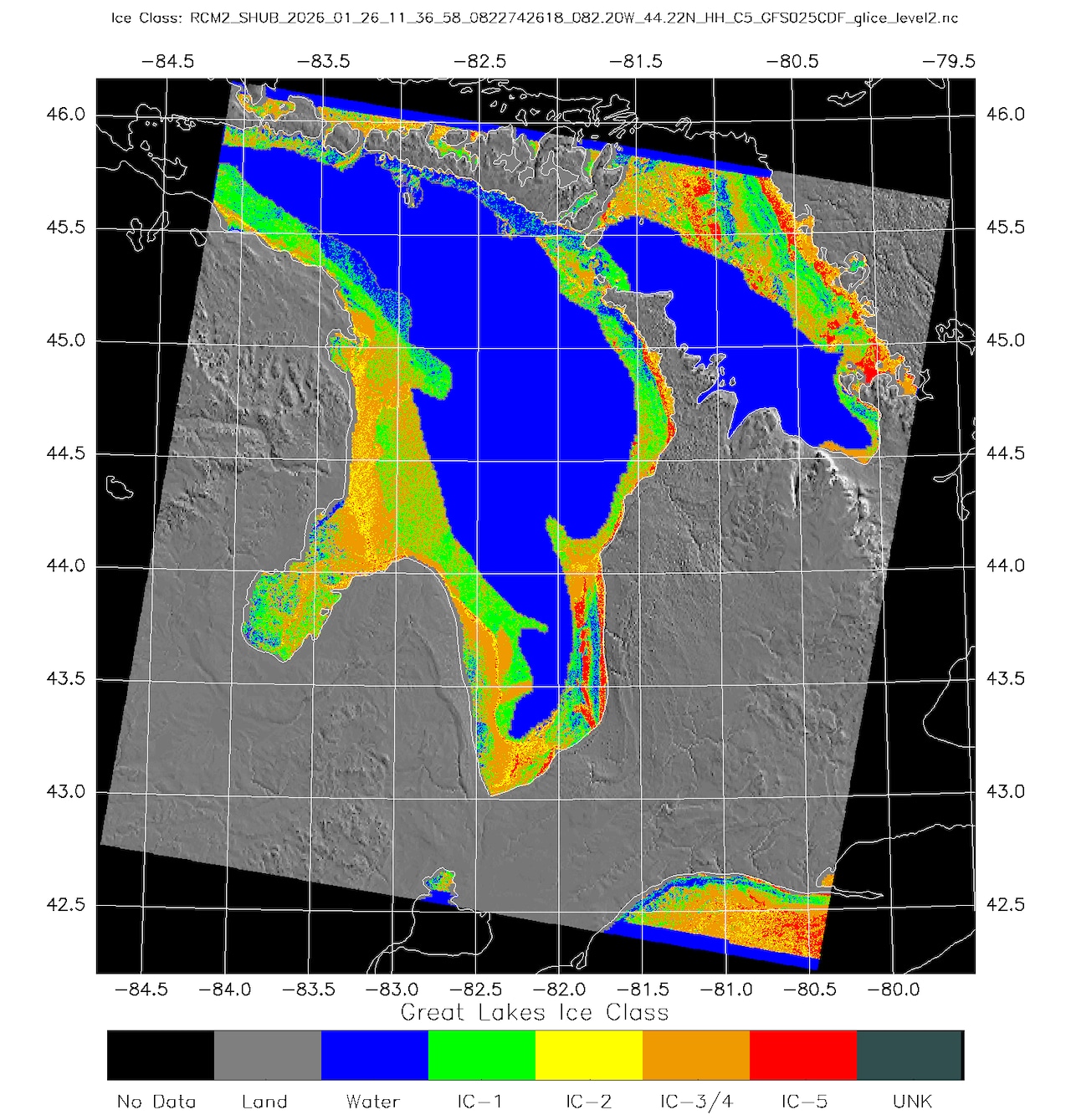 Lake Huron ice cover noted in greens and oranges on January 26.NOAA
Lake Ontario has deep water compared to its surface area. Ice is slowest to form on Lake Ontario. Although the percent of ice cover is lower than most of the other Great Lakes, the ice is also growing on Lake Ontario.
With the cold weather ahead, the Great Lakes will continue to grow ice. It seems like we will end up with the most ice since 2012-2013.