
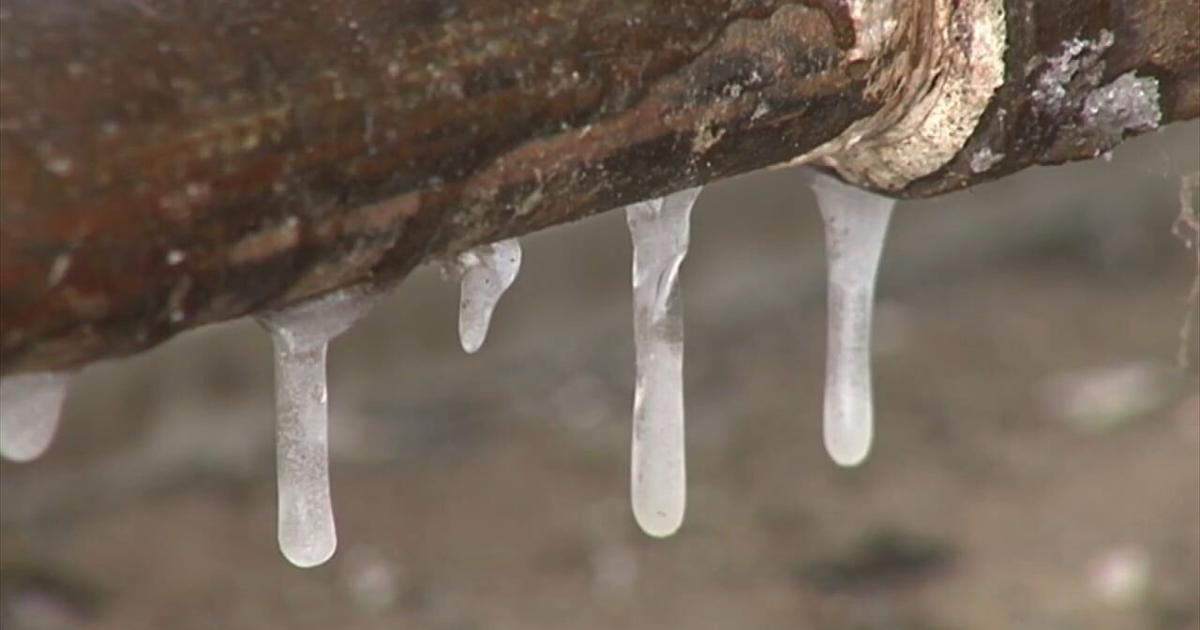
If you stepped outside this week, you felt it; bitter cold that’s not just uncomfortable, but hard on your home.
When temperatures drop, many plumbers know what that means.
“We get emergency calls for frozen pipes quite a bit. That’s the first thing that we encounter,” Joe Mrochko, Vice President of Inside Operations and Marketing for Schuler Service says.
It often starts in the house.
“You just need to get the heat to the pipes itself,” Mrochko says. “So, for example, if you have a meter in a closet, open the closet door. Simple common-sense things. You just want to get the heat from the house to the pipes so that they don’t have a problem freezing.”
That includes how you heat your rooms.
“Some people will try to save some money, and they’ll turn off the heat in different rooms of the house if they have baseboard heaters. And that’s okay if it’s a room that’s away from any plumbing, but if it’s a room that’s adjacent to a bathroom, maybe not a good idea. Let’s keep the heat through the walls,” Mrochko explains.
If pipes freeze, the damage might not show right away.
“There’s a really good chance that there is some kind of a pinhole leak somewhere that’s going to present itself after we thaw it,” Mrochko says. “If we’re involved with that situation, we’ll have the water turned off to the whole house so that we can then monitor where’s the leak coming from? Are there any leaks at all?”
Experts say leaving a fast drip of cold or room temperature water helps prevent freezing.
If you notice your water pressure is low, “You might have some kind of cold infiltration somewhere in the house and you might want to just look around a little bit, see if there’s any areas that you can expose to the heat,” Mrochko added.
Plumbers say for exposed pipes, heat tape can help, but if you notice low water pressure or no water at all, call a professional as soon as you can. With this kind of prolonged cold, waiting can make the damage worse.