
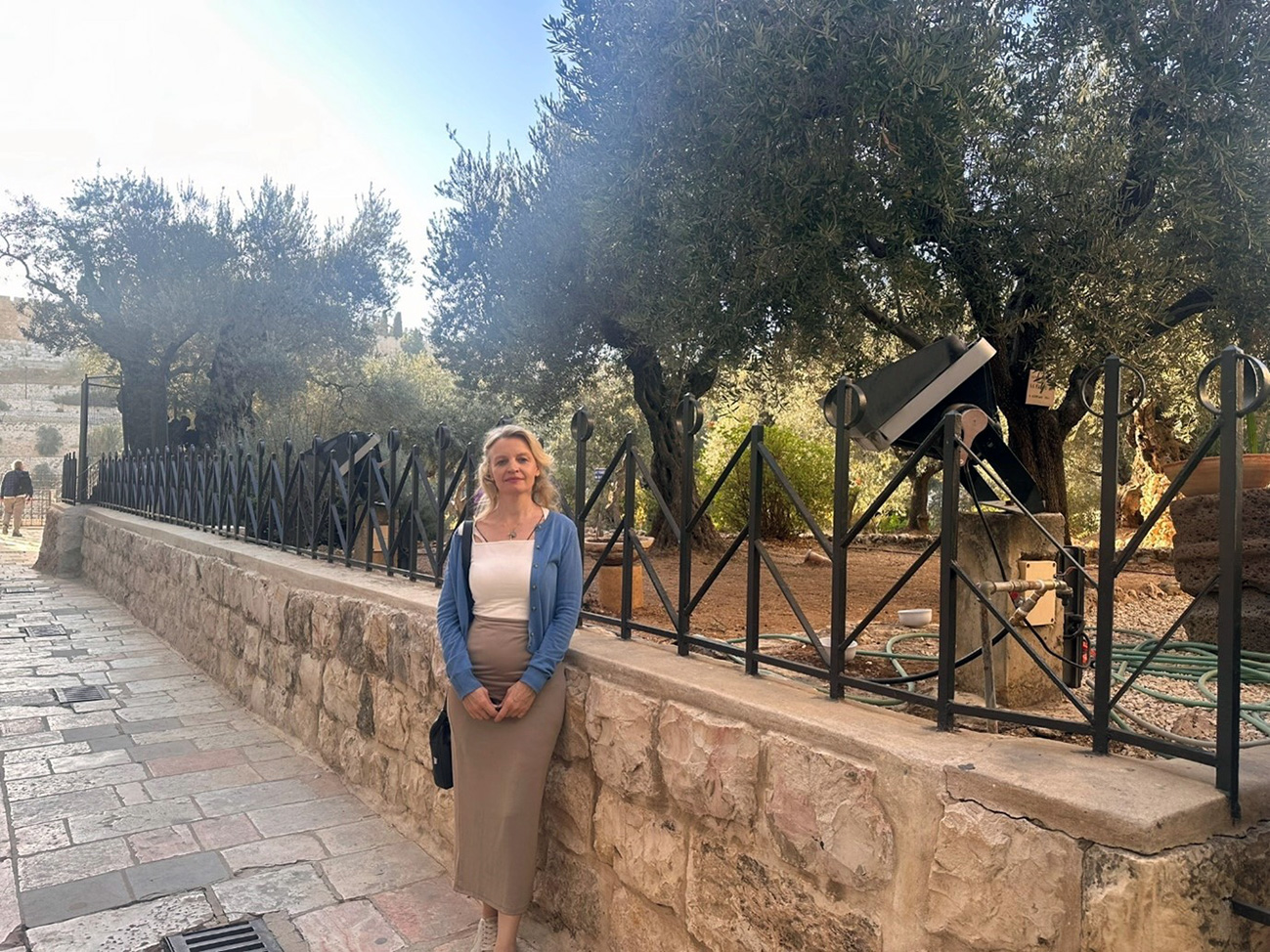
At the beginning of October, Maria Grota, from St Peter and All Souls’ Parish, travelled to Palestine to spend three months volunteering at the Home of Peace orphanage in Bethlehem.
The home is run by the Roman Catholic Sisters of St Elizabeth, whose charism is to care for children, following the example of St Elizabeth, mother of Our Lady. Situated in the West Bank, not far from the birthplace of Jesus, the orphanage provides a refuge for young people who have experienced loss, instability or hardship.
The Home of Peace currently supports forty-two Christian Arab children and young adults, aged between four and twenty-one. Fifteen of these are residents, while the rest attend daily for care and support. Most come from families facing profound difficulties such as bereavement, emotional trauma or the economic devastation caused by conflict. Some children are Palestinian or Israeli Arabs, while others have arrived in the past from countries such as Syria and Eritrea. The Sisters aim not only to keep the children safe but to help them grow in confidence, friendship and faith.
To support their mission, the Sisters employ Christian Arab care workers and teachers who assist with homework, provide pastoral care and help run daily activities. This enriches the children’s lives and also provides vital income for local families. The orphanage offers after-school clubs, outings and summer camps, simple experiences that many of the children may never have had. As Maria observed, ordinary joys become extraordinary gifts for these young people.
The work of the Sisters of St Elizabeth extends far beyond the orphanage walls. The decline of tourism since the Hamas attacks of 7 October 2023 has had a devastating impact on Bethlehem. The city relies heavily on pilgrimages and visitors, and its economy has collapsed. Shops, cafés and hotels that once thrived are now closed and boarded up, and many Christian families have emigrated in search of stability. Estimates suggest that since October 2023, around 260 Christian families have left Bethlehem, reducing an already small community from eight per cent to around six per cent of the population. There are now said to be more Christians from Bethlehem living in Santiago, Chile, than in their own hometown.
In response to this deepening hardship, the Sisters support families who have lost their livelihoods or who can no longer cross into Jerusalem for work due to tightened security restrictions. They distribute food, clothing, educational supplies and other essentials, providing a quiet but vital lifeline. One message Maria frequently heard from Palestinian Christians was an appeal to the wider Church: “Come to the Holy Land and support us by visiting. Our livelihoods depend on you.”
The Sisters also continue to accompany the young people who leave the orphanage to pursue further education. Without access to student loans, these students face significant obstacles. The Sisters help by covering the cost of accommodation, books and laptops, and offer continuing spiritual guidance. Their efforts have already borne fruit. Several graduates have gone on to study subjects such as law and medicine, becoming witnesses to hope in a region greatly in need of it.
Maria was deeply moved by the strong Christian identity of the Arab community. While many in the UK may keep their faith private, the Christians she met, especially young men, declared it openly and proudly. When asked their nationality, they often replied first, “I am Christian,” making faith the foundation of their identity. Yet this confidence exists against a challenging backdrop. Bethlehem, once a predominantly Christian town, is now largely Muslim, and the Christian population continues to decline.
On her Sundays off, Maria travelled from Bethlehem into Jerusalem, passing through the tightly controlled Checkpoint 300. She was acutely aware that although she was permitted to cross the wall freely, none of the children or staff at the orphanage were allowed to do so, and Israeli citizens were equally unable to enter Bethlehem. These weekly journeys offered her a glimpse of another side of Christian life in the Holy Land.
In Jerusalem, Maria joined a vibrant international Catholic community at the Vatican Notre Dame Centre, where Mass was followed by social gatherings. Here she met workers from the Far East, students at the Pontifical Biblical Institute and Hebrew University, seminarians and embassy staff. Despite the conflict, this community continues to pray, study and support one another.
One Sunday she met an Israeli woman who had converted to Catholicism and who spoke of the need to practise her faith discreetly. She told Maria about a Sunday Mass celebrated in Hebrew for Israeli converts and invited her to experience it. That evening, Maria entered an unmarked building set back from the street, an intentionally inconspicuous church so as not to attract unwanted attention. Inside, a simple hall served as the worship space, its minimal decoration reflecting Jewish sensitivities regarding images. The priest, an Italian fluent in Hebrew, wore vestments inspired by the Jewish tallit, a powerful reminder of the continuity between Christ and His people.
Maria found the Mass profoundly moving, especially during the consecration. “It felt,” she reflected, “as though I had come home, worshipping in our Lord’s Jerusalem with His countrymen and in their language.” Yet the parishioners shared a deep sorrow. Because of political restrictions, none of them were able to visit Bethlehem, the birthplace of the Saviour.
After three months, Maria left the Holy Land with great reluctance. She returned home carrying memories of sunlit hills, ancient stone buildings and the warm generosity of Israelis, Arabs and ex-pat Catholics alike. Above all, she remembers the children, their playfulness, resilience and exuberance. They are, she believes, the future of Christianity in Bethlehem, and the Sisters of St Elizabeth are ensuring that this future has hope.
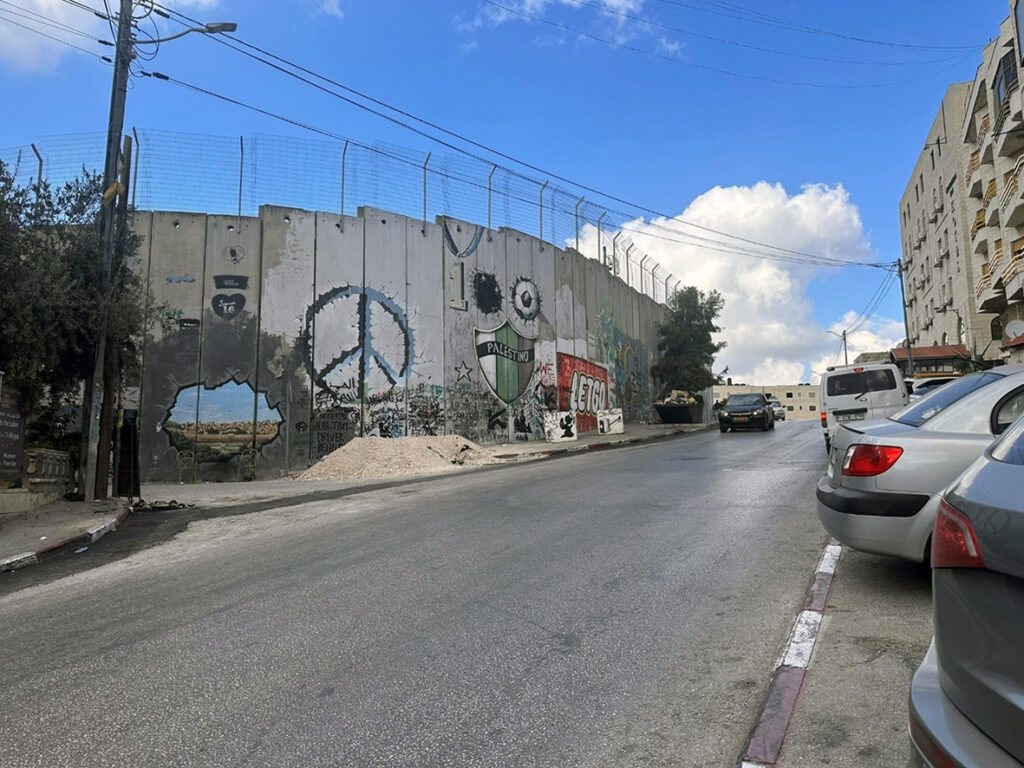
Bethlehem and Israel border wall
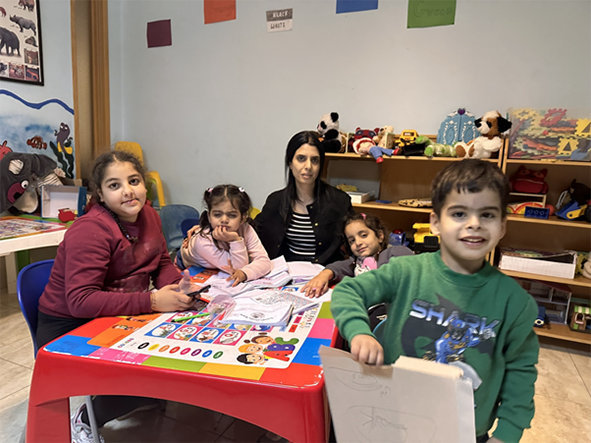
Children at the orphanage in Bethlehem
Comments