
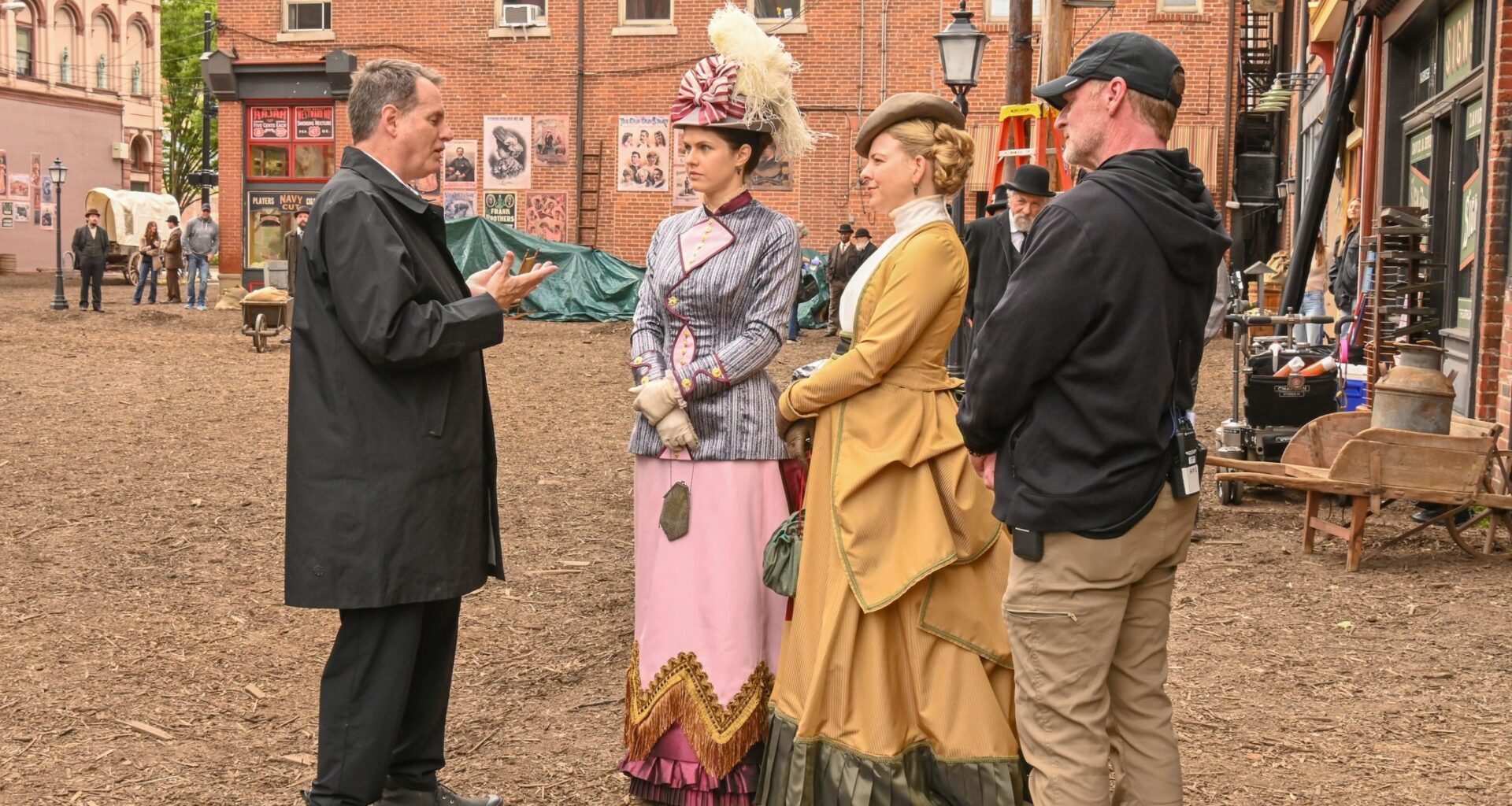
Although it’s hard to miss an establishing shot of the Sister Bridges in the opening of a new TV series, the aftereffects of those productions often go unnoticed.
Dawn Keezer, executive director of economic development nonprofit The Pittsburgh Film Office, says the film industry deserves more recognition as part of the region’s “economic stratosphere.” Film and TV productions spent $300 million on Pennsylvania-based products and services while filming in the region in 2025.
“People want to film here in Southwestern PA because we’ve got a great diversity of locations — we can look like anything as long as you don’t need a beach or a desert,” Keezer says. “Our crew is some of the best in the country, and you don’t usually find that in a place this size, but it goes back to we’ve been building this industry.”
The 2025 figures go well beyond previous years. In 2024, economic impact was estimated to be about $100 million. The previous record, set in 2021, saw $225 million in spending.
Pittsburgh gained its reputation as a film oasis, so to speak, throughout the 20th century, and while “Night of the Living Dead,” “Flashdance,” “Silence of the Lambs” and other historic films set a baseline for the industry’s wide presence in the area, Pennsylvania’s Film Production Tax Credit program broadly bolsters its staying power.
Since the tax credit’s inception in 2004, key features have remained consistent: Films and TV show productions are eligible for a transferable tax credit equal to 25% of the production’s cost, as long as it spends 60% of its budget on Pennsylvania goods and services. Tax credits can reduce federal tax liability or be sold to individuals or companies to offset production costs.
In 2004, state legislators allocated only $10 million to the film tax credit’s budget in its first year. The budget increased to $75 million in its second year, and has been $100 million in recent years. No single project can receive more than 20% of that budgeted amount in a year.
To receive their tax credit, productions are required to create an economic impact report — that’s how the Pittsburgh Film Office collects precise data on how much each production spends.
“The bulk of all of it is people,” Keezer says. “Personnel is the highest cost on any project, and, luckily for Southwest PA, we have over 5,000 people that live here that work in this industry. So they hire predominantly local, which was something we worked really hard toward creating.”
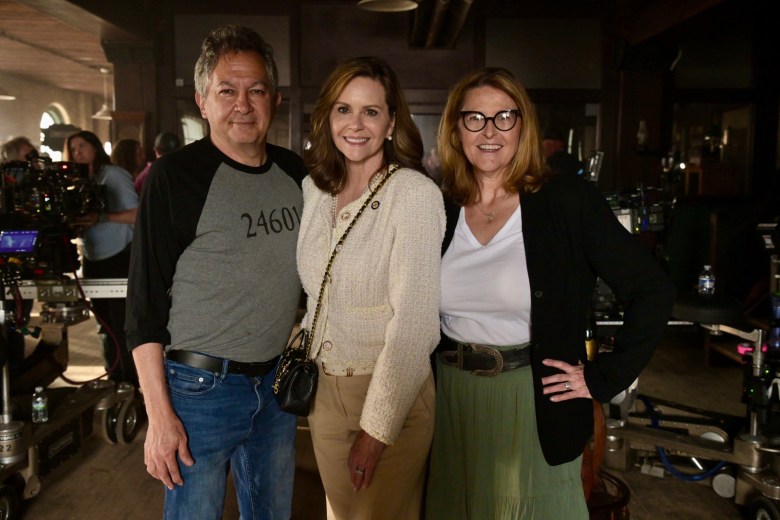 From left: Producer Dan Hank, state Sen. Camera Chatham Bartolotta and the Pittsburgh Film Office’s Dawn Keezer pose on the set of “Hershey.” Photo courtesy of the Pittsburgh Film Office.
After that comes what Keezer calls the sexy stuff: hotels, car rentals, office supplies and, most importantly, bottled water.
“My favorite statistic: ‘The Dark Knight Rises’ was so long ago at this point, but they spent $1 million on water during the 12 days they were filming,” Keezer explains, adding that the film spent $21 million in the region total without even receiving a tax credit. “That’s not what people think about when they think about the movie set.”
In 2025, the greater Pittsburgh region was the backdrop for 50 feature films, eight television projects, five commercials and 19 other projects, according to a press release from the Pittsburgh Film Office. Chief among them were the television series: Paramount’s “Mayor of Kingstown,” Apple TV’s “Parallax,” and HBO Max’s “The Pitt.”
While “Mayor of Kingstown” and “Parallax” are both current or former tax credit recipients, “The Pitt” is not.
Keezer says that bringing TV series to the region has been a goal since she started at the film office in 1994 because shows come back season after season to continually inject money into the local economy.
Plus, it raises Pittsburgh’s national recognition.
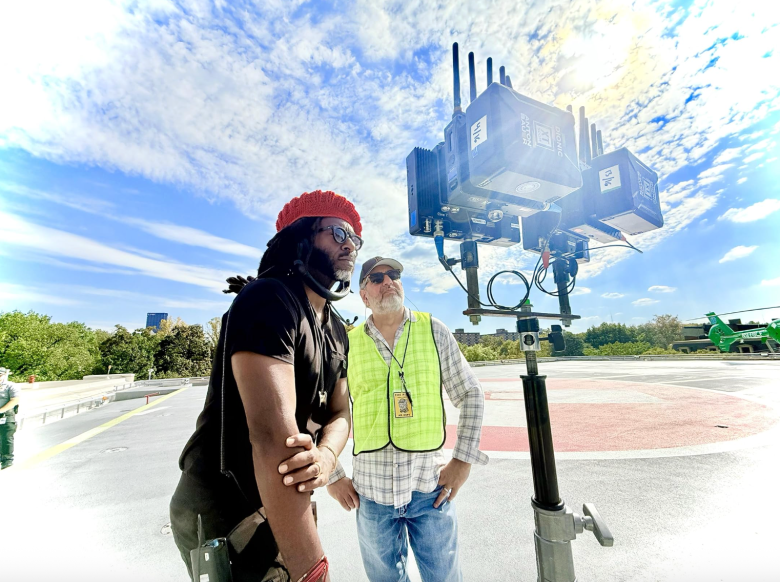 Damian Marcano, left, and Michael Hissrich filming on location in Pittsburgh for “The Pitt.” Photo courtesy of IMDB.
“Every time you see an image of Pittsburgh — small or large — you start changing people’s perception,” Keezer says. “The amount of attention and PR we get from ‘The Pitt’ being the No. 1 show, getting all these accolades and set here? They’ve shot here a total of seven, maybe eight days total over two seasons. They’ll be back again. We welcome them back every time because they hire local, they do all the things. You can’t buy that kind of advertising.”
Amid marked successes, Keezer says the next step is to increase Pennsylvania’s film tax credit budget.
While Pittsburgh’s sheer number of industry employees is attractive, other states have much stronger tax credit programs.
New York state has a $900 million budget and offers 30% tax credits — with an additional 10% added if it’s shot outside of New York City. Georgia similarly offers 30% tax credits, but has an uncapped budget.
“New Jersey is eating everyone’s lunch, because not only did they do a tax credit to work there, they’ve done a tax credit if you build there, which is why Netflix bought an army base,” Keezer adds. “Compounding our issues in Pennsylvania is we have two production centers: There’s us and Philly. Most other states are lucky to get one.”
Keezer hopes the budget grows to at least $300 million, as producers often want to know how much is left in the budget before asking about filming locations. But while the film tax credit program often receives bipartisan support from Pennsylvania legislators, it’s nowhere near their to-do lists, she adds.
“Without a huge increase, it just limits the opportunities, it limits the amount of work that we can see in the commonwealth,” Keezer says.
In the meantime, Pittsburgh will continue to appear on big and small screens throughout 2026.
The season four trailer for “Mayor of Kingstown” prominently features aerial and internal shots of State Correctional Institution-Pittsburgh.
“Hershey,” a biopic about the renowned Pennsylvania chocolatier and philanthropist Milton Hershey, is expected to release this July. Heist movie “How to Rob a Bank,” which brought Pete Davidson, Zoë Kravitz, Nicholas Hoult and other big names to Pittsburgh for filming last year, should be out by September.
Also, “Mayor of Kingstown” will return to the former State Correctional Institution-Pittsburgh site for its fifth and final season this year, and Apple TV’s “Parallax,” starring Liev Schreiber, will release later this year with views of Butler and Dormont.
“We built up this industry,” Keezer says. “We have the crew and we have the locations. We don’t have great infrastructure at this moment in time. We don’t have any purpose-built sound stages, we don’t have some of those things, but people still want to film here. They want to be here. I’ve got an empty prison; I’ve got an empty airport.”
For notices on crew or extra positions for productions in the region, keep an eye on The Pittsburgh Film Office’s website.