
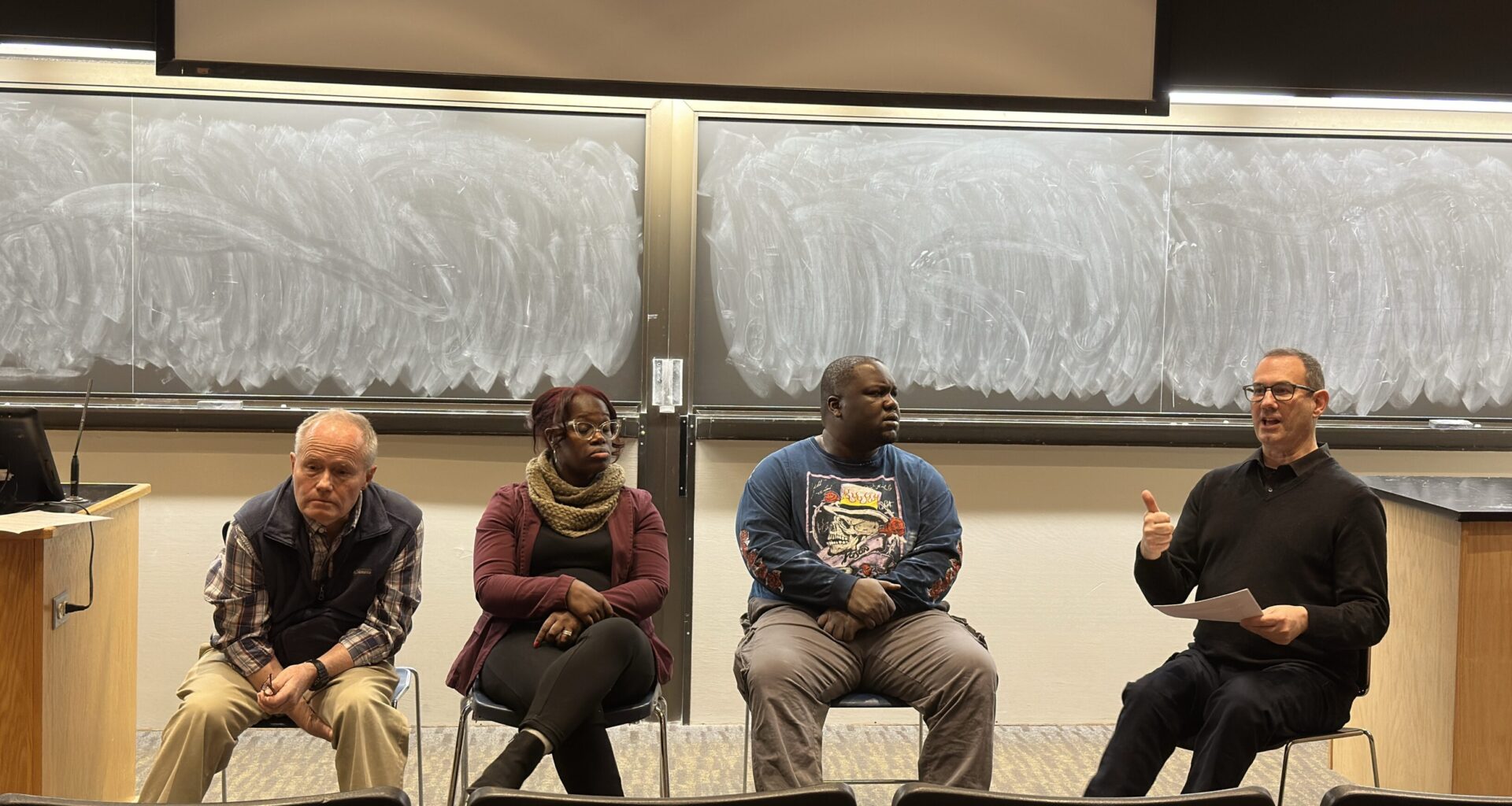
Lehigh’s Student Political Action Committee hosted a town hall Wednesday, one month after the Lehigh University Police Department arrested a man in possession of a firearm on campus, to address gun violence in the Lehigh Valley.
The discussion, moderated by Lehigh County Controller and 2026 congressional candidate Mark Pinsley, included three panelists who have each experienced gun violence firsthand.
Ibtihal Gassem, ‘27, originally organized the town hall to encourage students to become more politically involved. In response to the recent shootings in Minneapolis and on college campuses nationwide, she said she narrowed the focus specifically to gun violence.
“It’s so easy to just swipe past different issues when you see them on social media, but with this event, you can’t ignore that the impact of gun violence is right in front of you,” Gassem said.
According to the Gun Violence Archive, there have been over 900 gun-related murders and more than 1,500 gun-related injuries in the U.S. during the first four weeks of 2026. The town hall allowed audience members to learn about gun violence at the local level, making it more personal than national news coverage.
The event began with Bethlehem native Al Smalling, who shared his experience of losing his younger sister, Jerkera Battle, to domestic violence in July.
Smalling said he participated in the event as part of his grieving process and as a way to work through his pain.
Battle was the mother of a 3-month-old son, Noah, whom Smalling has since taken custody of. Now 9 months old, Noah attended the event.
“When this kid gets older, I’m going to try to help him grieve,” Smalling said. “I’m going to keep him as safe as possible and keep him educated on gun violence.”
Shalon Buskirk, an Allentown native, also spoke of her family. In 2017, her 19-year-old son, Parris Lane, was killed in a shooting. Five years later, while still processing the loss of her firstborn, her 22-year-old son, Najeer Lane, was also killed in a shooting.
“When you’re a black mother, you worry a lot,” she said. “You’ve got to walk in my shoes, walk in my skin, to understand.”
Buskirk said each time her children left the house, she told them she loved them and expected them to return safely. When her sons didn’t come back, she said her heart sank.
“You’re not supposed to bury your children — they’re supposed to bury you,” Buskirk said. “I would give anything for them to walk through that door again.”
Also on the panel was Dave Newton, a U.S. Marine Corps veteran, who said he’s handled guns since he was 14. Newton now speaks locally about firearm safety, teaching proper storage practices and warning about the dangers of guns in the wrong hands.
Newton said his military service required him to use firearms in ways that left lasting emotional scars. He emphasized that gun violence is largely preventable but said meaningful change depends on individuals taking responsibility and action.
At the conclusion of the event, the panelists discussed possible solutions to gun violence, including higher taxes on weapons and ammunition, stricter licensing regulations and better reintegration processes for formerly incarcerated individuals.
While Smalling argued that gun violence stems more from individuals committing the shootings, Pinsley said the primary issue is the guns themselves and that Congress has the power to do more to address gun violence.
“We need to be proactive, not reactive,” Buskirk said. “More conversations like this need to happen, and instead of turning a blind eye, take a stand, and don’t wait to get involved.”