
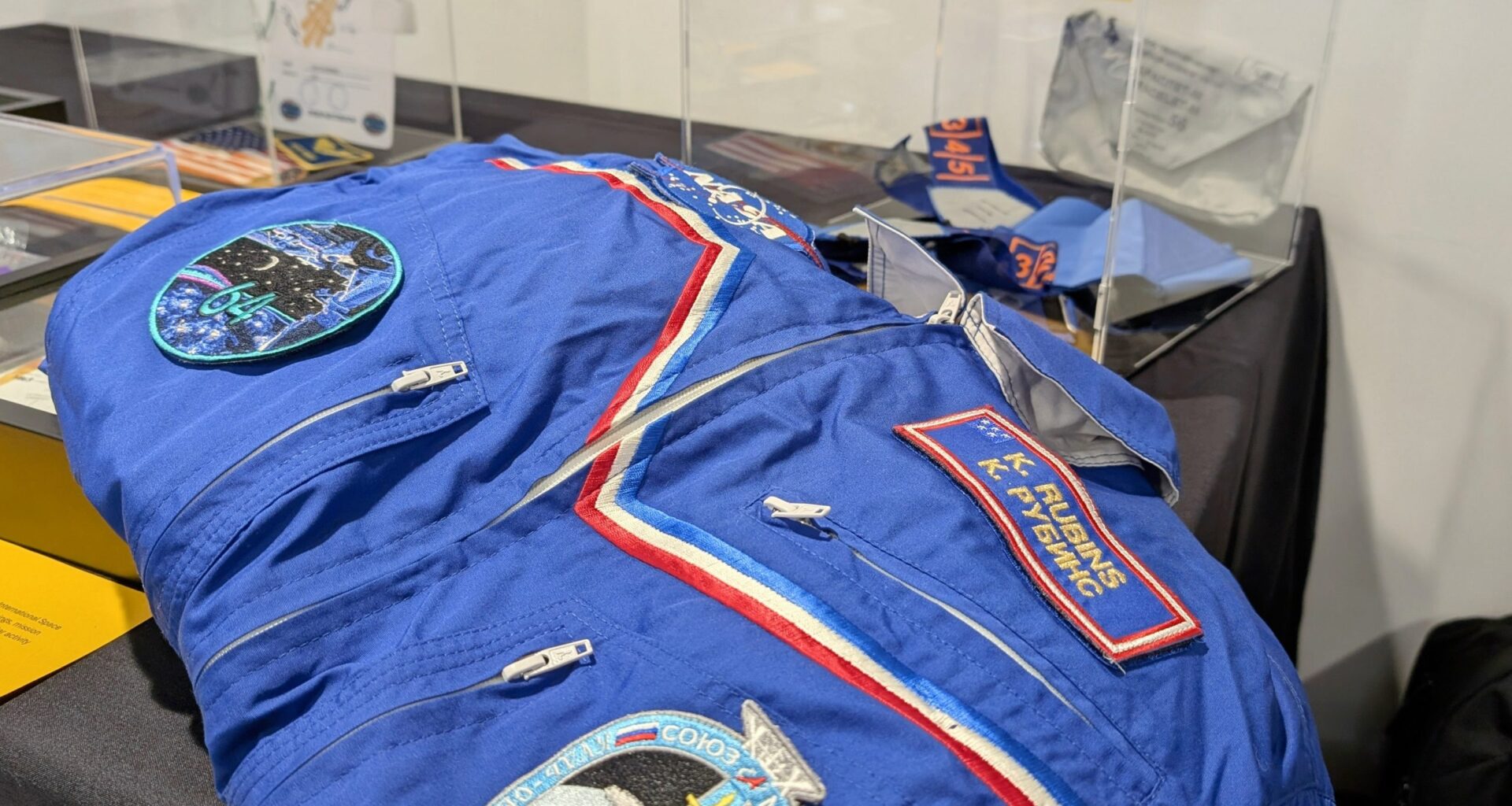
The University of Pittsburgh’s latest academic excursion shoots for the stars, but studies something terrestrial: Biomedicine.
Pitt launched the Trivedi Institute for Space and Global Biomedicine on Thursday, Jan. 29. The institute is another notch in Pitt’s belt of biomedical science programs.
Its research will specifically examine the effects of cell aging, cell repair and disease progression amid space flight, which speeds up these biological processes.
Kate Rubins, a NASA astronaut of 16 years who joined Pitt as a professor of computational and systems biology in October, was appointed the institute’s first director. She said at a press event that spaceflight accelerates bone loss, causes muscle weakness and degrades the immune system.
“At the same time, recovery can be very quick once you come back to Earth,” she continued. “That combination — a rapid onset and the recovery in otherwise very healthy people — gives us a powerful window into aging, chronic disease and resilience, and it lets us see biological mechanisms that are slow or hidden on Earth.”
Like other scientific research labs, its work hinges on the involvement of graduate and postdoctoral students, but speakers said it will also welcome undergraduates.
Anantha Shekhar, the senior vice chancellor for the health sciences and the John and Gertrude Petersen dean of the School of Medicine, called the Trivedi Institute “one of the audacious future directions for health and biomedical research.”
“Space is a very unique environment because there is very little gravity, very little oxygen, very little anything, really,” he said.
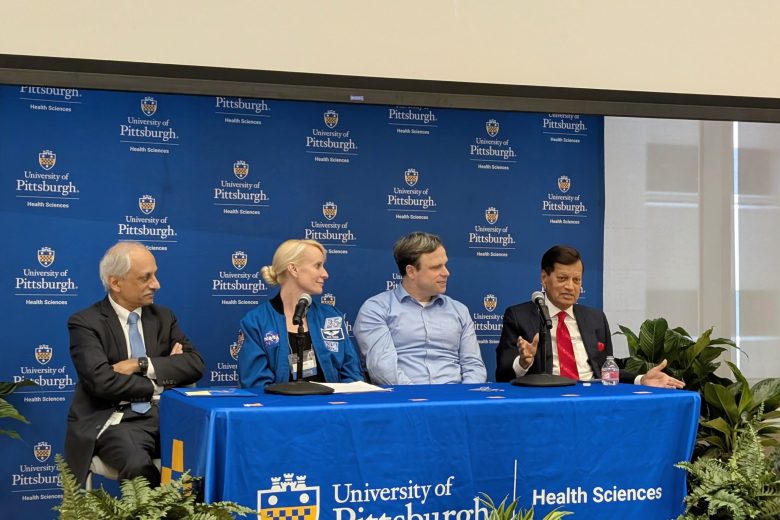 From left: Anantha Shekhar, senior vice chancellor for the health sciences; Kate Rubins, Trivedi Institute’s inaugural executive director; Deputy Director Christopher Mason; and local entrepreneur Ashok Trivedi. The panel announced the launch of the Trivedi Institute for Space and Global Biomedicine on Thursday, Jan. 29. Photo by Roman Hladio.
Supporting the institute’s launch is a $25 million investment from Ashok Trivedi, who co-founded IT services company IGATE. Trivedi, a resident of Pittsburgh for the last five decades, has previously donated to Pitt through his philanthropic nonprofit, the Trivedi Family Foundation.
“I believe physics has reached a level of creative maturity, while at the same time, the biological sciences are bubbling with youthful excitement,” Trivedi said at the event. “This coming century belongs to biological sciences, and, of course, part of that is this space and global mobile medicine institute.”
Rubins said that understanding how human biological systems rapidly adapt to space flight draws on the study of microgravity, radiation and the limited medical resources in space.
To understand these interdisciplinary interactions, the institute will draw on professors and coursework from related departments: physics, medicine, spaceflight, synthetic biology, engineering and entrepreneurship. Professors Chris Mason, Afshin Beheshti and Sylvain Costes — all Pitt educators from various departments — are also in the initial cohort of researchers.
“What we learn when humans leave Earth should benefit the people who stay here,” Rubins said.