
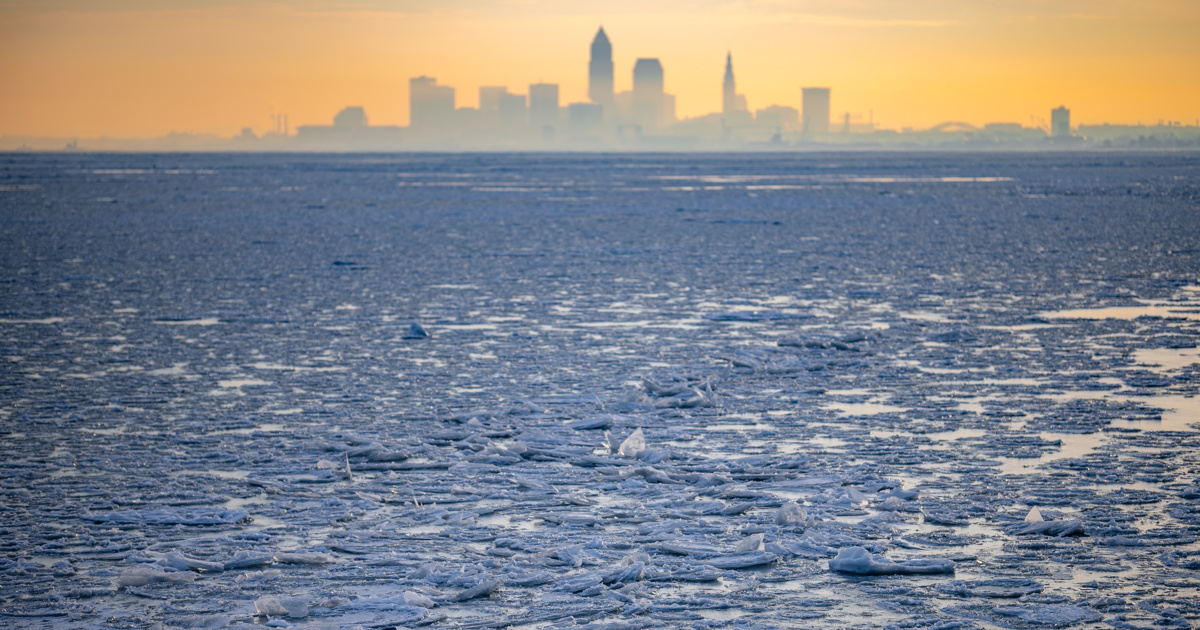
It has been 30 years since the last time Lake Erie was 100% frozen over in February 1996. This year, however, Cleveland’s Great Lake has come extremely close.
As of Feb. 3, 2026, Lake Erie is 94% frozen over, a figure that far exceeds the average ice peak of 65-70%, according to the National Weather Service Cleveland.
Over the past five years, peak ice coverage has swung dramatically, ranging from a high of 94% this winter to just 11% in 2023. Meteorologists attribute this to the prolonged stretch of extreme cold and this year’s record low temperatures.
According to Alexa Maines, a meteorologist at NWS Cleveland, January held one of the longest cold stretches ever recorded, with eight consecutive days below 20 degrees Fahrenheit from Jan. 24-31. Only two years — 1899 and 1961 — have experienced longer streaks, each lasting nine days.
“This is certainly an abnormally long stretch of really cold weather, so that’s what caused the lake to freeze over more than a lot of recent years,” says Maines.