
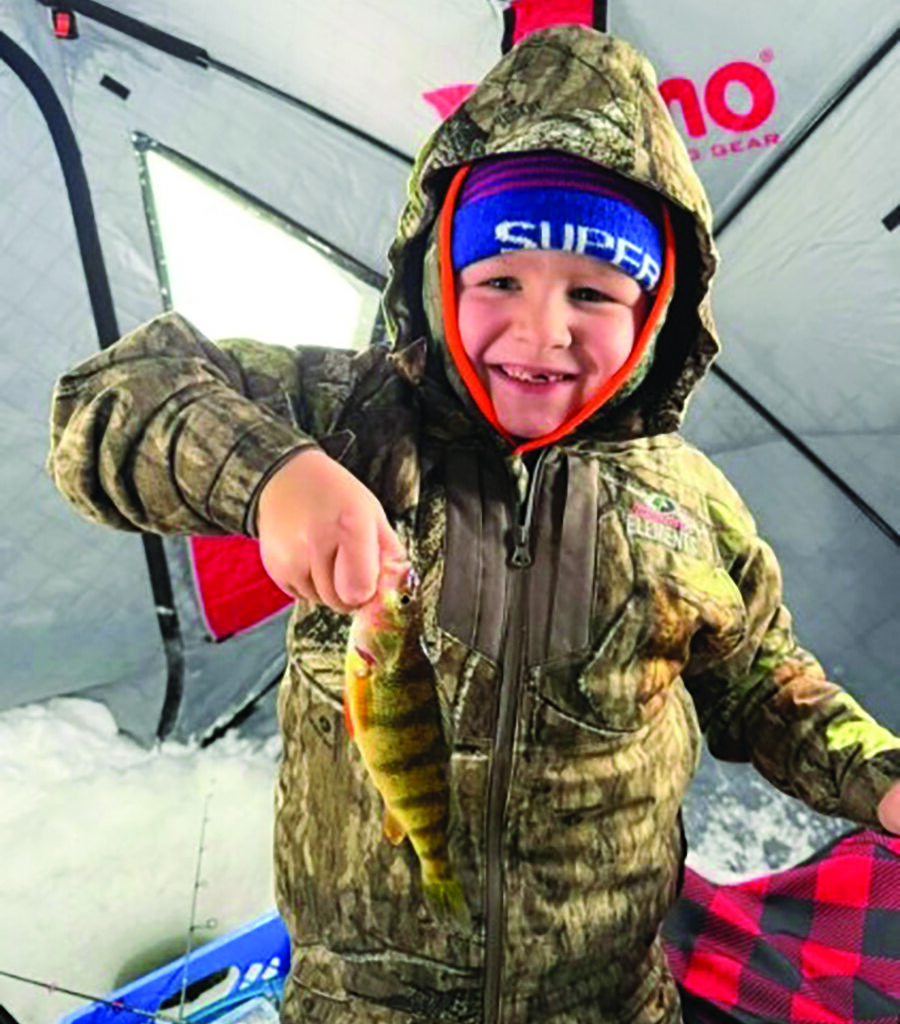
Rare cold weather has frozen 98 percent of Lake Erie, significantly reducing the lake effect snow and suppressing the usual wave activity. In particular, the eastern basin of Lake Erie is now locked under a layer of ice unseen for many years. This transformation is especially evident from Buffalo, New York to Erie, Pennsylvania – a stretch known as the deep end, the big water – where the familiar sound of waves has entirely ceased. The stillness across this region feels unsettling to some, yet it is precisely this vast, quiet expanse that now presents unique opportunities for both anglers and photographers.
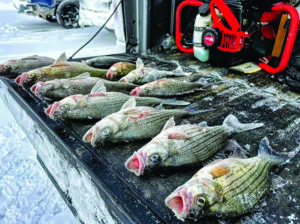
Chunky white bass are prolific in Chautauqua Lake and can provide non-stop action for ice anglers.
For ice anglers, this is a season people will remember for years. When Lake Erie freezes, it opens up areas that were once too rough to reach. The huge lake suddenly feels more personal. On the ice, anglers are after yellow perch, walleye and sometimes steelhead. Some of the biggest fish of the year, or even a lifetime, are caught here. Retired charter captain Bob Rustowicz once landed a Lake Erie walleye near Seneca Shoal that weighed almost 16 pounds.
Steelhead tend to favor the Lake Erie harbors when winter clamps down. Barcelona, Dunkirk and the Buffalo Small Boat Harbor all become trout magnets when ice sets up, offering structure, baitfish and a little protection from the wind. But out on the open lake, walleye are the prize. Lake Erie walleyes are built differently. They are big, powerful and unforgiving of mistakes. Jigging minnow-style lures such as the W5 or W7 Rapala’s, or 1-1/4 inch Moonshine Shiver Minnow, tipped with a real minnow, are a go-to here, simple and deadly. Drop, jig, pause. Watch the rod tip. Hang on.
Lake Erie ice fishing demands respect. Wind-blown ice can stack, crack and twist into jagged pressure ridges without much warning, and rapid temperature changes can weaken the ice, increasing the risk of dangerous breakage or sudden openings. Additionally, ice thickness can vary significantly even within short distances, making it essential to verify conditions frequently. Ice anglers know the rule: no fish is worth gambling your safety. DO NOT FISH ALONE. Essential safety equipment, such as spud bars for testing ice thickness, ice cleats for traction and personal flotation devices should always be used. Wearing layered, insulated clothing and carrying ice picks for self-rescue can further reduce risk, and checking weather forecasts before venturing out is strongly advised. Common sense remains critical, including informing someone of your plans and adhering to marked safe access points. But for those who prepare and pick their days wisely, the reward is stepping onto water that few ever get to fish this way. Some anglers have already accessed the big lake from Sturgeon Point, but some say it’s still a bit too early. Minimal yellow perch and small walleye catches on Lake Erie have been inconsistent as of this writing.
Along the shoreline, shifting winds frequently create jagged “ice push mountains” that are impressive to look at, less impressive to cross. Photographers love them! Safer options include protected areas like Buffalo Small Boat Harbor, Dunkirk and Barcelona Harbor, where ice tends to form more consistently and where steelhead are often willing participants. Until winds calm and conditions stabilize, however, inland lakes remain safer and often more productive options. We all have a choice.
Happiness is: little 6-year-old Lucas Stearns, ice fishing with his dad, Major Stearn – a Chautauqua Lake ice fishing guide, caught his first-ever fish this week near Long Point on Chautauqua Lake.
So if Lake Erie feels a little too big, too wild or you’re just not quite ready, it can be fickle. There is always Chautauqua Lake, where some days are quiet, some days electric, but when the bite turns on, it reminds you why ice fishing is addictive. Yellow perch, panfish and walleye fill buckets and stories there, while large white bass have been making surprise appearances, bending rods, and raising eyebrows up and down the Chautauqua shores. Major Stearns runs the “Fishing with Dad, LLC” guide service, and his name aptly describes his love for fishing with his 6-year-old son, Lucas. If you’re looking for a first-time ice fishing trip or looking to learn more about how to ice fish, call him at 716-758-1379. His rates are very reasonable ($250 includes all the gear and bait). Learn the ropes right.
The most common questions repeat across the ice every season: what lure should I use and how deep should I fish? The honest answer is the same as it’s always been: experiment, pay attention and don’t be afraid to move. Stearns uses an ice machine to run out quickly to the spots he fishes, sets up an ice hut to get out of the wind and fishes simple. Short rods (24-28 inches) with Northland tungsten jigs, swim baits or jigging spoons tipped with a grub or perch eye do the trick in 15 feet of water. Stearns adds, “Fish tell you what they want if you listen long enough. Sometimes it’s subtle. Sometimes it’s chaos.”
On Chautauqua Lake, the midwinter air temperature has often hovered near zero, and a stiff north or west wind drives wind chills into a negative double-digit chill factory. You know it’s cold. Ice anglers face a familiar decision: pack it in early or stay put and hope something exciting happens. Quite often, especially this year for reasons unknown, that excitement arrives in the form of feisty freshwater white bass.
White bass have become abundant in Chautauqua Lake, and while walleye remain the preferred target for many hardwater anglers, these silver-sided scrappers have a knack for stealing the spotlight. When a roaming school slides under the ice, the action can go to borderline chaos in minutes. White bass travel in large packs and feed aggressively, triggering fast-paced feeding frenzies that light up sonar screens and keep rods bent. On days when moving feels like punishment and every step squeaks louder than your boots should, staying put and enjoying the moment suddenly feels like a very good life choice. White bass action can certainly change that.
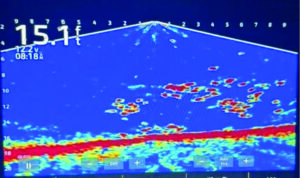
The fish on Chautauqua Lake have been moody, with some days being quiet, other days hectic with tight lines and a heavy harvest. Modern sonar can see the fish movements and help with finding fish.
Steelhead guide William Schwartz also went fishing last week to Chautauqua Lake and says, “Ice fishing here is often small perch and occasional walleye when you can find them, but when some nice schools of white bass come through, we guys digging holes in the ice can really have some fun. We put 11 on the ice in just a couple of hours and only kept fish between 10 and 15 inches. We fished the deep water off Long Point using size 7 blue/silver jigging Rapala’s.” Schwartz is one of those regular ice fishing anglers who can adjust to conditions on the hard water; he has even gone ice fishing on local streams to catch steelhead! He excels as a local steelhead guide. Contact him at 716-426-5109.
For everyone, part of the recent Chautauqua fun is that white bass aren’t picky. There’s no secret handshake or mystical lure required. Simple works. A basic jig tipped with a minnow has been catching white bass for decades and shows no signs of losing its magic. Ice jigs paired with soft plastic grubs are just as effective and save anglers from fumbling with frozen bait fingers that stopped working an hour ago.
For lure-only anglers, flash and movement rule the day. Small spoons, jigging raps and blade baits all shine when white bass are on the prowl. Silver, white, chartreuse and glow patterns tend to get the most attention, especially in deeper water or low light. Most anglers fish them aggressively: sharp snaps of the rod followed by a brief pause. White bass are fast, competitive and not known for overthinking things. When a school shows up on the flasher, the bite is often immediate and decisive.
Back at the cleaning table, white bass get an unfair reputation. Yes, they have a strip of darker red meat along the lateral line, often blamed for a “fishy” taste. The solution is simple: remove the blood vein when filleting and bleed the fish shortly after harvest. Do that, and what’s left is firm, mild white meat that fries, bakes, or grills beautifully. So good.
Winter fishing in Western New York isn’t always comfortable. Just remember that when the white bass show up in force, they deliver bent rods, shared laughter and a reminder that sometimes the best days are the ones where you were too cold to leave anyway.
This winter is a gift made possible by prolonged cold and patient anglers willing to embrace it. The ice creaks. Snow crunches under boots. A flag pops, or a rod loads up, and suddenly the cold doesn’t matter anymore. These are the days that pull people off the couch, away from the window where snow drifts quietly past, and out into the kind of weather that makes memories. No matter how good the conditions look from the parlor, one thing never changes: you can’t catch fish watching the snow from your couch. The hard water is here. The fish are waiting. It’s cold. So what! Bundle up, step out, and be part of a winter that doesn’t come around very often.
Gotta love the outdoors!
Outdoors Calendar
Feb. 7 – Lakeshore Long-beards NWTF Banquet, White Inn, 5 p.m. doors open, 6:30 p.m. dinner, live auction, raffles, annual youth event fund-raiser; Info: Robert Turk, 716-673-6703; https://events.nwtf.org/EVT-20816.
Feb. 9 – West Falls Conservation Society, monthly meeting, 8 p.m., 55 Bridge St., West Falls.
Feb. 10: Children in the Stream, Youth Fly Fishing program, free, Costello Room, Rockefeller Art Center, SUNY Fredonia, 7-8:30 p.m., 12 yrs old and older, info: 716-410-7003 (Alberto Rey).
Feb. 14 – WNY Walleye Fisherman’s Flea Market, 9 a.m.-2 p.m.; Knights of Columbus, 36 Pierce Ave., Hamburg; Info: Chris Kempf, 716-400-9258; Jim Plinzke, 716-861-8817.
Feb. 19-22 – Greater Niagara Fishing Expo, Niagara Falls. Visit www.niagarafishingexpo.com for info.
Join our free newsletter mailing list below!