
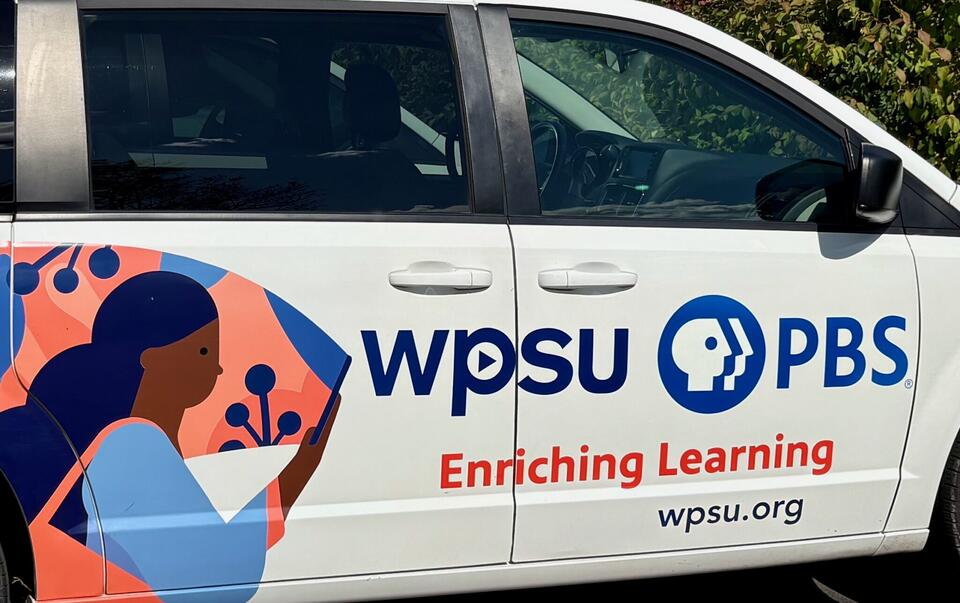
Public broadcasting in Central Pennsylvania is expected to stay on the air after months of uncertainty following Penn State’s approval earlier this month of a pending deal to sell WPSU to Philadelphia-based public media organization WHYY.
For WPSU staff, the announcement marked a dramatic turn after months of fearing the worst.
“I have been at WPSU coming up on 17 years, and I’ve been the news director for 15 of those years,” said Emily Reddy, news director for WPSU-FM. “We basically thought that WPSU might shut down and that there might not be any more public media in central Pennsylvania. But this makes it look like we’re going to be able to keep doing news, keep doing television programs, keep doing educational work throughout Central and Northern Pennsylvania.”
The university’s Board of Trustees voted on Oct. 13 to authorize the sale, which will ensure that WPSU’s radio, television, and digital platforms will continue operating under new ownership. A Penn State board committee previously rejected a proposal in September that would have required the university to pay $17 million in subsidies over five years.
WHYY, which serves the Philadelphia, New Jersey and Delaware region, must now raise $8.6 million within the next three weeks to finance the transition and keep the station afloat.
Under the approved agreement, WHYY will acquire WPSU’s assets — including endowed funds — for $1 and form a separate entity to manage the station. The deal also guarantees that WPSU will remain in operation for at least three years and continue to offer Penn State students internships and hands-on experience in broadcasting.
The transaction still requires approval from WHYY’s board and the Federal Communications Commission, with closing expected by June 30, 2026.
The deal came after Penn State decided it could no longer use tuition dollars to provide funding to the station and as WPSU faced what university officials termed “financial headwinds.”
Funding challenges have mounted in recent years, Reddy explained. State support ended several years ago, university allocations were cut last year leading to layoffs, and federal cuts compounded the financial strain. The university’s decision to withdraw ongoing funding and wind down operations after the September deal was voted down signaled what many staff feared would be the end.
“It was really surprising. I mean, it was devastating as someone who has worked here for most of my professional career,” Reddy said. “The fact that it looks like it’s going to be saved is a huge relief. I believe very deeply in the mission of public media.”
She added that the potential loss would have left much of the region without access to public media programming.
“There are people in parts of Pennsylvania who don’t have access to good internet,” she said. “They wouldn’t be able to stream it from somewhere else, so it would just be going away completely for them.”
WHYY President and CEO Bill Marrazzo said the organization stepped in to prevent public media in central Pennsylvania from “going dark.”
“In the face of WPSU going dark, we were motivated first of all to see what, if anything, we might be able to do to avoid that outcome,” Marrazzo said. “We respect the fact that 1.5 million citizens in Central Pennsylvania have that one easy, free access to public media through WPSU, so supporting the foundation of universal access was our primary goal.”
Marrazzo emphasized that WHYY intends to preserve WPSU’s local identity and programming.
“We intend to maintain WPSU in its own operating subsidiary and to continue to provide content that is particularly relevant to citizens in central Pennsylvania,” he said. “Our intention is to build upon their strong history of producing locally relevant programming.”
However, sustaining operations without university or federal support will require significant fundraising.
“To put the $8.6 million into some context, our business performance suggests that over the next five years, WPSU needs about $17.6 million of new revenues, not through cost cutting, but new revenues, to get it into a break-even state,” Marrazzo explained.
He expressed confidence in WHYY’s ability to reach the initial fundraising goal within the 30-day exclusivity period, citing the organization’s “solid, if not terrific” financial record and donor base.
“A lot of it is built upon creating more content that generates more audiences, that generates more contributed income and donor support,” Marrazzo shared. “So we have some muscle around the opportunity to grow revenues for WPSU through their current audiences in terms of new household membership and new major donor performance.”
Both Marrazzo and Reddy see the partnership as a chance to strengthen public media across Pennsylvania.
Reddy noted that collaboration with WHYY could bring new resources and opportunities to WPSU’s newsroom and programming.
“This is a station that is known for its quality programming,” she said. “It’s likely that they have a lot to teach us and a lot of resources that could help WPSU become a stronger station. It’s more programming and more to offer to listeners and viewers.”
Marrazzo said WHYY’s mission aligns closely with WPSU’s long-standing role in serving diverse audiences with balanced, trustworthy journalism.
“If you accept the fact that the media landscape is super competitive, then what public media offers is a more balanced source of trusted news and information,” Marrazzo said. “We know from our data that we are able to create content and experiences that help audiences learn about the differences between them in ways that they can respect those differences but not become disagreeable.”
For now, WPSU staff are continuing their work while awaiting the deal’s final approvals.
“I think that we’re focusing on continuing to report, continuing to do our regular work and continuing to show the public what it is that they’re supporting and what an important resource it is,” Reddy said. “There’s a lot that we still don’t know. There could be some changes, but I think they could be positive ones.”
If the purchase goes through, WHYY will lease WPSU’s current space at Penn State’s Innovation Park and cannot sell any of the station’s non-core assets without university permission.
For Central Pennsylvania residents, many of whom rely on WPSU for local news, PBS programming and educational resources, the prospect of continuity brings relief and renewed optimism.
“I couldn’t imagine living in a place that didn’t have local public media,” Reddy said. “So I am thrilled that there will still be public media in Central Pennsylvania.”
The post ‘A Huge Relief.’ WHYY Deal Poised to Keep WPSU’s Mission Alive in Central PA appeared first on StateCollege.com.