
NEWTON TWP. — Cyber charter school students have lower academic outcomes, even as districts funnel more taxpayer dollars into them, public school officials in Lackawanna and Luzerne counties say.
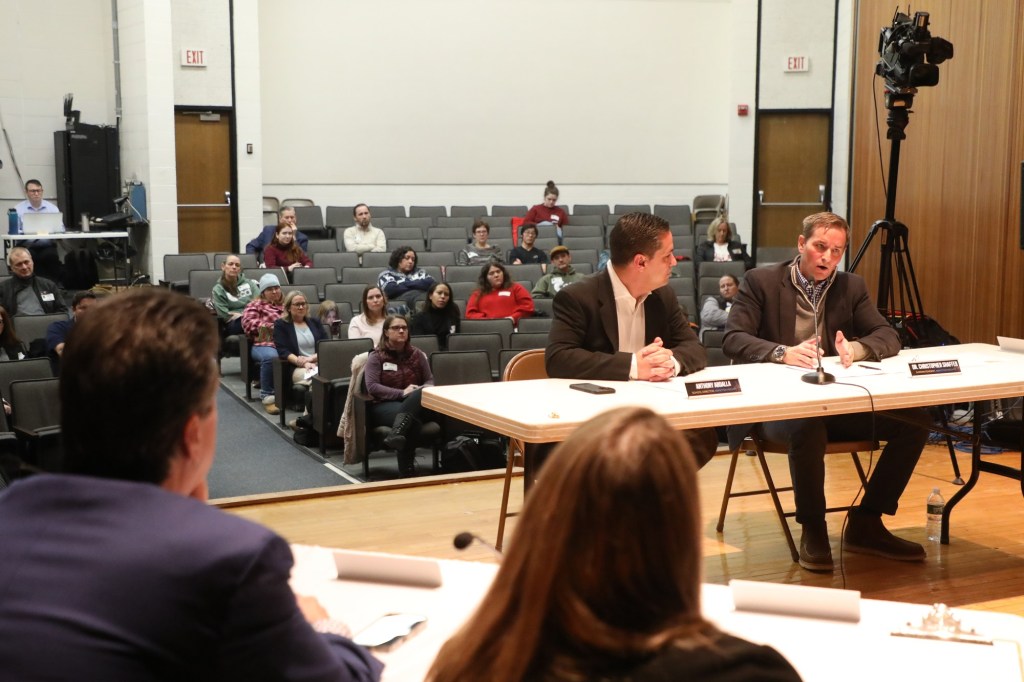
Officials in the Abington Heights and Wyoming Area school districts testified Monday at a hearing on cyber charter school reform before lawmakers on the House Democratic Policy Committee.
Abington Heights Superintendent Christopher Shaffer, referencing state Department of Education data, said in his district 61% of middle school students and 88% of high school students scored proficient or advanced in English language arts, compared to 9% of students at Commonwealth Charter Academy. He said 51% of middle school students and 68% of high school students scored proficient or advanced in math, compared to 4% of students at CCA.
Shaffer said student growth in English language arts and math in his district exceeds state standards, while CCA’s growth in those subjects does not.
He also said 96% of Abington Heights students regularly attend school, compared to 90% of CCA students, while Abington Heights’ graduation rate is 95% and CCA’s is 65%. Shaffer emphasized that social interaction is critical for students.
“We are meeting the needs of our students and are preparing them for post-secondary education and the workforce,” Shaffer said. “Charter schools are granted significant autonomy in staffing, scheduling, instructional delivery and governance with the expectation that flexibility will lead to improved results. That autonomy must be matched with clear, consistent, outcome-based accountability.”
Wyoming Area School Director Peter Butera testified that over the past 10 years, the amount the district has spent on cyber charter schools has increased to $3 million a year from a little more than $600,000. He said the $3 million accounts for more than 6% of Wyoming Area’s budget.
Decreased property values in the district brought on by flooding have resulted in the district raising taxes each year for 16 years, Butera said. The district has the highest property tax rate in Luzerne County, he said.
Butera said his concerns about the school district prompted him to make a motion to explore merging with another district last year. The board rejected the motion, 5-4.
“What I think doesn’t make sense to a lot of people is the fact that while our district is fighting every single year to be able to pass a balanced budget, we have to set aside 6% of that budget to pay tuition to charter schools that are generating close to $100 million of net income a year and that have $400 million in net assets over liabilities,” he said. “I don’t like to be cynical, but it feels to me like there’s an effort being made to bleed public schools dry. And my biggest concern is that it’s working.”
Abington Heights School Director Anthony Abdalla wondered about why the funding for cyber charter schools varies by municipality.
“It’s the same student being taught by the same teacher from the same wherever she’s teaching from,” he said. “From a business standpoint and a logical standpoint, that makes zero sense to me.”
State Rep. Joe Ciresi, D-146, Montgomery County, said the amount varies by district and tax structure, as well as what the community and the district are willing to pay.
Lawmakers said during the hearing that while they understand children learn differently and that parents can choose where their children can be educated, cyber charter schools should be scrutinized for how they are spending taxpayers’ money.
“It’s about accountability and safety of students,” said Rep. Jim Haddock, D-118, Pittston Twp., who co-hosted the hearing at Abington Heights Middle School with state Rep. Eddie Day Pashinski, D-121, Wilkes-Barre.
More than 30 people attended the hearing, many of whom were parents, students and officials from CCA, Reach Cyber Charter School and Agora Cyber Charter School. Many of them defended the schools, with one person yelling that student safety was “why I chose cyber charter.”
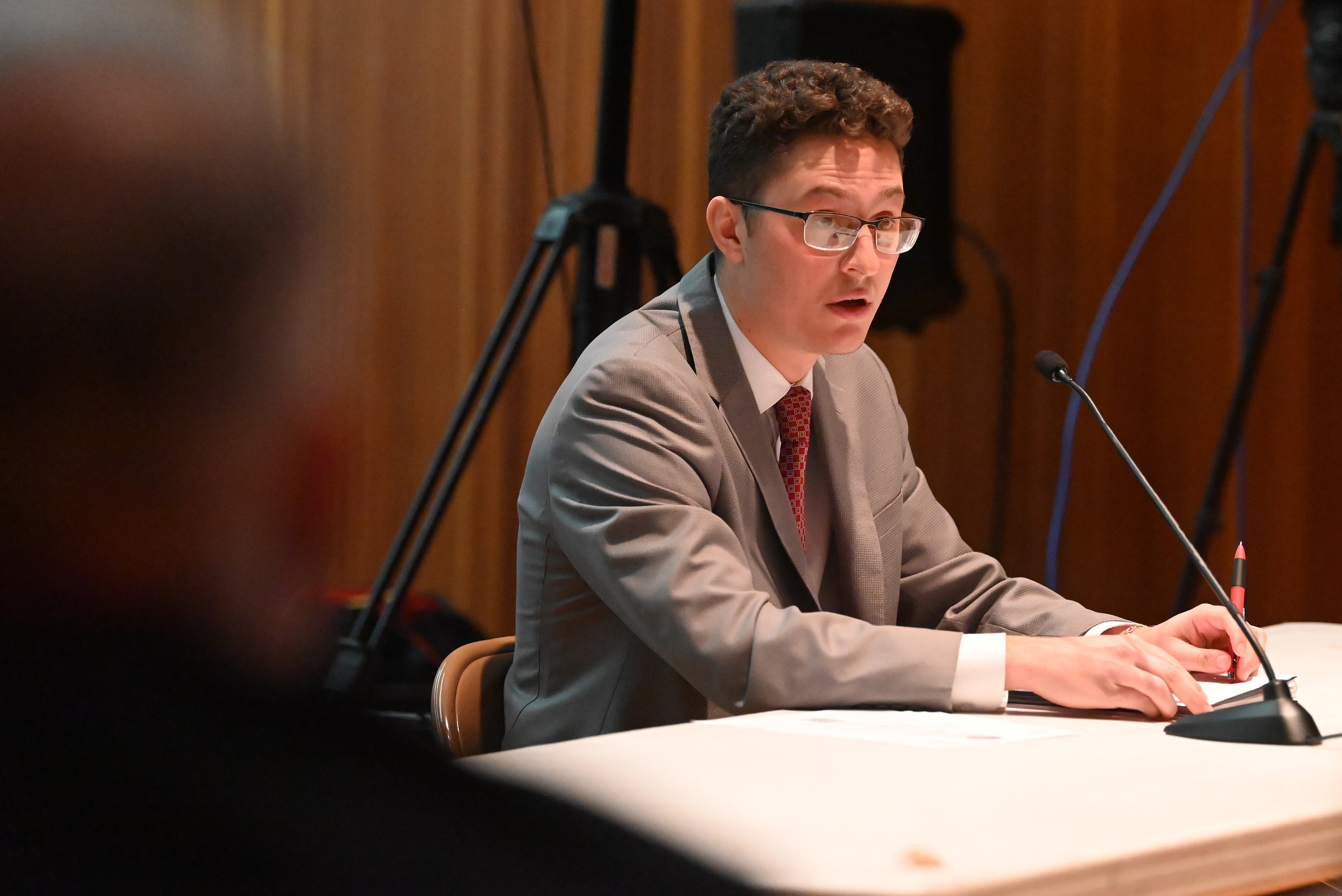
Wyoming Area School District Board Member Peter Butera speaks during the cyber charter reform hearing at Abington Heights Middle School in Clarks Summit on Friday, Feb. 09, 2026. (REBECCA PARTICKA/STAFF PHOTOGRAPHER)
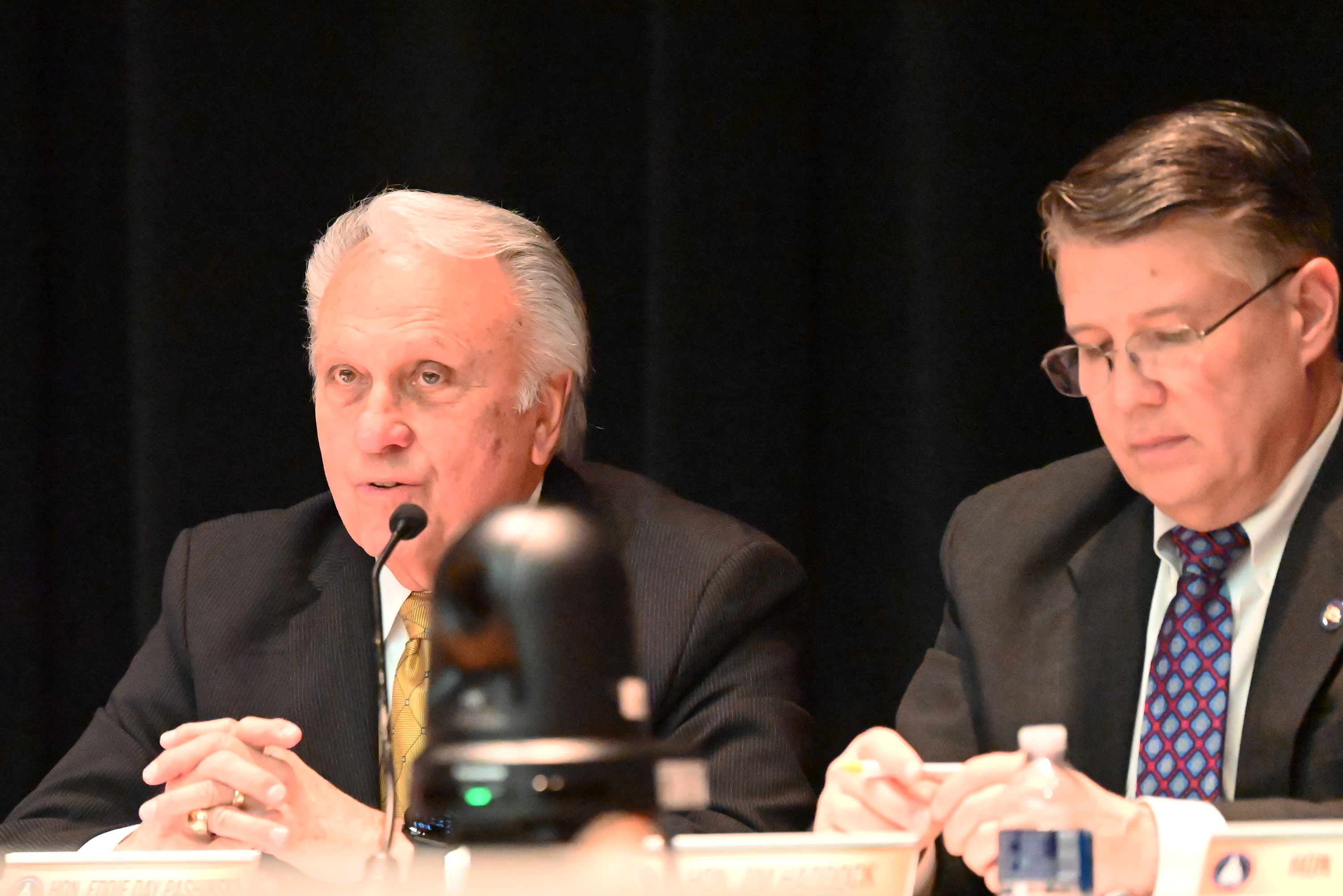
State Rep. Eddie Day Pashinski speaks during the cyber charter reform hearing at Abington Heights Middle School in Clarks Summit on Friday, Feb. 09, 2026. (REBECCA PARTICKA/STAFF PHOTOGRAPHER)
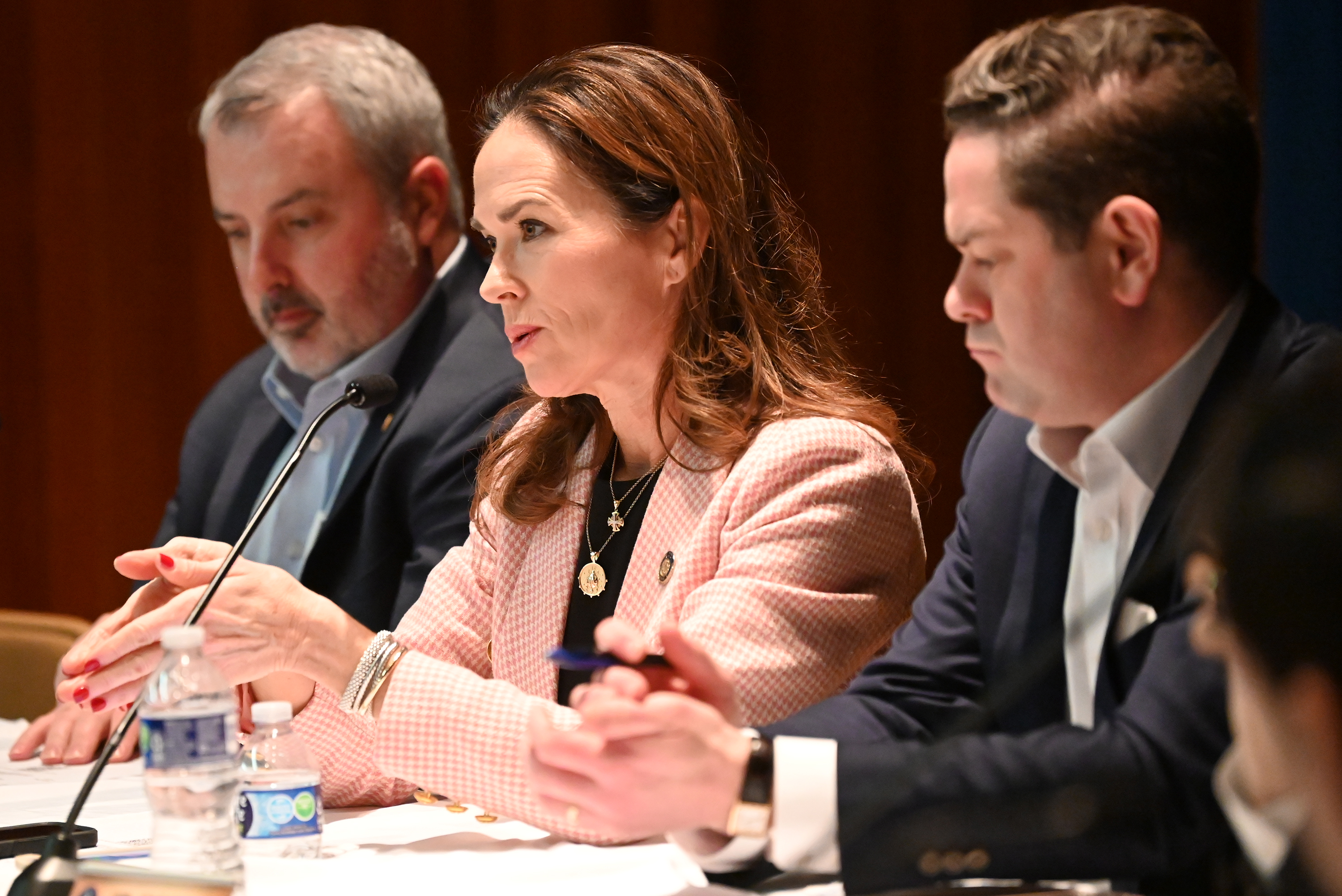
State Rep. Bridget Malloy Kosierowski asks the panel questions during the cyber charter reform hearing at Abington Heights Middle School in Clarks Summit on Friday, Feb. 09, 2026. (REBECCA PARTICKA/STAFF PHOTOGRAPHER)
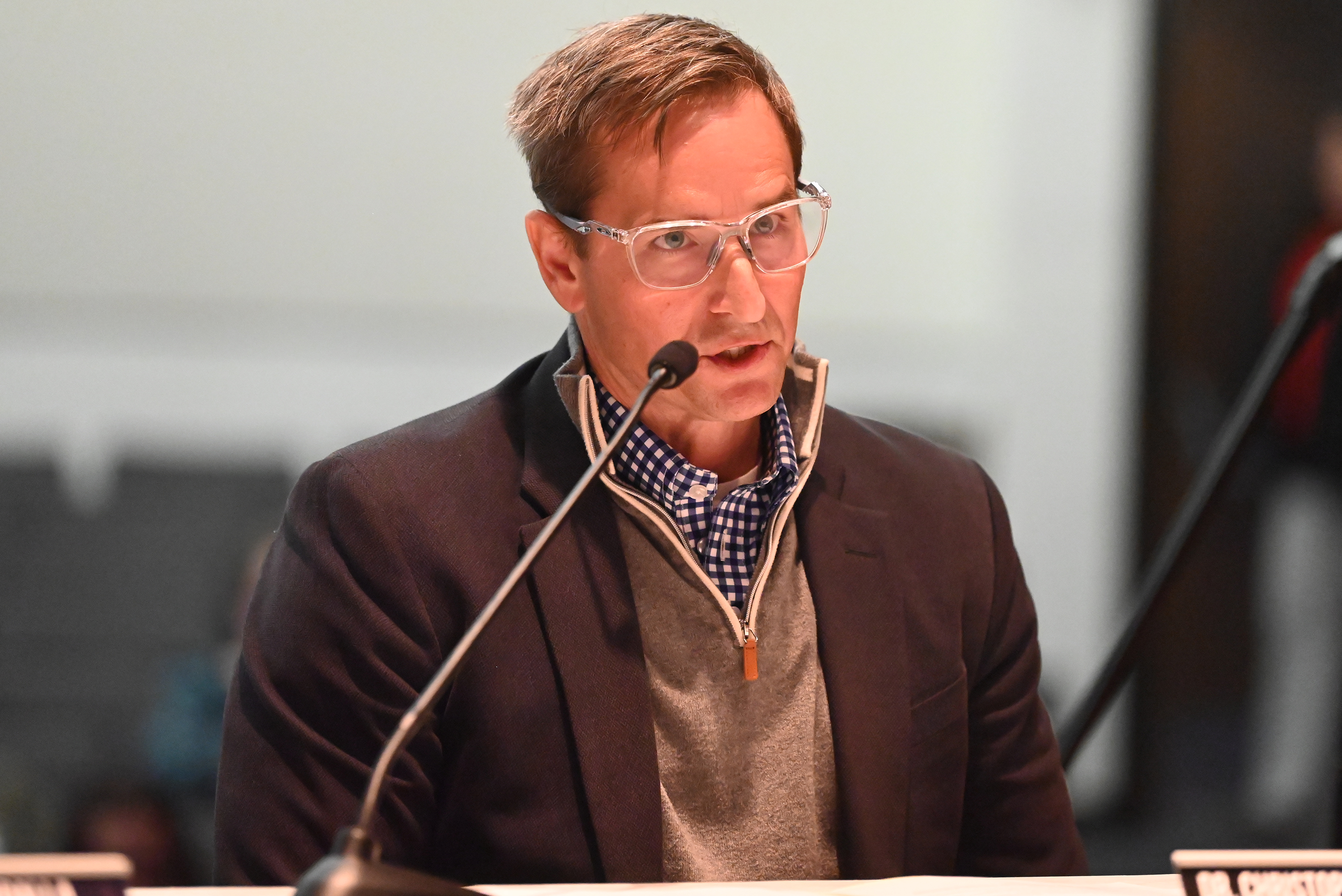
Abington Heights School District’s Superintendent Dr. Christopher Shaffer sits on the first panel during the cyber charter reform hearing at Abington Heights Middle School in Clarks Summit on Friday, Feb. 09, 2026. (REBECCA PARTICKA/STAFF PHOTOGRAPHER)
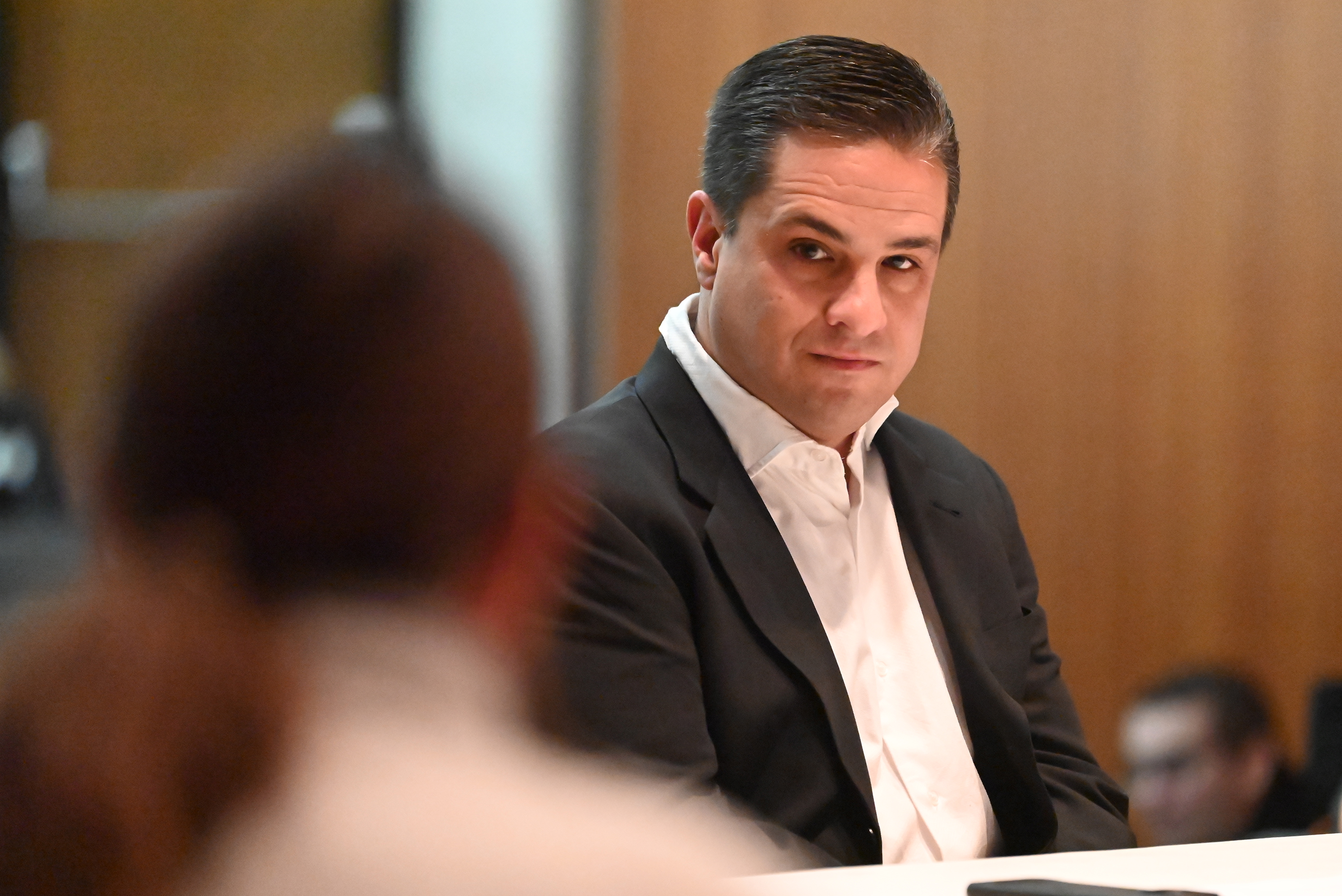
Abington Heights School District School Director Anthony Abdalla listens to State Rep. Tarah Probst during the cyber charter reform hearing at Abington Heights Middle School in Clarks Summit on Friday, Feb. 09, 2026. (REBECCA PARTICKA/STAFF PHOTOGRAPHER)
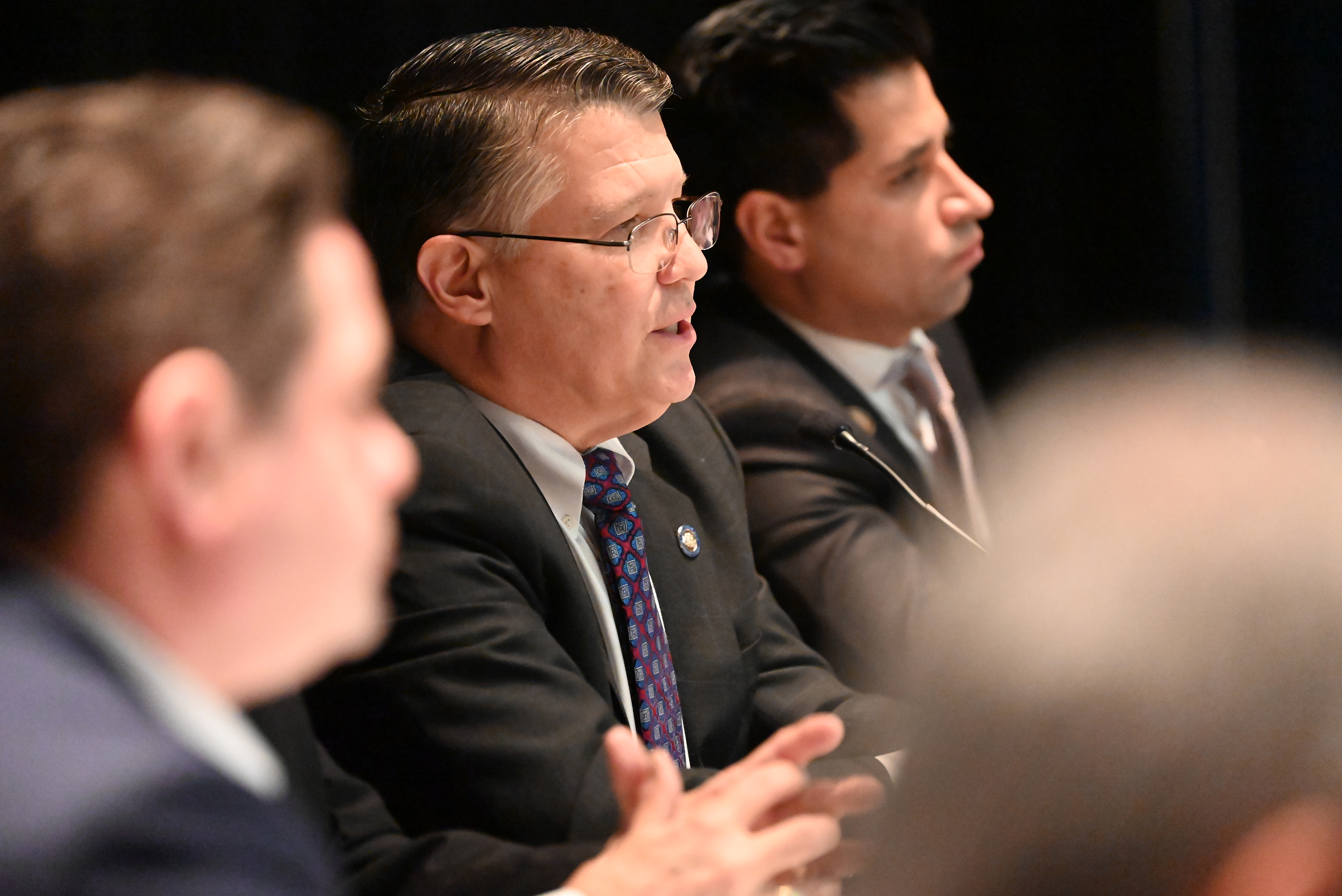
State Rep. Jim Haddock speaks during the cyber charter reform hearing at Abington Heights Middle School in Clarks Summit on Friday, Feb. 09, 2026. (REBECCA PARTICKA/STAFF PHOTOGRAPHER)
Show Caption
1 of 6
Wyoming Area School District Board Member Peter Butera speaks during the cyber charter reform hearing at Abington Heights Middle School in Clarks Summit on Friday, Feb. 09, 2026. (REBECCA PARTICKA/STAFF PHOTOGRAPHER)
Timothy Eller, chief branding and government relations officer for Harrisburg-based CCA, said in an email that students at the school — many of whom were behind academically or from situations where their needs were not being met in a traditional setting before enrolling — do well compared with those in public schools.
“Across multiple measures, CCA students consistently meet or outperform their peers in local school districts, despite often starting at a disadvantage,” he said. “Just as important, families are voting with their feet. Nearly 94% of CCA families indicate their intent to return each year, which reflects strong satisfaction with our academic programs, individualized support, and the care our teachers and staff provide to students and families alike. CCA’s model is built around personalization, flexibility and partnership with families. For many students, that approach is not just effective, it’s transformative. Our focus remains on delivering high-quality, student-centered public education that meets students where they are and helps them succeed, regardless of ZIP code or prior circumstance.”
Locally, CCA operates two Family Service Centers, in Wilkes-Barre Twp. and Dickson City, and plans to open a third on Montage Mountain in the fall.
Kelley McConnell, chief academic officer for Reach Cyber Charter, based in Enola, said after the hearing she wished cyber charter schools were invited to participate in the session. She said they serve students who aren’t well served at brick-and-mortar schools.
School districts pay tuition for any student within their borders who attends a charter school. Lawmakers have made efforts to reform cyber charter schools in recent years. The 2025-26 state budget included new policies designed to increase oversight of cyber charter schools, including allowing public schools to deduct more expenses from their cyber charter tuition, ensuring students are seen weekly, not allowing students who regularly have unexcused absences to transfer into a cyber charter school, and requiring families submit proof of residence twice a year.
Gov. Josh Shapiro’s 2026-27 budget would align cyber charter funding to actual costs for districts, saving school districts an estimated $75 million annually.
Shaffer said Abington Heights budgeted just under $2 million for charter schools for the 2025-26 school year. The Wyoming Area School District set aside nearly $2.6 million in its 2025-26 budget for charter schools, according to Superintendent Jon Pollard.
Pollard said in an email Monday recent cyber charter school reforms don’t go far enough.
“There must be the same accountability for Cyber Charters as there are for Brick and Mortar public schools,” he said. “It is completely unfair for Districts to foot the bill for advertising and giveaways to families, faculty and staff of these cyber charters. The legislature must take reform seriously.”