
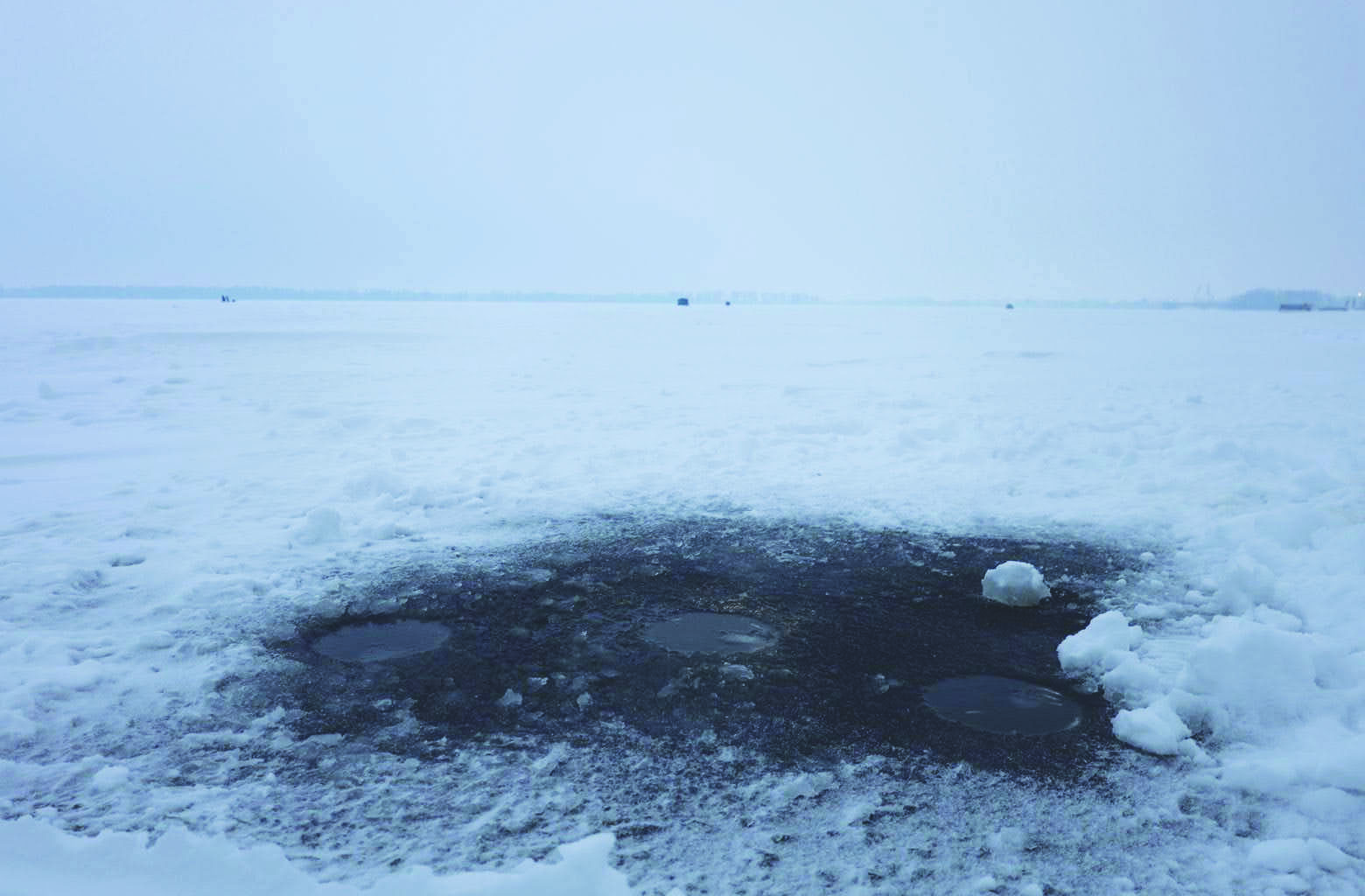
Lake Erie is closing in on a rare winter milestone as ice cover climbed to about 95% by early February, far ahead of the long‑term seasonal average, according to the National Oceanic and Atmospheric Administration’s Great Lakes Environmental Research Laboratory. The rapid freeze appears clearly in NOAA’s historical dataset, where this year’s line rises sharply in January instead of the typical gradual increase toward a March peak.
The lake has not frozen completely since 2014, and it has only reached full ice coverage three times since record keeping began in 1973, which makes this winter’s surge especially notable.
The deep freeze set the stage for a dramatic event over the weekend. An 80‑mile crack split across the lake’s frozen surface from near the Canadian shoreline toward the Cleveland area after strong winds swept across the Great Lakes, according to AccuWeather. The shifting winds pushed and twisted the ice until it fractured, creating a jagged opening that stretched nearly the entire width of the lake. Ice also piled into ridges along parts of the shoreline, creating hazards for nearby communities and raising concerns about property damage in vulnerable coastal areas.
Cracks of this scale are not unheard of when Lake Erie is heavily frozen. The lake’s ice behaves like a massive yet brittle sheet that can drift, collide and separate as winds shift or temperatures fluctuate. This winter’s combination of Arctic air and persistent wind made the ice both thick and fragile, a setup that can produce dramatic breaks.
Story continues below advertisement
Whether the lake will reach full ice coverage remains uncertain. AccuWeather Great Lakes Expert Brandon Buckingham said a mid‑February warm-up could keep the lake just shy of 100 percent. A few pockets of open water remain on the western end, kept alive by the same winds that caused the crack. If winds calm and temperatures stay low, the lake could seal over completely, but the window is narrowing.
Assistant Professor of Environmental Science and Sustainability Claire Griffin said Lake Erie’s size makes it the most likely of the Great Lakes to completely freeze.
“Lake Erie is the smallest of the Great Lakes both in terms of area and depth,” Griffin said. “Because of its small size, Erie cools off much faster than some of the other lakes. So it is very normal for Erie to freeze over completely.”
Griffin explained that water’s high heat capacity plays a major role. It takes a long time for water to warm up, but it also takes a long time to cool down. Larger and deeper lakes like Lake Superior hold far more heat and require longer, more intense cold periods to freeze. Erie, by contrast, loses heat quickly and responds more dramatically to cold snaps.
Even so, Griffin said the long‑term record does not show a clear trend in how often Erie freezes over.
“It doesn’t freeze over every year,” she said. “We actually don’t see a really strong trend for Erie in whether or not it’s freezing over completely. There is a lot of natural variability in Earth’s climate even without climate change. Climate change is definitely happening, but that doesn’t mean it’s not going to get cold.”
Griffin noted that while the eastern United States is experiencing a bitter winter, the western half of the country is unusually warm and dry. The contrast, she said, is a reminder that regional weather does not always reflect global climate patterns.
For those living near the lake, the winter has been intense. Assistant Professor of English Courtney Walton, who lives in Erie, said the conditions have been more extreme than she expected when she moved to the city.
“There’s a lot of snow,” Walton said. “I feel like it snows every day. It’s very gloomy, and the amount of snow plus lack of sunlight has been surprising. I’m coming from Chicago, so I thought I knew snow, but this is another level.”
The frozen lake, she added, contributes to the region’s distinct winter atmosphere.
“I think it’s pretty cool,” Walton said. “Because it’s so cold it’s frozen, but it also helps with lake‑effect snow. So it’s like, would I rather deal with the super‑cold weather or the snow? And I would rather deal with the super‑cold than the snow, honestly.”
The near‑total freeze may also shape the coming months. AccuWeather forecasts an atypical weather pattern for the remainder of the winter, saying that it will be cooler-than-normal for the region, which may delay shoreline warming into the late spring.