
By Dr. Barbara Brandom
While headlines focus on the pressure that massive data centers place on Pennsylvania’s power grid and water resources, a quieter hazard has gone unnoticed: light pollution.
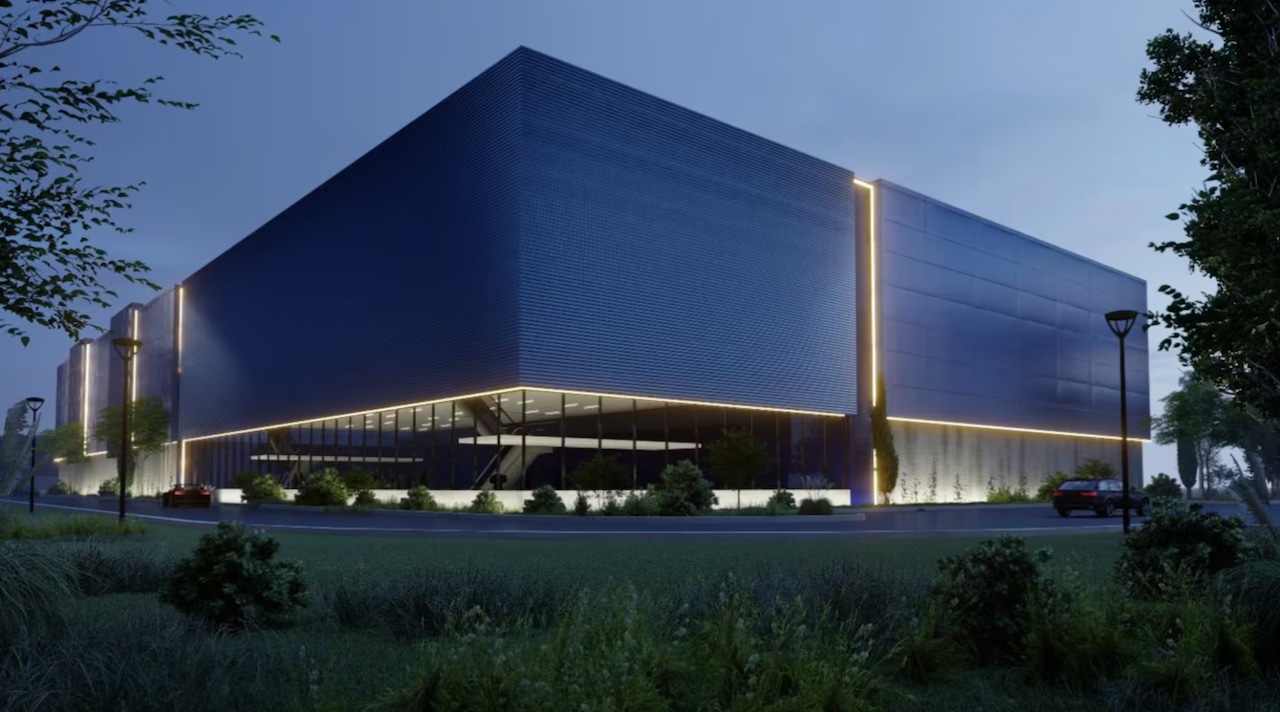
A hyperscale data center campus requires as many as 1200 acres of land to accommodate infrastructure, cooling, and power systems, with round-the-clock industrial lighting. Residents in rural or suburban areas near data centers have reported that the facilities often “glow at night” like large cities.
A bill that would have regulated light pollution was dropped in the Pennsylvania House of Representatives, despite growing evidence that this pollution is a threat to both people and the natural world. House Bill 0969 would have advanced responsible outdoor night lighting by setting an example: Government facilities would be required to follow best practices that reduce light pollution. The bill died in the Pennsylvania House Environmental and Natural Resource Protection Committee in March of last year and has not resurfaced for discussion or a vote.
The ecological effects of artificial light are well documented. Prolonged exposure can prevent trees from adjusting to seasonal change. Light pollution alters the behavior, foraging patterns, and breeding cycles of insects, turtles, birds, fish, reptiles, and other wildlife in both rural and urban environments.
Evidence also links outdoor light exposure to mental health issues in nearby, “fenceline” communities because it disrupts people’s sleep and circadian rhythm.
Although the evidence that indoor light pollution alters human health is fairly strong, the effects of external light pollution on human health have only been documented for 15 to 20 years. Nevertheless, since 1995 studies examining female employees working a rotating night shift found that an elevated risk of breast cancer is associated with exposure to artificial light at night.
In 2007, the International Agency for Research on Cancer classified shift work as a probable human carcinogen. A biologic mechanism for this effect may be that melatonin levels, usually increased at night, drop precipitously in the presence of artificial light. Melatonin has many biologic effects including the nocturnal reduction in estrogen. Estrogen is often a promoter of breast cancer. The National Cancer Institute estimates that one in eight women will be diagnosed with breast cancer at some time during their life. Known risk factors are attributed to only about 50% of these cases.
In 2006, the National Institute of Environmental Health Sciences convened experts to examine links between artificial lighting and human health. A subsequent report observed that modern life is defined by altered patterns of light and dark made possible by electricity. The authors noted that rising rates of breast and prostate cancers, obesity, and early-onset diabetes have paralleled dramatic increases in nighttime artificial light. “The science underlying these hypotheses has a solid base,” they wrote, “and is currently moving forward rapidly.”
The “Precautionary Principle” is an environmental idea that states that if an action could cause severe, irreversible damage, lack of full scientific certainty should not prevent taking measures to avoid that harm. This principle, which should guide both state law and data center infrastructure standards, compels us to reduce exposure to artificial light during the hours of natural darkness.
Gregory Pirio, who moved to Loudoun County, Va., 14 years ago, recalls a landscape once filled with forest and farmland. “It was just really beautiful, and now it has this very industrial feel,” he says. Today, he lives about 150 yards from a data center powered by methane (“natural gas”) turbines and backed up by diesel generators.
There are published standards for data center infrastructure, but they do not address exterior lighting. As a result, lighting concerns are often ignored in planning and construction.
The details of outdoor lighting matter. This Commonwealth should encourage residents and businesses to transition to responsible lighting practices because excessive or poorly designed lighting has measurable ecological and health consequences. In environmentally sensitive areas, light trespass—light shining beyond property boundaries—should be eliminated.
According to the National Park Service, 50 percent of light from an unshielded outdoor lamp is wasted, shining upward where it serves no purpose. Only about 40 percent is directed downward onto the intended area.
These are unnecessary lapses in responsible design. Data centers should not receive construction approval if their exterior lighting impacts nearby residences, parks, or forested areas. Responsible lighting is not an aesthetic luxury; it is a public health and environmental necessity.
We want to protect our health. We must protect biodiversity as well.
Dr. Barbara Brandom writes from Rockwood, Pa.