
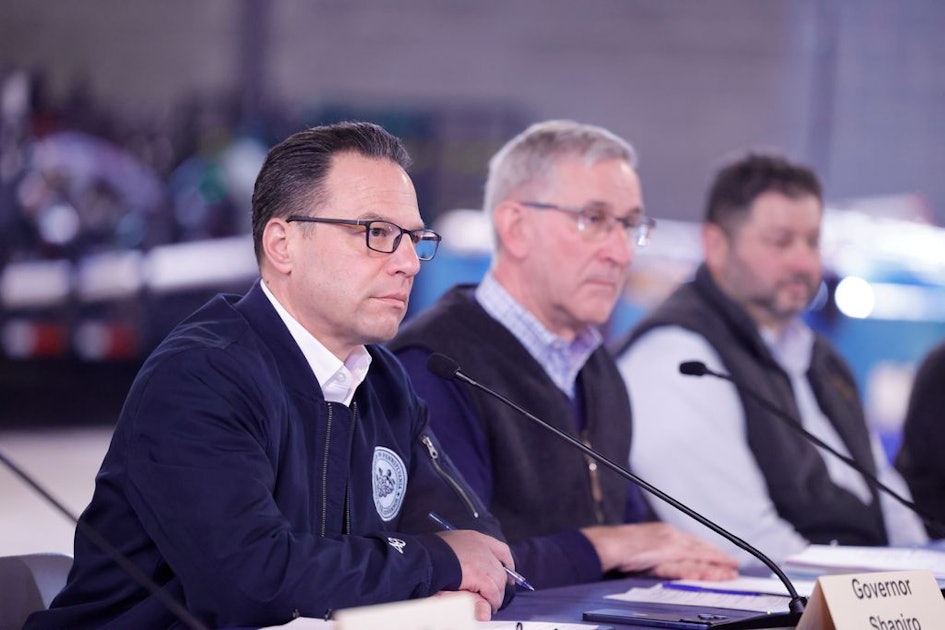
Pennsylvania Gov. Josh Shapiro and state agriculture officials convened a roundtable with poultry producers, legislators and industry leaders on February 24 to outline an expanded response to a surge in highly pathogenic avian influenza (HPAI) that has claimed more than 7.6 million birds in the commonwealth since January.
Shapiro directed his administration to deploy additional personnel, expand testing and coordinate with the U.S. Department of Agriculture and industry partners. In total, 105 staff are now assigned to HPAI mitigation efforts, including three Pennsylvania National Guard Civilian Support members, 55 Commonwealth veterinarians, four Penn State Extension experts and 42 USDA employees.
Pennsylvania remains the only state in the nation with a dedicated HPAI Recovery Fund. Since 2022, $75 million has been committed to the fund. To date, 302 poultry businesses have received $15.6 million in grants to offset losses and strengthen biosecurity protections, with $59.4 million still in reserve.
The Pennsylvania Animal Diagnostic Laboratory System has processed more than 672,342 HPAI tests since July 2024, including more than 200,000 poultry samples. Since January 2026, the lab system has already tested 80,000 birds in less than two months.
“My Administration is working around the clock to expand our rapid response efforts and mitigate this surge,” Shapiro said. “We are deploying more personnel, expanding our testing ability, and coordinating closely with the federal government and our industry partners.”
A coordinated response on the ground
The roundtable was held at the PennAg Industries Rapid Response Center in Lancaster, which serves as the operational hub for disease containment. PennAg also manages the state’s Center for Poultry and Livestock Excellence.
Building long-term readiness
To bolster long-term readiness, Shapiro secured $6 million in the 2024–25 budget to establish a fourth diagnostic lab at Penn State Beaver. His proposed 2026–27 budget includes $11 million for agricultural preparedness and response.
Legislation signed by Shapiro last year expanded the types of samples certified poultry technicians may collect, resulting in 211 new workers. The statewide total now stands at nearly 900 certified poultry technicians, with more than 500 producers trained as HPAI Samplers.
Poultry is the largest sector of Pennsylvania’s $132.5 billion agriculture industry, supporting nearly 48,800 farms and almost 600,000 jobs. The state’s poultry industry alone is valued at $7.1 billion.
Bipartisan support
State legislators from both parties attended the roundtable and expressed unified support for the response effort. Senate Democratic Agriculture Chair Judith Schwank called the outbreak a direct threat to families across the commonwealth.
“The Shapiro administration is responding to this crisis with the urgency it demands by mobilizing the resources necessary to protect our communities and our food supply,” Schwank said. “Now, more than ever, we need a unified effort to slow the spread of the disease and minimize its impact on our farmers.”
Senate Republican Appropriations Chair Scott Martin echoed that call for coordination, noting the bipartisan work already underway to expand testing and monitoring resources.
“Both sides of the aisle have worked to ensure we have enough testing and monitoring capacity to protect more flocks from being affected,” Martin said. “Today’s roundtable was an important step to keep the lines of communication open and ensure everything is being done to protect poultry operations throughout the state, especially during this critical time.”
On the House side, Democratic Agriculture Chair Eddie Day Pashinski praised the administration’s speed and pledged continued legislative engagement. “The General Assembly is committed to working alongside producers, veterinarians, and state agencies to support strong biosecurity, rapid response, and long-term solutions that protect this industry,” Pashinski said.
House Republican Agriculture Chair Dan Moul underscored the non-partisan nature of the threat. “HPAI isn’t a red or a blue issue — it impacts everyone in the state,” Moul said. “It is impressive to see the speed at which PDA and USDA have come together for the Pennsylvania poultry industry.”
PennAg Industries Vice President Chris Herr credited the center’s year-round relationships with producers as key to mounting a rapid response. “Having established trust and year-round relationships with producers has put us in a position to respond quickly, train farm managers and staff, and work efficiently with government and industry leaders together,” Herr said.
State Veterinarian Dr. Alex Hamberg stressed that containing the virus will require continued collaboration at every level. “Many of the best solutions come from the people who are in the field every day — and the only way we get through this is by working together,” Hamberg said.