
Pittsburgh Public Schools turned down an application for a new Montessori charter school with little fanfare on Wednesday night.
The board unanimously approved a resolution denying Three Rivers Wildflower Montessori’s request for a charter, which would have allowed the school to operate with public dollars. Board members did not comment during the vote.
The Montessori method, pioneered by Italian physician and educator Dr. Maria Montessori, prioritizes child-driven, hands-on learning. In her application, Stephanie Lapine, founder of Three Rivers Wildflower Montessori, proposed three intentionally small “microschools,” with locations to be determined by demand and neighborhood diversity.
Lapine, currently a teacher at PPS Manchester K-8, suggested last year that these scaled-down schools would allow teachers to implement the Montessori method with full fidelity.
But Lisa Augustin, the district’s director of charter schools, said the school’s proposed curriculum and lack of location made its application insufficient. Earlier this month, Augustin told board members that, without a location determined by the start of the application process, PPS officials could not visit or inspect the facility to determine whether it is suitable for children.
Augustin also said Lapine has not provided enough evidence of sustainable support for the new school. No pre-enrollment forms were submitted with the application, Augustin said, and several letters of support were authored by parents and businesses located outside the city.
Pennsylvania’s charter school law also suggests that districts evaluate whether charter school applicants would “serve as a model for other public schools.” Charter schools, according to the law, are meant to expand the types of education offered and encourage innovative teaching methods.
“We have a Montessori school,” Augustin told board members during a Feb. 3 presentation. “So with an existing Montessori school, this school is not new and innovative.”
But Lapine said Three Rivers Wildflower would extend the model to more students and educators of color.
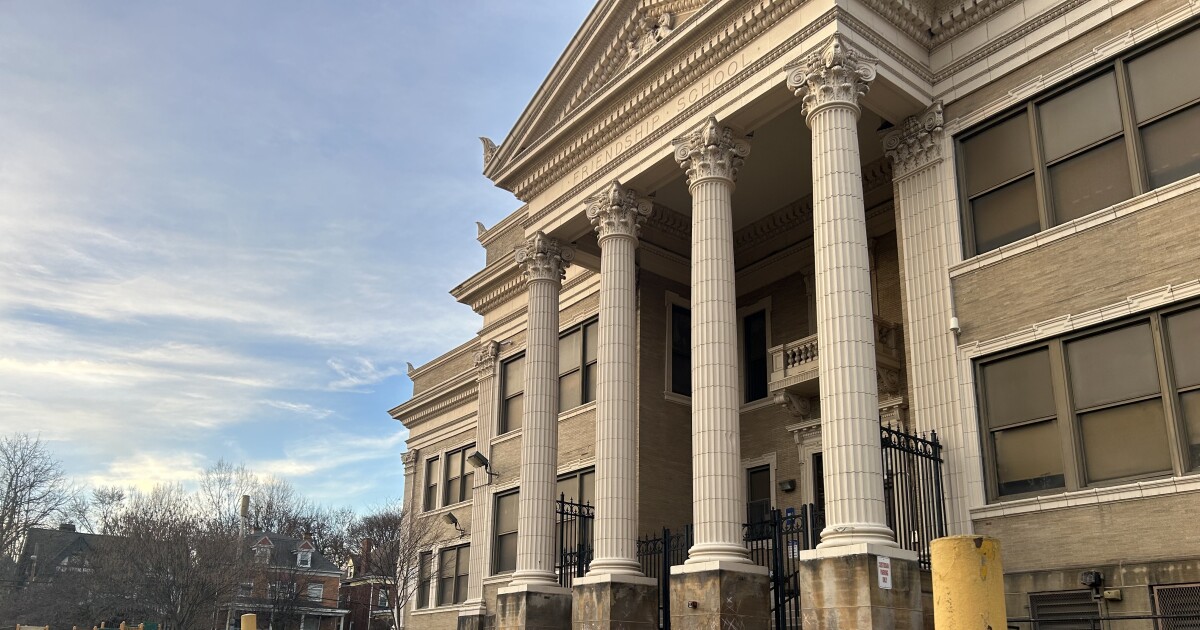
While Black students make up about half of K-5 students districtwide, less than 13% of the nearly 250 students at the district’s PreK-5 Montessori magnet school in Friendship are Black.
According to A+ Schools’ annual report, only 5% of PPS’s Montessori educators last year were Black, compared to 16% of K-5 educators districtwide.
In written testimony submitted to the school board on Wednesday, Lapine said her charter school would serve as an antidote to “a historic and devastating white-washing of the Montessori method.”
“It was never intended to be a system of education gate-kept by White privileged folks, but that is exactly what PPS has created,” Lapine wrote. “You see.. we can keep doing the same thing and pretending it doesn’t hurt anyone. Or, we can turn to those who have been decrying an unjust system and ask, How can we change this?”
Lapine told board members earlier this month that she plans to return with an application that satisfies all of the district’s requirements. Charter school applicants may submit a revised application or appeal to the state’s Charter School Appeal Board with a petition signed by at least 1,000 district residents.
However, at hearings in December and again this week, some parents shared concerns about launching new charter schools amid potential school closures.
Others spoke in support of the existing Montessori school after school board vice president Tracey Reed suggested during last week’s Future-Ready Plan discussion that PPS Montessori should be eliminated if the district intends to phase out all elementary-level magnet schools.
At Monday night’s district public hearing, Montessori parents such as Darlene Yanakos cited the school’s long waiting list and consistently high academic outcomes.
Last school year, Montessori PreK-5 had the highest reading proficiency rates of all PPS elementary schools and one of the lowest chronic absenteeism rates districtwide.
“The equitable path forward is not to limit access to successful models, it’s to replicate them in more neighborhoods so more families from more backgrounds can benefit,” Yanakos said. “If we’re closing buildings, we should also be expanding opportunity.”