
Arizona Gold & Silver Inc (TSX-V:AZS, OTCQB:AZASF, FRA:A9J0) earlier this week provided an update on drilling at its Philadelphia Project, outlining both short-term variability in results and what CEO Mike Stark described as a significant exploration opportunity still in its early stages.
Speaking to Proactive, Stark explained that holes 159 and 160 encountered faulting on either side of the current upwelling zone, which affected near-surface continuity.
Proactive: Alright, welcome back inside our Proactive newsroom. Joining me now is Mike Stark. He is the CEO of Arizona Gold and Silver. Mike, it’s good to see you again. How are you?
Mike Stark: Very well. Thank you. Good morning.
News out from the company today talking about your next two holes on your Philadelphia Project, 159 and 160. Up until this point you’ve had some real success in these holes, and these two not so much. Maybe you can explain to investors what you’re seeing here?
Yes, glad to. Currently we have an upwelling zone, which we’ve been drilling down dip on, and it is still completely wide open at depth. We’ve now seen two faults on either side. When the geology drops away like that, if you drill over those areas it’s not there, but it is below.
We had a very successful run of many holes. This was somewhat expected at some point. The beauty is maybe 50 to 60 feet over on our 1,000 feet of strike, we would likely encounter another upwelling zone. A classic example is the Vera Nancy mine in Australia, where they have upwelling zones all along strike.
The best thing is we have not been cut off down dip, and that’s where the grades are likely to get better, proven by history only 14 miles away in the Oatman district.
Does that change what you’re doing next? Are you continuing along the same area and altering step-outs? What’s the plan moving forward?
We’re stepping up beside hole 136 to better understand either side of that zone. We had a very, very healthy hit there. This is above holes 156, 157 and 158, roughly above that section, to understand what’s happening below. It’s a good area to be drilling and it has to be infilled in time. We’re doing it now to better understand what’s going on.
We’re not disappointed in the project. Matter of fact, we’re overwhelmed. This is a very big, robust system over 165 metres wide.
You’re still waiting on some permits for drill pads. Is part of the message that this is only a small portion of the Philadelphia Project?
It really is. When you look at the concentration area, it’s three and a half acres out of 3,100 acres that we control. This permit will extend to the south end of the property, covering a kilometre and a half of untested vein exposure.
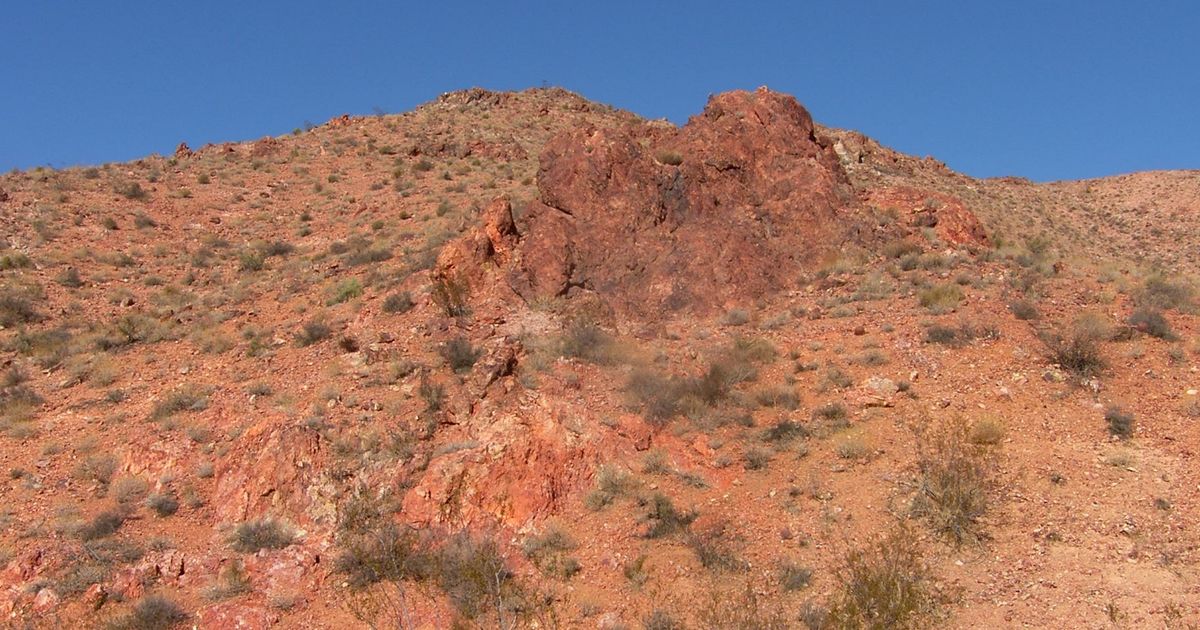
We can never say it’s guaranteed, but why would the vein come to the surface if it didn’t come from down below? That’s only one aspect. Then there’s Red Hill, which is a major, major opportunity to drill down dip and along strike to find other upwelling zones.
This is a significant discovery, and it’s yet to be explored as far as I’m concerned.
So you and the team are encouraged about what’s ahead?
We’re very positive. Sure, it’s discouraging when you hit faults, but this was almost expected. The recovery we’re seeing now shows this is just the beginning. We had a site visit yesterday and I was overwhelmed by the enthusiasm.
Quotes have been lightly edited for style and clarity