
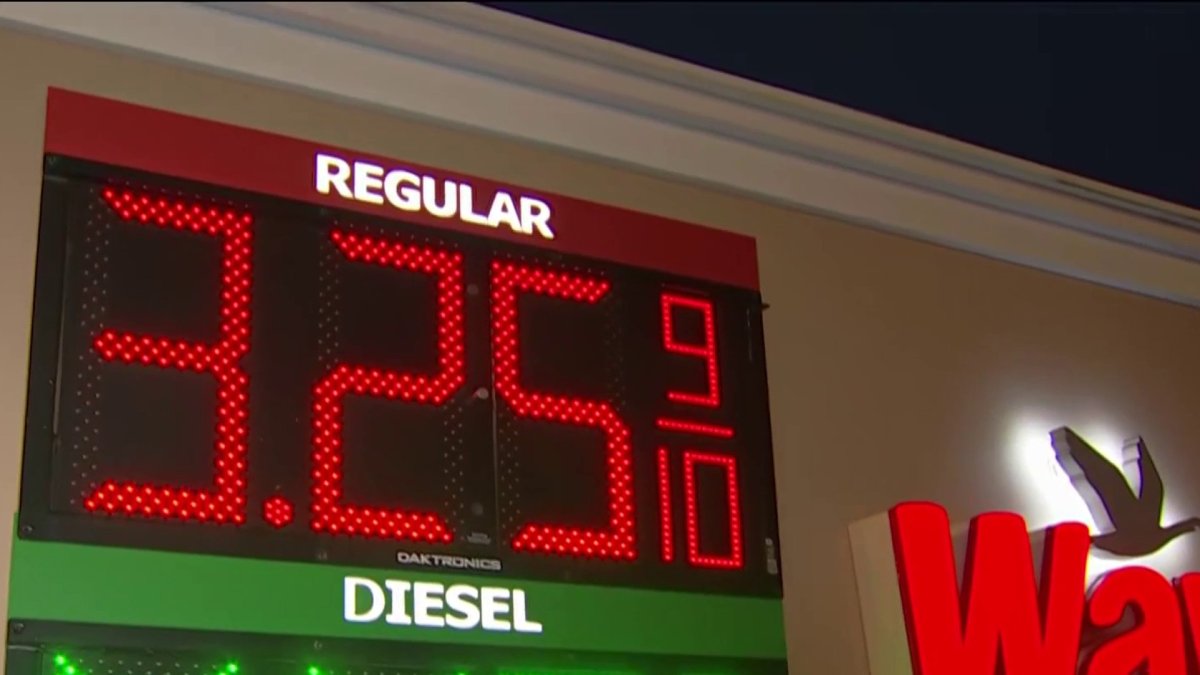
Experts say gas prices jumped 10 cents per gallon overnight and they won’t be going back down any time soon as they are impacted by the ongoing war in Iran.
As seen Wednesday morning, all across Pennsylvania, New Jersey and Delaware, the cost for gas is up from the same time on Tuesday.
But, the issue isn’t just hitting our communities, some drivers in Europe waited in line to fill their tanks with fuel, as war engulfed the Middle East and shipments of oil and gas were stranded in the Persian Gulf.
A gallon of regular was selling for $3.11 on average in the U.S., according to motor club AAA, surprising some drivers at the pump. Gasoline prices were already rising before the U.S. launched strikes on Iran as refiners switch over to summer blends of fuel.
But crude prices rose sharply in recent days because of the war.
On Tuesday, oil prices soared to levels not seen in more than a year as Iran launched a series of retaliatory attacks, including a drone strike on the U.S. Embassy in Saudi Arabia.
Iran has also struck energy facilities in Qatar and Saudi Arabia, and disrupted tanker traffic through the Strait of Hormuz, the narrow mouth of the Persian Gulf through which a fifth of all oil traded passes, sending global oil and natural gas prices soaring.
President Donald Trump addressed the rising prices in remarks in the Oval Office Tuesday. “We have a little high oil prices for a little while, but as soon as this ends, those prices are going to drop, I believe, lower than even before,” he said.
Benchmark U.S. crude jumped 8.6% to $77.36 a barrel Tuesday.
Brent crude, the international standard, added 6.7% to $81.29 a barrel. Global oil prices jumped to start the week over concerns that the war will clog the global flow of crude.
The price of crude is the single largest factor in how much U.S. drivers pay for fuel.
And, higher oil prices are usually felt at the pump within a couple of weeks at most.
Even though the U.S. has a massive stockpile of crude oil, what happens overseas has an impact on pricing locally.
Some of the world’s largest oil-producing countries in the Middle East stopped oil production because of the war. And, many ships that haul fuel have anchored around the Strait of Hormuz. That’s one of the world’s most important shipping lanes for crude oil.
AAA is keeping an eye on developments overseas and the impacts that they could have here.