
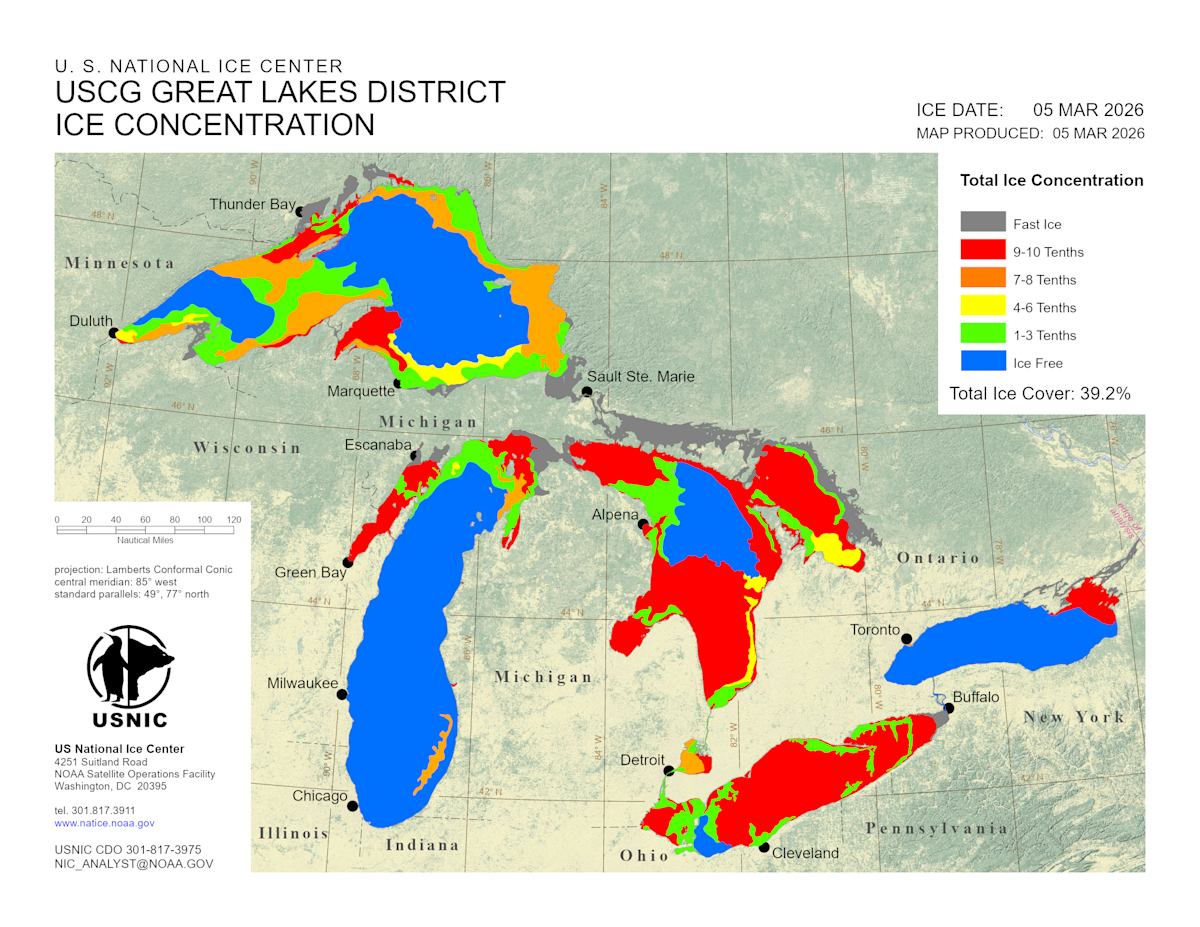
The ice on Lake Erie is slowly melting.
After some new ice formed over Lake Erie on Feb. 26, the U.S. National Ice Center says that the ice coverage on Lake Erie is back to 70 percent.
Jonathan Edwards-Opperman, physical scientist with the U.S. National Ice Center, says that some new, very thin ice formed over Lake Erie during the final days of February.
That new ice has now melted, bringing the coverage back down to close to 70% of Lake Erie. The thawing has resulted in open water along the western and southern shores of the western basin of Lake Erie as well as the eastern end of the Lake Erie islands.
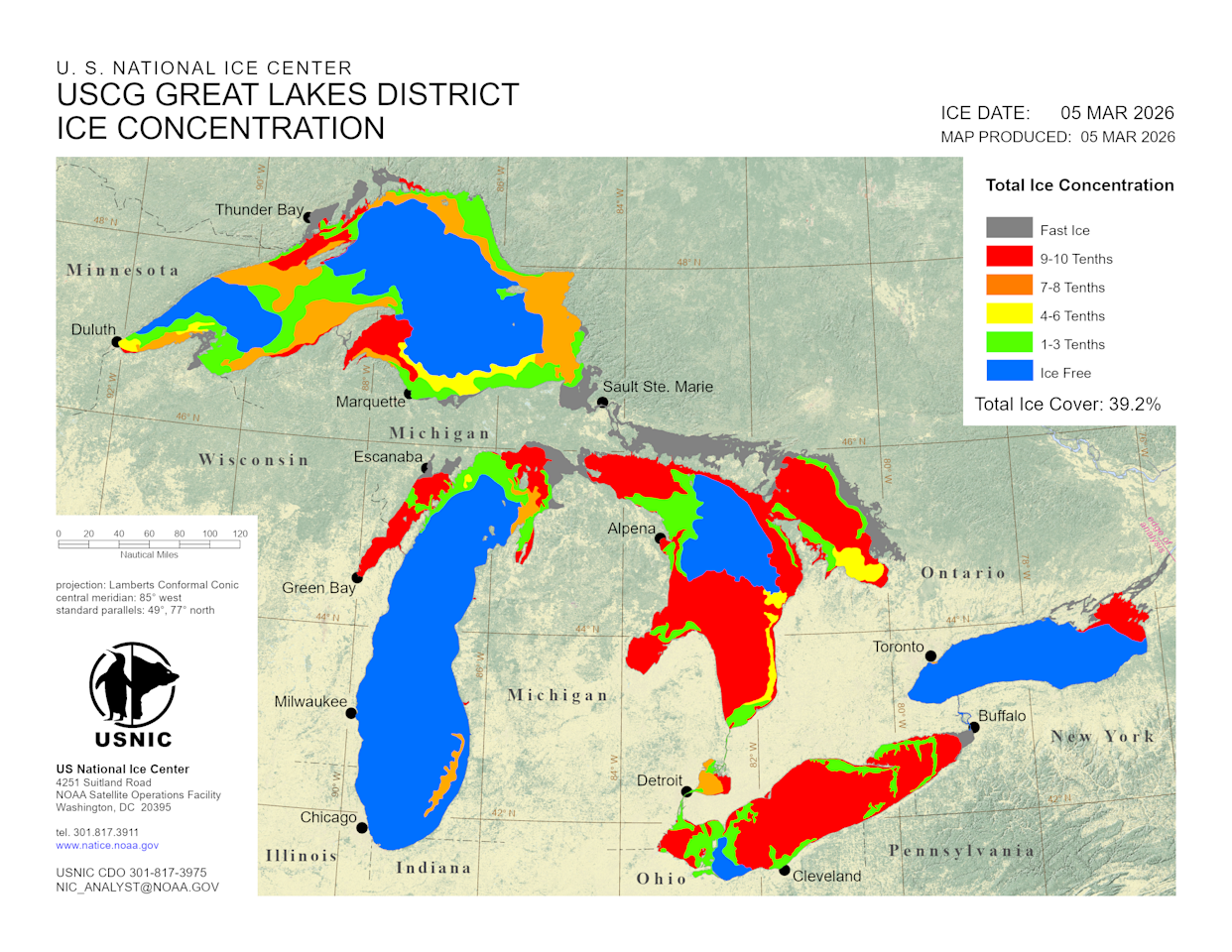
As of March 6, Lake Erie is showing 70% of ice coverage. Lake Erie remains the most ice-covered of the Great Lakes in early March.
What lies ahead for the ice on Lake Erie?
Looking ahead at the forecast, Edwards-Opperman expects the remaining ice to melt more consistently over time.
Edwards-Opperman says that the forecast does not look favorable for any periods of ice growth.
High air temperatures in Erie County are forecasted to range from the upper 40s to mid 60s from March 7 through March 11.
February snowfall totals: How much snow fell in Erie, Pa. in February?
Where is the thickest ice on Lake Erie?
According to the National Ice Center, the thickest ice on Lake Erie remains in the eastern basin near Buffalo.
The current data from the map provided by the National Ice Center shows that a chunk of fast and thick ice remains in that area near Buffalo. Most of Lake Erie in the eastern basin is still at nine-tenths (90-100%) in total ice concentration.
Lake Erie still the most ice-covered lake
Lake Erie remains the most ice covered out of the Great Lakes, with just a gap of open water shown on the Ohio end of the lake. Around the gap of open water is where most of the thinnest ice on the lake remains.
Spring forward March 8: Why do we set the clocks forward for daylight saving time?
The other Great Lakes, specifically Lake Michigan and Lake Ontario, show a vast majority of ice-free areas or open water.
Nicholas Sorensen can be contacted at Nsorensen@usatodayco.com.
This article originally appeared on Erie Times-News: What the National Ice Center says about the ice coverage on Lake Erie