
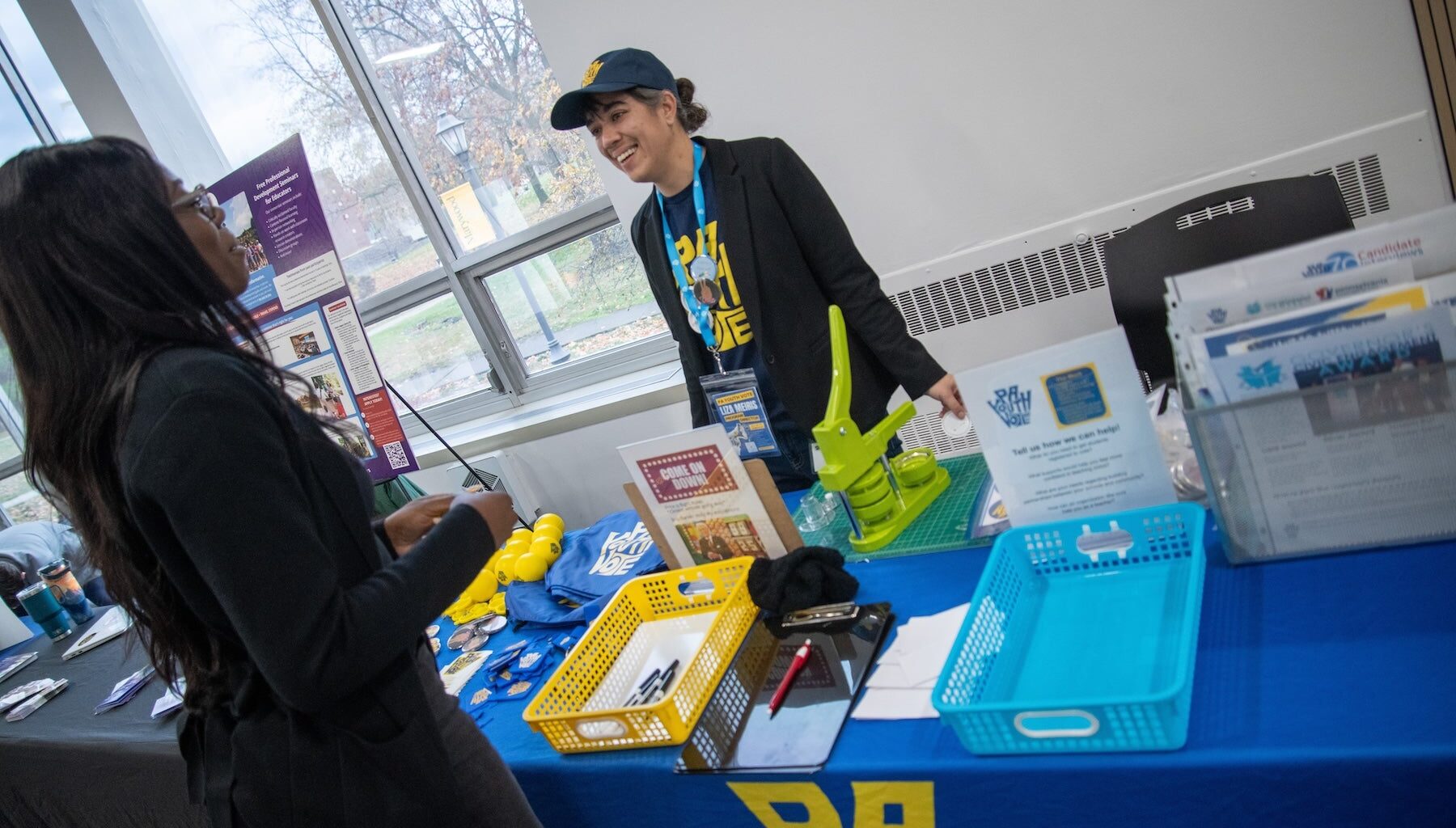
Informing young people about civic processes
Samuel Gatheca, a senior at Temple University, says he often finds it difficult to find information about candidates, especially in local elections.
One of the projects the 21-year-old is working on for PA Youth Vote is a voter guide, so people can make informed decisions.
“I think voter guides are really important, especially before entering the booth,” Gatheca said. “Because I want people to be prepared.”
 Samuel Gatheca poses at Temple University. (Courtesy of Samuel Gatheca)
Gatheca also spends time working information tables in colleges, high schools and middle schools to inform other students about PA Youth Vote.
Nguyen is working to bring young people into the civic process as well. He is building a nonpartisan public speaking training program to teach high school and middle school students about how they can participate in the democratic system.
The project is set to include a series of workshops on how local government works, how to prepare public comments for meetings and how to deliver those remarks confidently.
Nguyen said his goal is to get students to participate in something that means more to them than a line on their college application.
“It’s to empower them,” Nguyen said. “I’ll know I’ve succeeded if I see these students continuing to engage with local civics beyond the program.”
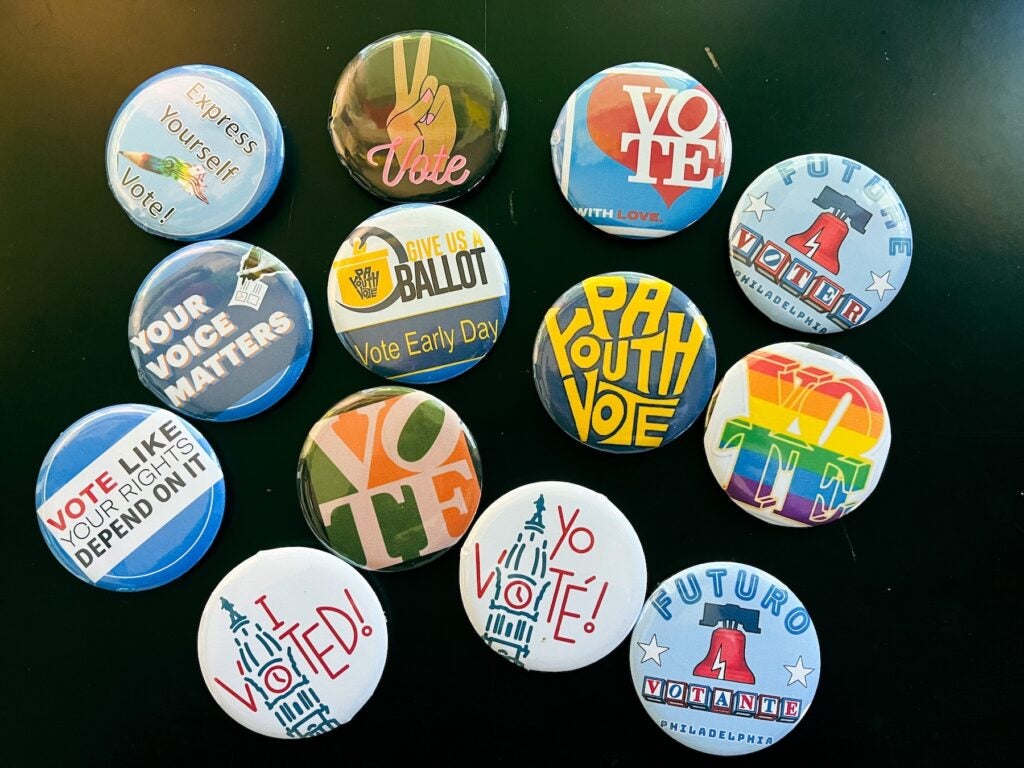 PA Youth Vote buttons. (Courtesy of PA Youth Vote)
Tapping into the community
Lina Lin, a 19-year-old attending Drexel University, started Youth Voice Mosaic, PA Youth Vote’s digital magazine, in the summer of 2025. It is a platform for students across the state to share personal stories, highlight community issues and improve civic and media literacy.
Lin said she wanted to create a community to amplify youth voices, where people come together through lived experiences with civic engagement.
“A community where people can engage with each other and that the youth feel represented and empowered to share their voices,” Lin said.
PA Youth Vote intern Raniyah Lawrence-Ashford, a sophomore at Lincoln University, is focused on in-person engagement with her school community in order to get fellow students involved in the electoral process.
Lawrence-Ashford said she saw the positive effect of tabling at her school and thought it would be a compelling way to involve her peers in civics, at local and federal levels. She thinks that the effects of smaller elections are not as well known among her contemporaries.
“I feel like a lot of students at my campus know a lot about the presidential elections, but I really want to teach about the local and early elections as well and how they impact the community,” she said.