
Some 1,400 small businesses in Pennsylvania that are owned by women or minorities face a difficult challenge: They have to prove all over again that they are eligible for a program meant to help disadvantaged business owners — only this time without mentioning that they are women or minorities.
And state officials told a state House committee Monday that a Trump administration policy issued in October is causing headaches for officials too.
The new rules apply to how the federal government decides who can participate in “Disadvantaged Business Enterprise,” or DBE, programs that set aside a portion of government-funded contracts to firms traditionally shut out of such opportunities.
The programs were a lifeline for women- and minority-owned firms in particular. But the Trump administration, which has been hostile to many initiatives that give special consideration to nonwhites, has said such firms must demonstrate a disadvantage without referring to ethnicity or gender.
That’s left businesses and government officials scrambling to get the same businesses recertified under some other rationale.
“We were … just as surprised as you and businesses in your district,” Corey Pellington, deputy secretary of administration at PennDOT, told state House members at a budget hearing for the agency Monday. State transportation agencies, which administer contracts for highway and other projects that use federal funds, were given no advance warning about the change, Pellington said.
“It did also go into effect immediately,” he added, though officials “did not get any guidance from U.S. DOT for an additional 30 days.”
That effectively paused the contract assistance program in Pennsylvania, as more than 3,000 companies nationwide reapplied for DBE programs offered by Pennsylvania alone. In all, some 50,000 companies across the country were affected, according to Congressional Democrats who, in a letter, urged U.S. DOT secretary Sean Duffy to reconsider the changes.
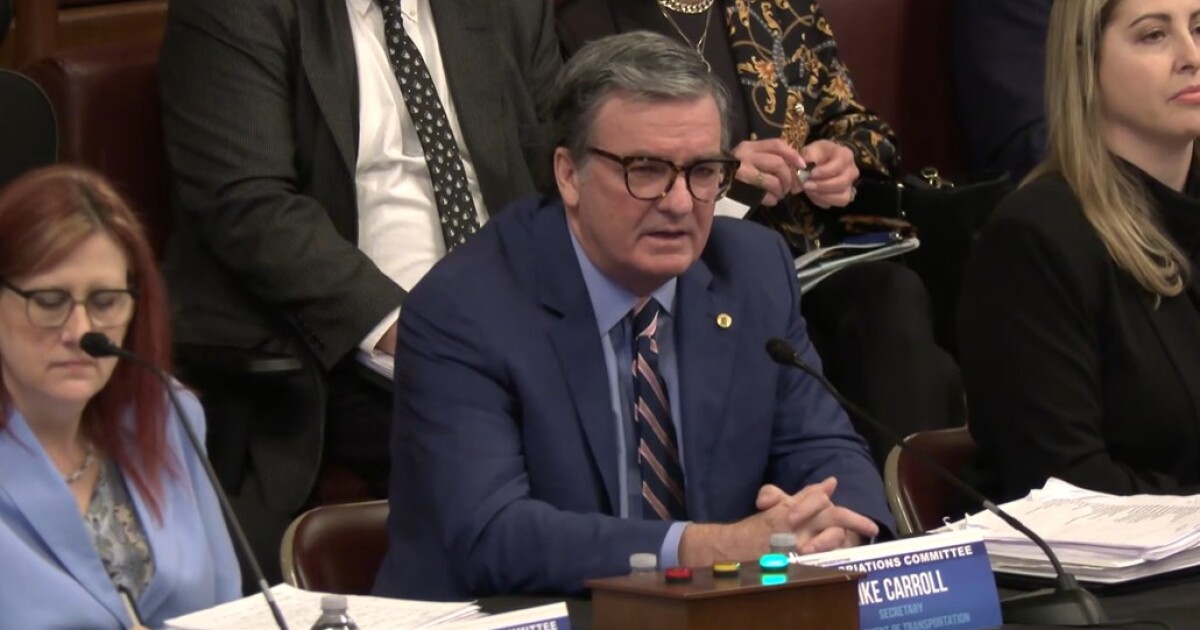
“Please know that we consider the recertification of these entities critically important. We will do everything in our power to make that happen as speedily as we can,” said PennDOT secretary Mike Carroll.
The concern arose amid questioning by Pittsburgh-area Democrats Abigail Salisbury and Aerion Abney, both of whom sit on the House Appropriations committee. The lawmakers had been contacted by affected businesses and asked state officials to explain the state’s relationship with the federal agency.
The program was created in 1983 to support independent small businesses: Company owners must have a net-worth under $2.1 million and control at least 51% of their business. As a new component under the second Trump administration, owners must now submit a personal narrative explaining why their businesses are disadvantaged, but they can’t cite race or gender as a reason. According to U.S. DOT guidance, they should instead offer “proof regarding specific instances of economic hardship, systemic barriers, and denied opportunities.”
DOT’s statement said the change was intended to “treat all Americans equally and … not discriminate on the basis of race or sex.” It cited a 2024 ruling by a federal judge in Kentucky which found that it was unconstitutional to “treat certain individuals — women and members of certain racial and ethnic groups — as ‘presumed’ to be disadvantaged. Other individuals do not benefit from that presumption.”
Compelling existing DBE participants to strip out references to race and gender while reapplying for the program, the agency said, would “ensure a level playing field between existing participants and new applicants.”
Alexis Russell, a Black woman who co-owns a Pittsburgh-based general contracting company and an architectural consulting firm, called the federal re-certification requirement “asinine.”
Barred from discussing race or gender explicitly, Russell said her reapplication discusses, among other topics, that she had little exposure to the game of golf — a fact that may cost her networking opportunities since sometimes business deals sometimes take place on the links. Other applicants may write about the quality of their grade schools, but Russell said she wouldn’t blame her education.
State guidance, she said, suggested applicants could discuss the quality of their grade schools, but Russell said she declined to use that approach.
“I’m 42 years old,” she said. “I don’t remember elementary school, I’m not claiming that my school district was the issue.”
The companies in the DBE program tend not to be prime contractors on construction jobs: They are usually subcontractors, such as Russell’s business, or provide technical expertise for tasks like digital planning and mapping.
“I’m not doing the $100 million projects, we’re already just kind of getting the leftovers,” said Russell, who submitted new applications for her two companies. “We’re not taking anything from anybody. We’re just trying to make sure that we’re included.”
In a letter to businesses in January, state certifiers asked business owners to reapply by Feb. 5. They listed dates for workshops about how to reapply.
PennDOT officials said Monday that 7% of the 1,400 Pennsylvania-based firms have been reevaluated and none have so far been rejected. The state is also trying to reach about 500 other businesses that have yet to reapply.
About 350 businesses in Allegheny County — including 250 in Pittsburgh — have been asked to re-certify, according to state records.
The county office of business equity and inclusion, alongside PennDOT and Pittsburgh Regional Transit, are among five state agencies that can certify companies for inclusion in a state database historically meant to remove barriers for contractors.
Emily Mercurio, CEO and founder of a Pittsburgh geospatial tech company, said the program has helped establish her business — and it paid off for taxpayers by encouraging the hiring of small firms with less overhead.
“It kind of lowered the barrier of entry to networking with prime contractors,” she said. “A lot of companies have used these kinds of programs to grow. Eventually… they kind of graduate from that program or they’re no longer eligible.”
After attending a county-hosted workshop on how to reapply at Riverside Center for Innovation, Mercurio said she’s submitted her application. If she doesn’t qualify for recertification, she said her company may lose the visibility that comes from being listed in the state DBE database.
Mercurio said allowing women- and minority-owned firms to participate reflected well established patterns of discrimination against such owners.
“It’s based on data that has been collected over decades,” she said. “Now the ladder’s being pulled up for businesses like mine.”