
For years, Christine Ziemer has been fighting what often felt like an impossible battle.
She, and other residents of manufactured homes across Pennsylvania, have been struggling to keep up with skyrocketing lot rents in the communities where they live.
Buying a manufactured home — sometimes referred to as mobile or modular homes — can seem like a great idea.
They’re typically more affordable than a traditional home, and the communities where they’re located can feature an assortment of amenities.
But in most cases, the owners of manufactured homes don’t own the land on which they sit. Relocating a manufactured home is extremely costly and often impractical, leaving many residents like Ziemer effectively trapped.
And some companies have been taking advantage of that.
Private equity firms have been purchasing manufactured home communities across the state, then dramatically increasing land lot rental fees while slashing services.
That is what has happened to Ziemer, who lives on a fixed income and says she has felt stuck under the weight of the growing cost of her lot rent. She has seen her monthly rent nearly double over the past seven years from $495 to $900.
Ziemer is a member of a coalition of manufactured homeowners who have over the past few years shared their plight through the media. They’ve pleaded with politicians to enact legislation to help.
While they have received quite a bit of support, they haven’t seen any resolution.
Gov. Josh Shapiro is looking to change that.
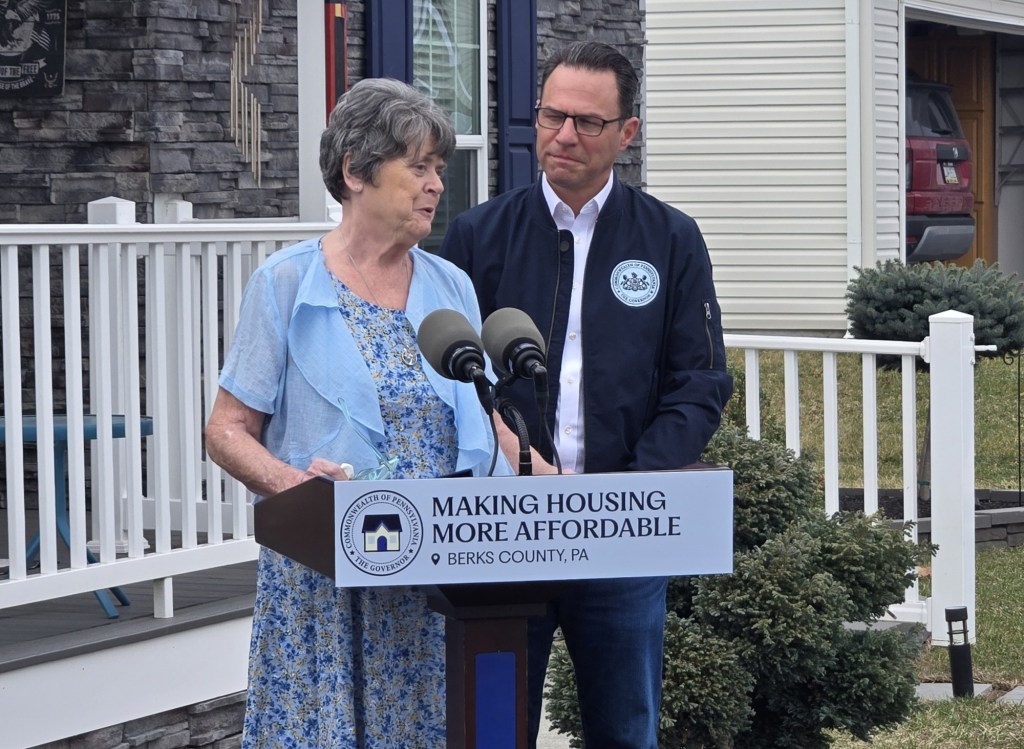
And on Wednesday, he made the trip from Harrisburg to Douglass Village in Douglass Township to tell Ziemer that.
After a short tour of her house, where the governor chatted in Ziemer’s sunroom with her and other members of the coalition, Shapiro held a press conference on her driveway to call on Republican leaders in the Senate to pass legislation he says will protect people like Ziemer.
“I’m here today to highlight what has become a huge problem and an example of greedy people taking advantage of good folks,” Shapiro said.
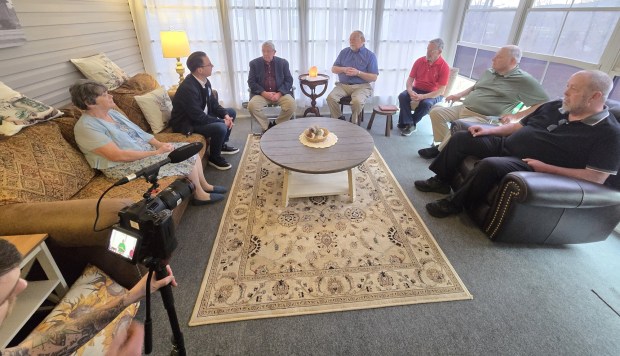 Gov. Josh Shapiro met with members of the Coalition of Manufactured Homes of Pennsylvania at a Douglass Village home in Douglass Township on Wednesday to highlight reforms he has proposed to protect manufactured homeowners from rising lot rent increases. (KAREN SHUEY – READING EAGLE)
Legislation pending
The good news, he said, is that legislation has been introduced in both chambers of the Pennsylvania General Assembly that would amend the Manufactured Home Community Rights Act to limit annual lot rent increases by tying it to the consumer price index.
The bill passed the state House last summer in a 144-59 bipartisan vote.
But the bill remains under consideration by the Urban Affairs & Housing Committee in the Senate.
“I’m calling on Senate leadership to bring this bill up to protect wonderful people like Christine,” he said. “Put the bill on my desk so that I can sign it. Actually, I told Christine that I might even sign it right on her kitchen table.”
Following Shapiro’s visit, State Sen. Tracy Pennycuick, a Republican whose district includes Dougalss Village, issued a statement supporting his message.
“It is wrong what is happening to the residents of manufactured housing communities across our state, and I am encouraged by the governor’s words and speaking to the seriousness of this issue,” she said. “I have been advocating for residents in my district since the day I took office, and I look forward to working in partnership with the governor to move meaningful solutions through the General Assembly.”
Pennycuick said the truth is many of these residents are seniors and families living on fixed incomes who are now being priced out of the neighborhoods they have called home for years.
“With few alternatives available, they are being squeezed by relentless rent increases — many driven by private equity investors treating these communities like profit centers instead of neighborhoods,” she said.
Shapiro said the legislation is critically important, explaining that manufactured homes have long been considered an affordable housing option.
Pennsylvania is home to roughly 2,300 manufactured home communities accounting for about 56,000 households, according to a 2023 statewide analysis published by the Federal Reserve Bank of Philadelphia.
And over the last several years, lot rents in many manufactured home communities have risen sharply due mainly to heightened demand for affordable housing and an increase in corporate ownership.
“Unfortunately, what we’re seeing is that these people are in their dream homes but the land that they are standing on keeps going up at really ridiculous rates,” Shapiro said. “At the same time, the level of service that they’re getting is going down, down, down.”
In Pennsylvania, as in most states, there are no rules restricting the size of rent increases at manufactured home communities.
“We’ve got to get it across the finish line,” Shapiro said. “If we all come together, Republicans and Democrats alike, we can protect wonderful people like Christine from outside private equity firms that want to take advantage of them.”
‘Perfect option’
Shapiro thanked Ziemer for her advocacy and willingness to share her story.
Ziemer said the decision to purchase a manufactured home made sense for her and her late husband, Joe, in 2019.
The couple were approaching their 70s and their Bucks County home was getting to be a bit too much for them to handle. They wanted to downsize, and they wanted to do it closer to where their daughter lives so they could spend more time with their grandchildren.
Douglass Village seemed to be the perfect option.
The community of 322 manufactured homes for people age 55 and up was in a great location, and the owners of the sprawling property would take care of landscaping, plowing, mowing and the other outdoor chores that come with homeownership.
The home was customized to make life easier for Joe, a disabled veteran who at the time had an amputated leg and had been diagnosed with dementia. It had a ramp leading to the front door, a lift in the bedroom and an open floor plan that ideally accommodated his wheelchair.
When they moved in, Joe, who passed away in October, and Christine paid a monthly lot rent of $495. The couple said the cost was well worth the decreased stress living in the community provided, especially considering the $16,000 a month it would have cost for Joe to live in a skilled nursing facility.
But things changed. The community was sold to a large, out-of-state property management corporation a little over four years ago, and the sale has been accompanied by steep annual rent increases.
Ziemer said her story is just one among thousands of stories highlighting the challenges that people living in manufactured home communities are facing.
“I look forward to the day when our governor gets to sign legislation that will stop ongoing lot rent increases and put an end to a practice that is making housing unaffordable for so many,” she said.