
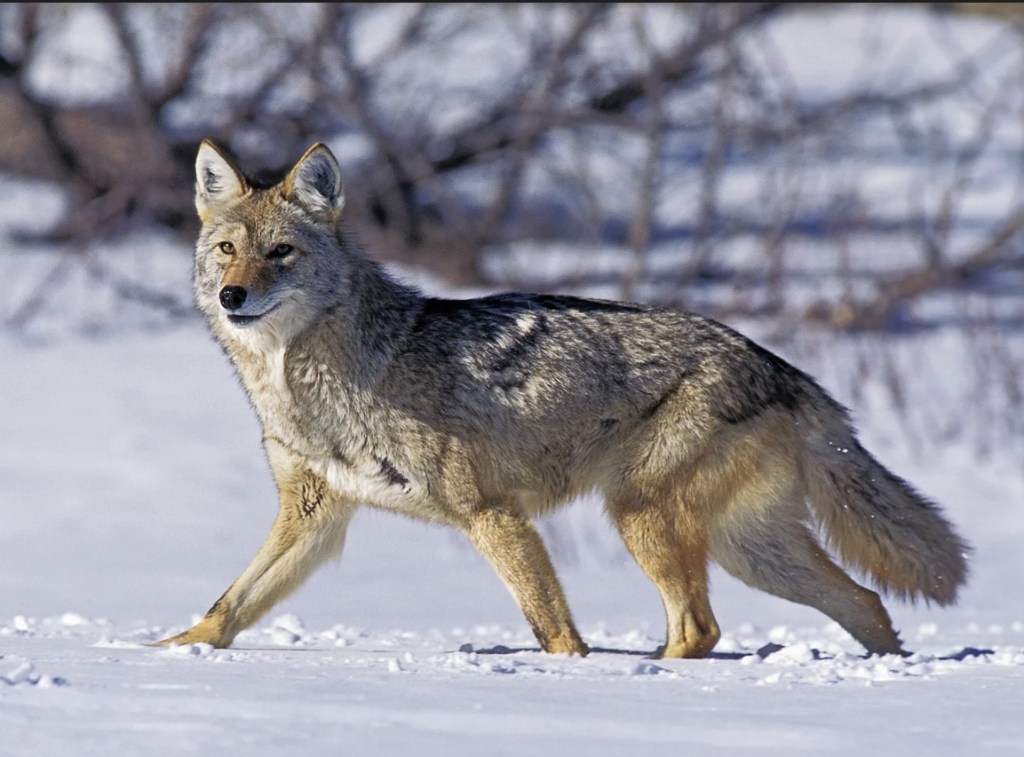
Coyotes are here and they’re as wily as ever.
And although we may not have any roadrunners here in the southeastern corner of the state, our resident coyote population just keeps growing, a fact that poses an increasingly deadly risk to wildlife, pets, livestock and even people.
While coyotes are found in all 67 counties of Pennsylvania, mostly concentrated in the northern parts of the state, in the past few years their numbers in suburban areas around Philadelphia and Pittsburgh have increased.
A heightened awareness of the risks posed by coyotes came on Dec. 28 when a man was attacked from behind by a coyote and injured while jogging at Warwick Furnace in Warwick Twp. The attack resulted in significant injuries, including lacerations to his face and legs that required medical treatment and more than 30 stitches. The attack prompted Chester County officials to warn the public to use caution in the outdoors due to the possible presence of coyotes.
But more than people, small pets are at risk since coyotes frequently prey on pets weighing 25 pounds or less. Pets left unleashed or in flimsy outdoor pens can be easy targets for coyotes. Livestock, especially young kid goats and calves, are also at serious risk.
How can we reduce the risks imposed by our ever-growing local coyote population?
There are people who specialize in hunting coyotes.
Joe Booker of West Grove and some of his buddies including Rick Cimino of Landenberg are among coyote hunters.
For the most part, Booker’s coyote hunts come at the request of landowners and farmers, mostly in Chester, Delaware, and Lancaster counties. They are under distress with coyotes attacking their pets, killing their chickens, kid goats, lambs, calves, and sometimes even maiming their cattle.
When Booker, 54, gets the call, he’ll visit the farm and set up at night when coyotes are most active, especially between 1 a.m. and daybreak.
Following the regulations dictated by the Pennsylvania Game Commission, he’ll generally be using a rifle fitted with night vision and thermal scopes in either .22 mag or 17 Winchester super mag calibers mounted on tripods, and sometimes a 12-gauge shotgun.
Once he’s set up, Booker uses thermal scanners and an electronic caller while luring the coyotes within range.
Booker has bagged between 50 and 60 coyotes over the past four years with his heaviest coyotes taken to date being a 48.8-pound male and a 44-pound female. With the numbers of coyotes growing so exponentially, a number of clubs like Mosquito Creek, Nancy Lees, and Port Clinton sponsor tournaments with the heaviest coyotes taking top prizes at the weigh-in.
These tournaments draw a significant number of hunters. In fact, a total of 3,435 registered hunters participated in the 35th Annual Mosquito Creek coyote tournament held this year from Feb. 20-22. The winner with a 51-pound male coyote took home $6,870 in prize money.
Booker, whose been predator hunting for 44 years (foxes, raccoons, and coyotes) noted that 30 or 40 years ago it was almost impossible to find a coyote in our corner of the state.
“The first one I knew of being shot here was back in 1991,” he said. “Although they were rare back then, in the last five years the coyote population has gone crazy.”
Booker believes one indicator that coyote numbers are zooming is mange.
“This year three of the coyotes we took had mange which I believe is a sign that there are too many of them. That’s also why so many foxes have mange.”
Coyotes are also susceptible to rabies which may have played a role in the attack on the jogger.
“Too many people critical of what we do mistakenly think that our hunting coyotes causes them to have more pups and actually increases the population,” said Booker. “The truth is that it’s the availability of food that determines how many pups will be born and survive, not how many coyotes are killed by hunters. Here in Chester County there’s plenty of food. That’s the main source of our coyote population explosion. Meanwhile, the number of deer and foxes have declined due to the increased presence of coyotes. In the end, coyote hunting barely puts a dent in their overall numbers.”
Unlike Booker, I myself have had only two encounters with coyotes here in Chester County, one where we were driving deer and pushed a coyote from its hiding place at the end of a hedgerow; the other was when I was bowhunting from a tree stand the morning after I had dispatched a nice buck and the biggest coyote that I have ever seen passed beneath my stand on its way to feast on the entrails of the deer I had field dressed the day before.
But my encounters with coyotes while hunting out west in Colorado and Texas were far more frequent. I remember when our Colorado outfitter was quartering out a bull elk right around dusk, the yipping, yapping, and howling of coyotes surrounded us as they crept closer and closer to claim what was left of the elk. To say the least, it was very unnerving. Large packs of coyotes were also active as night fell in Texas. I did manage to shoot a coyote in Texas but couldn’t do anything with it since it was covered in mange.
Coyotes out west like to travel in packs and they sometimes do that here as well. Booker has witnessed packs consisting of as many as five coyotes racing in to his calls all at once and providing plenty of shooting opportunities.
Booker is also active on the Chester County Eastern Coyote Hunters Facebook page. Readers who want to learn more about eastern coyotes and coyote hunting might want to check it out as well.
Tom Tatum is a freelance columnist focusing on the outdoors. You can reach him at tatumt2@yahoo.com.