
Faculty and students from the University of Pittsburgh’s Ford Institute for Human Security are bringing their research on gender equality and democratic leadership to a global stage this month at the United Nations’ 70th session of the Commission on the Status of Women (CSW70).

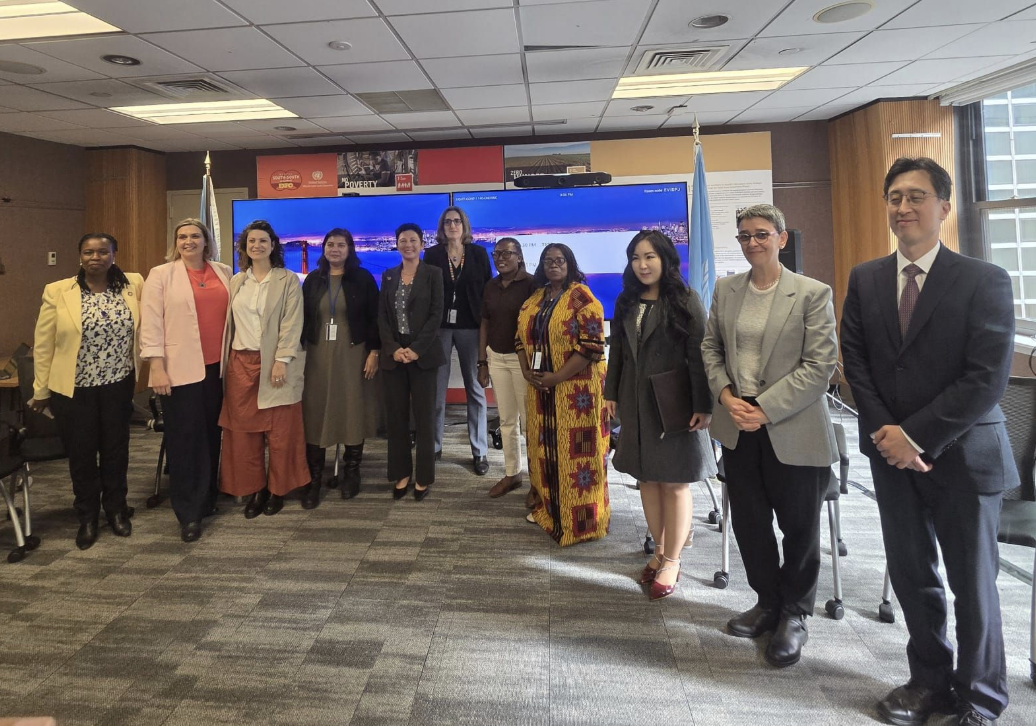
Dr. Müge Finkel (fifth from left) stands with fellow panelists at last week’s CSW70 event.
Dr. Müge Finkel, associate professor at the School of Public and International Affairs and director of the Ford Institute, joined international scholars and practitioners last week as a panelist at the CSW70 side event, “Defending Democracy in the Digital Age: Gender, Power, and Participation.” The event examined how technology-facilitated violence against women and girls creates barriers to women’s participation in public and political life—posing significant challenges for democratic governance.
The event was organized collaboratively by the United Nations Development Programme (UNDP), the Korean National Police Agency, and the Centre for Protecting Women Online, and brought leading experts in politics, law, policy, and human rights together alongside representatives from international institutions and civil society organizations.
“It was a privilege to participate at the Commission on the Status of Women this week, engaging in thoughtful conversations with colleagues, experts, and the next generation of gender equality leaders,” Finkel said. “These moments of dialogue across institutions, generations, and experiences are what keep the momentum for gender equality moving forward.”
Finkel will return to New York City this week with student researchers from the Ford Institute’s Gender Equality in Public Administration (GEPA) working group as they present their work at two more CSW70 side events, “Women’s Leadership & Gender Parity in Justice Institutions” and “Women’s Leadership in Times of Change: Strengthening Trust, Cohesion, and Inclusive Governance.”

Dr. Finkel with SPIA students at CSW70.
“We are so excited to be part of the second week of CSW and have the opportunity to share our wonderful students’ work,” Finkel said. “Having more women in leadership positions has never been more important for the future of democracy and peace.”
The GEPA working group, co-led by Finkel and Dietrich School Professor Dr. Melanie Hughes, brings faculty and student researchers together to examine women’s representation and leadership in public institutions worldwide. Founded in 2015 in collaboration with UNDP, the group has engaged more than 100 SPIA students in collaborative research on gender equality in public administration.
Students have opportunities to engage with their UNDP partners beyond events like this week’s CSW70. GEPA researchers present their work annually at United Nations headquarters in New York City and are eligible to participate in competitive paid internships with the Gender Teams at UNDP’s six regional hubs.
Students interested in learning more about the Ford Institute for Human Security, including working groups like GEPA and Online Violence against Women in Politics, should visit their website. Learn more about our Master of International Development program and concentrations like human security and and governance and international public management, or email us at spia@pitt.edu with any questions.