
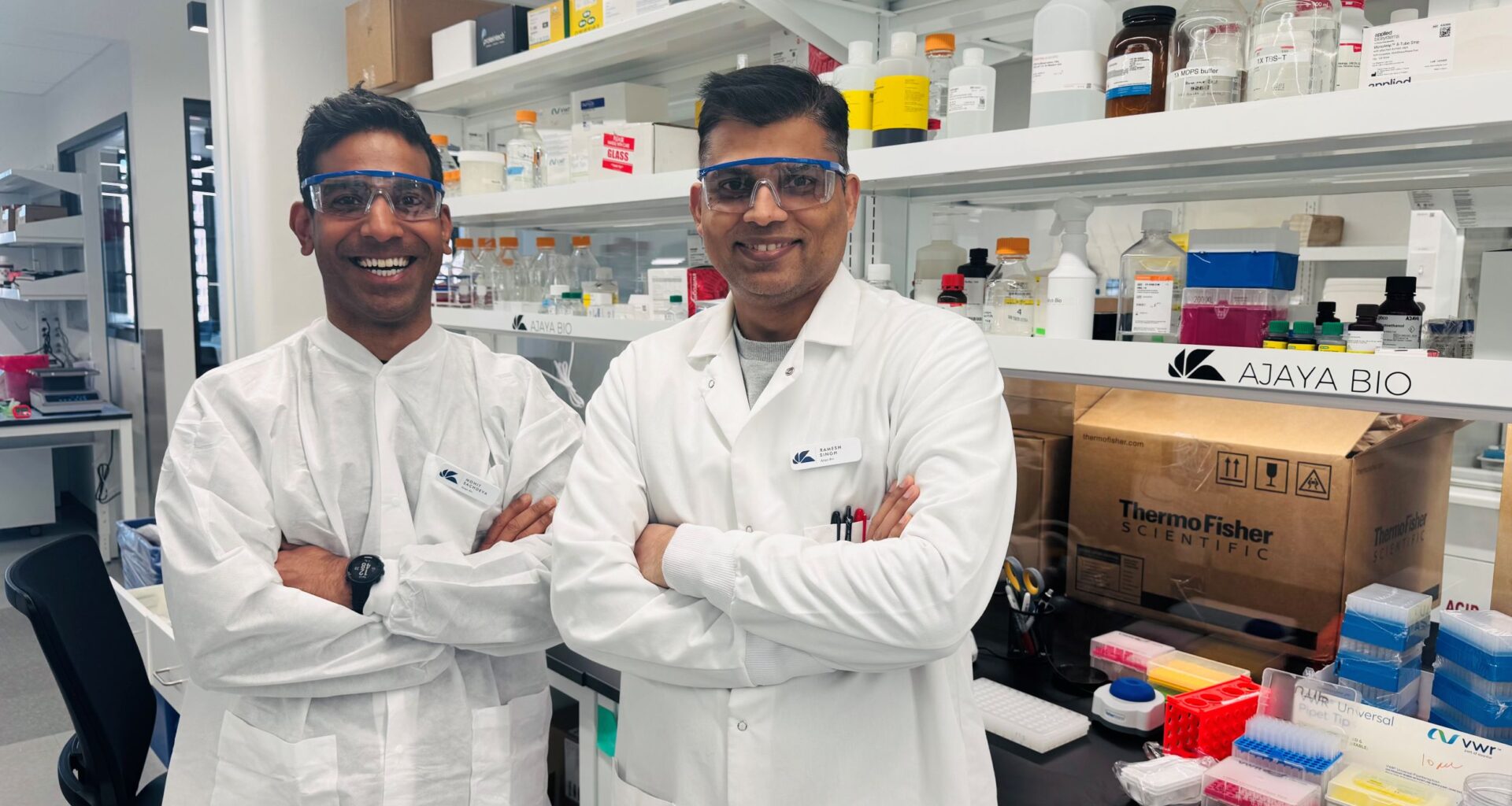
Startup profile: Ajaya Bio
Founded by: Mohit Sachdeva, Ramesh Singh
Year founded: 2024
Headquarters: Philadelphia, PA
Sector: Biotech
Funding and valuation: $1 million raised at an undisclosed valuation, according to PitchBook
Key ecosystem partners: Ben Franklin Technology Partners, BioAdvance Capital, BioLabs Philadelphia, HiveBio Accelerator
After a decade of developing drugs for other companies, biotech founder Mohit Sachdeva is now building his own — aimed at a different way of treating autoimmune disease.
His company, Ajaya Bio, is developing a drug designed to destroy the inflammatory cells that cause autoimmune diseases, rather than just blocking them. It’s an approach Sachdeva hopes will help the startup become one of Philadelphia’s next major life sciences companies, in a region known for breakouts like Spark Therapeutics, the cell and gene therapy company where he previously worked.
“We are trying to build something that will have a lasting effect on the city ecosystem.”
Mohit Sachdeva, Ajaya Bio
“We are trying to build something that will have a lasting effect on the city ecosystem,” Sachdeva told Technical.ly. “The city has a lot of talent, so we need to create those kinds of jobs.”
Sachdeva bootstrapped Ajaya, eventually leaning on friends for cash to pull together early data that could be presented to institutional investors.
Ajaya previously participated in the HiveBio accelerator last year and raised $1 million from BioAdvance Capital and Ben Franklin Technology Partners to support its preclinical studies.
That early interest from institutional investors is expected to give the company traction when it raises its next round, Sachdeva said. The firm is now preparing to raise a Series A round to fund manufacturing, regulatory filings, a clinical trial, and an expansion beyond its four-person team, he said.
“Our strategy was to let our data speak,” he said. “These investors saw value in what we are building.”
Developing longer-term treatment for autoimmune diseases
Typically, patients with autoimmune diseases take medication to block inflammatory cells, called pathogenic immune cells, and slow disease progression, he said.
Ajaya Bio is trying to get rid of those cells. The company developed a bispecific antibody, a lab-made molecule that links two antibodies together so they can work at the same time. One of the antibodies finds the inflammatory cells and the other antibody recruits immune cells in the body to kill them.
“Every time we go to some patient advocacy group or patient meetings, we realize the treatments are there,” he said. “They’re managing the diseases, but we’re not getting actual cures.”
This method of treatment means that patients wouldn’t have to take the drug for as long, because the cells are being destroyed, he said.
The company’s lead program is a treatment for rheumatoid arthritis, and the company is currently conducting preclinical animal studies. After that, the company will start manufacturing its drug and submit an investigational new drug application to the FDA to get approval for clinical trials.
In the next five years, Sachdeva hopes the drug will be in patients’ hands and that the company will continue to expand its products.
“We also are developing a broader pipeline where we can target other autoimmune diseases using the same drug,” Sachdeva said. “[and] some other drugs that could be used for other autoimmune indications or cancer indications.”
This story is made possible thanks to support from Ben Franklin Technology Partners of Southeastern Pennsylvania, a nonprofit that leads the Philadelphia region’s equitable economic growth by nurturing and investing in innovative, early-stage companies, and through purposeful involvement in regional and national initiatives.