
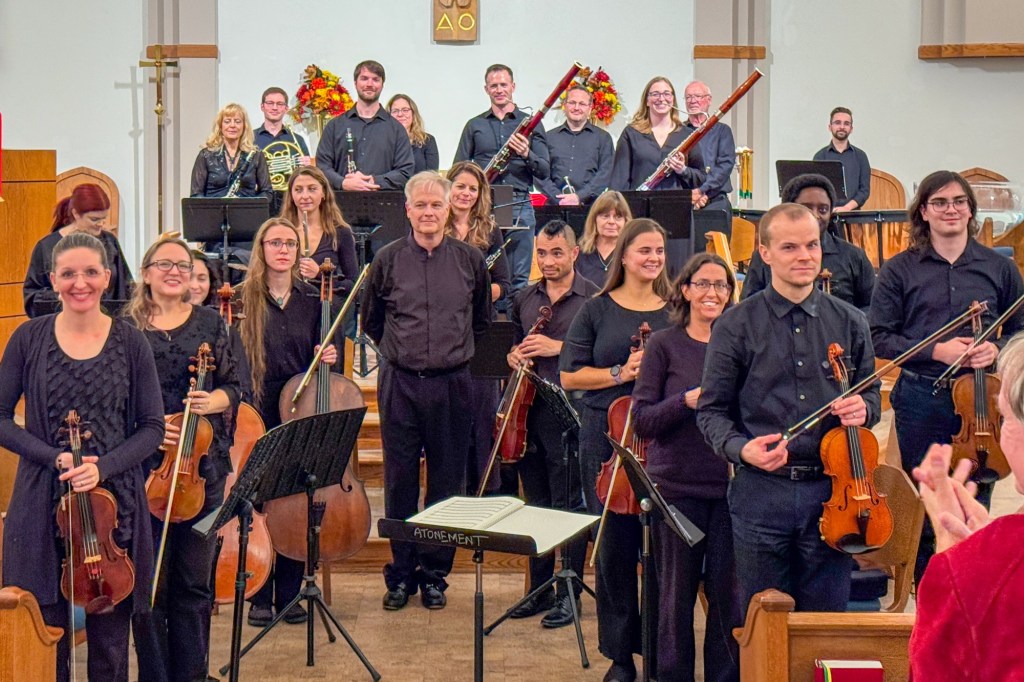
Berks Sinfonietta, a chamber orchestra founded and directed by David McConnell in 2014, will makes its Boscov’s Berks Jazz Fest debut with “Gershwin Comes Alive,” an all-Gershwin program featuring pianist Lars Potteiger performing George Gershwin’s beloved “Rhapsody in Blue.”
The concert will be held on March 28 in the Miller Center for the Arts in Reading at 6 p.m. Opening for the show will be the Berks High School All-Star Jazz Band.
The Sinfonietta has a reputation for excellence in exploring both classics and contemporary classical music, giving thoughtful and precise interpretations. The orchestra draws musicians of all ages (including gifted students) from Berks County and beyond, and McConnell often programs innovative, avant-garde works, and occasional premieres, along with masterworks by Beethoven or Mozart.
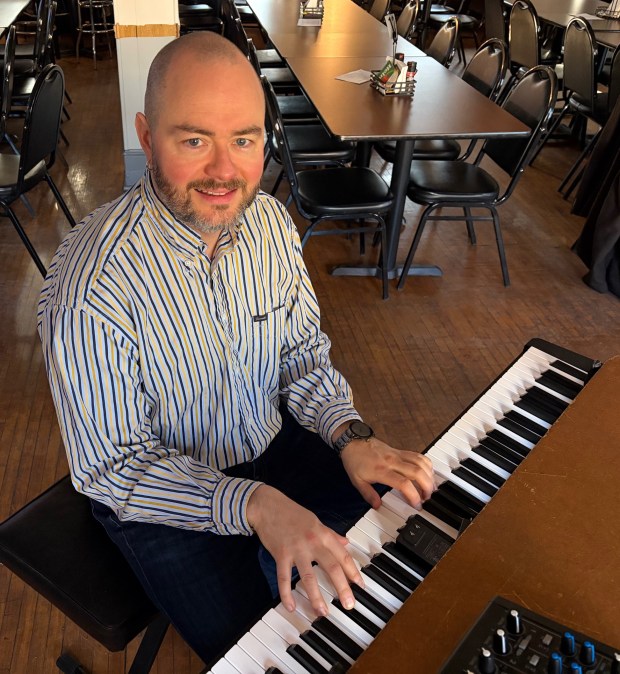 Pianist Lars Potteiger will team up with Berks Sinfonietta to perform “Gershwin Comes Alive.” (Courtesy of Boscov’s Berks Jazz Fest)
McConnell and Potteiger, who is a jazz pianist, are both stepping out of their usual genres for this concert, which they performed last summer in Reading and Lancaster. They are following in the footsteps of Gershwin, who lived with one foot in jazz and one foot in classical music. In “Rhapsody in Blue,” the composer managed to create a hybrid of the two.
“It was a departure from what I normally do,” Potteiger said. “So, I was prepping everything as it was notated in the score.”
But later, as he and McConnell were preparing a talk on the Gershwin program: “It got me thinking about the piece, and I basically threw out everything I’d been doing and decided to improvise the solo cadenzas. I thought it was more in the spirit of what the piece was when Gershwin wrote and performed it.”
He particularly concentrated on the big cadenza solo in the piece’s center, noticing the harmonic structure, which turned out to be identical to the Russian song “Dark Eyes.” So, in the first performance last summer, he wove portions of that song into his improvisation. The second concert his improv was different, and at the jazz festival it will be distinct from the other two.
It took the orchestra some getting used to, he said.
“But as long as David knows about how I’m getting out of (the improv), he can bring in the ensemble,” Potteiger said.
The Rhapsody was commissioned in 1924 by jazz bandleader Paul Whiteman for concert called “An Experiment in Modern Music.” Because he was on a tight deadline, Gershwin wound up improvising the solo parts at the premiere. Ferde Grofe, who helped with the original orchestration, in 1942 arranged it for symphonic orchestra, and the cadences were written into the piano score. (No one knows what the original improvisations sounded like.)
“As soon as I knew I wanted to do this piece, Lars was my first thought, because I’ve so admired his playing,” David McConnell said. “I’ve seen his incredible music-making over the years.”
He was inspired to have Berks Sinfonietta perform the Rhapsody when he discovered that British pianist/organist/composer/arranger Iain Farrington had created an arrangement for chamber orchestra.
“He’s excellent at making chamber arrangements of bigger works,” McConnell said. “And when I saw that he had done ‘An American in Paris,’ it turned into an all-Gershwin program.”
The latter piece, he said, is “brilliantly done, and puts that work into the purview of smaller groups without any loss of what the large orchestra brings.”
The jazz-influenced symphonic tone poem, first performed in 1928, was inspired by time spent by Gershwin in Paris, and famously includes four taxi horns in the score.
Also on the program will be the “Funny Face Suite,” based on the Gershwin songs in the 1927 Broadway musical, which starred Fred and Adele Astaire. (The 1957 film version of “Funny Face” also starred Astaire, with Audrey Hepburn, but it had an entirely different plot and only used four of the songs.) The suite includes “S’Wonderful,” “My One and Only,” and three others.
Another suite, “Lady Be Good!,” is based on the 1924 stage show, which also starred the Astaires. The score was stuffed with obscure Gershwin songs, some of which are used in the suite; audiences will recognize “Fascinatin’ Rhythm” and the title song.
For both suites, McConnell said, “There’s no conductor’s score; just a piano score with cues written in.”
He said this is typical of scores played by pit orchestras, and “it seems disorganized at first, perhaps, but then everyone in the pit learns to listen in a way that maybe doesn’t always happen in a classical concert. It teaches a different set of skills, and they become better musicians.”
The lesser-known piece “Lullaby for String Orchestra,” Gershwin’s first attempt at an orchestral work in 1919 as a 21-year-old student, is “very quiet and delicate,” compared to the other pieces on the program, he said, noting that it gives the audience five minutes to focus in on a tiny, little-known gem.
For complete information about Boscov’s Berks Jazz Fest and how to purchase tickets, visit www.berksjazzfest.com.