
Long before Buffalo was settled, the Canadian shoreline of Lake Erie was already shaping history—through forts, conflict, and cultural exchange.
FORT ERIE, ON — Decades before Buffalo saw its first European settlers, the Canadian side of Lake Erie was already being shaped by history. In 1764, the first Fort Erie was built along the shoreline, marking one of the earliest European footholds in the region.
At the time, Europeans had no permanent presence nearby. Indigenous communities, especially the Seneca people, had long lived along Buffalo Creek. While French explorers had passed through, it was the British who chose to establish roots. According to Niagara Parks historian Jim Hill, the British asked the Seneca for permission to build a small trading post. The Seneca agreed, but warned them not to build too close to the water.
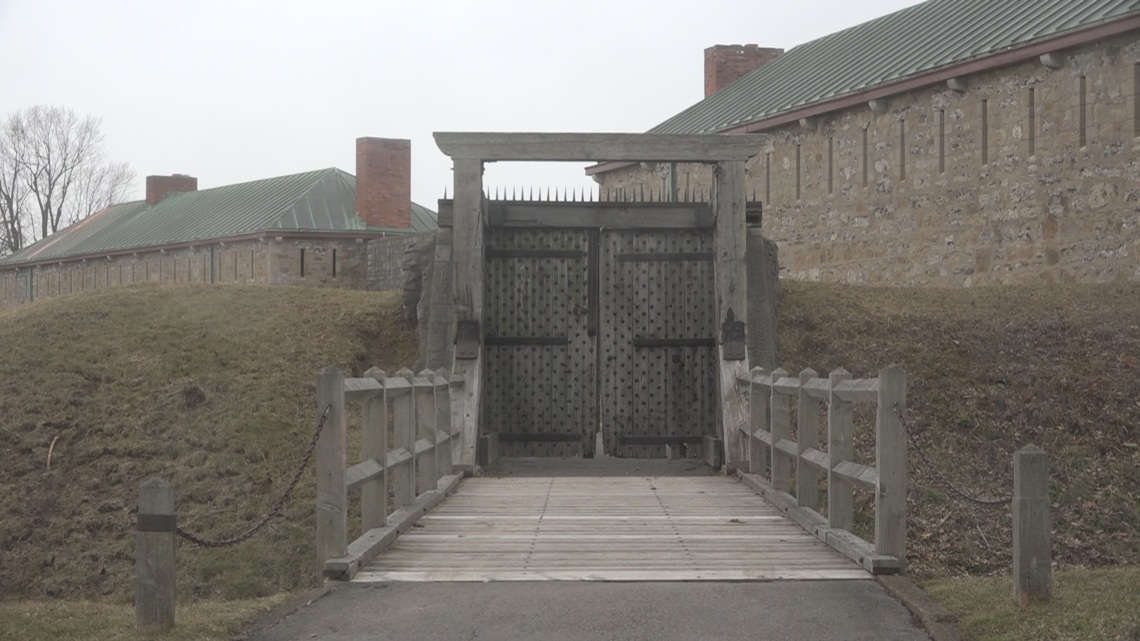
The British ignored that advice. They constructed the original fort right on the shore, where it endured years of battering from waves and massive ice flows. Eventually, the structure gave way to the elements and was replaced in 1803 by the fort that still stands today.
In those early years, Fort Erie was a remote and rugged posting. Hill says there’s a long-standing joke that if a young officer was sent there, it was either because he was a troublemaker or his troops were. Despite its isolation, the fort played a key role during the American Revolution, serving as a supply base for British soldiers, Loyalist fighters, and Six Nations warriors.
Even as the United States emerged from the Revolution, this region remained under British control. At the time, the only Europeans in the area wore red coats, underscoring how different the political landscape looked compared to today.
Now, Old Fort Erie stands as a living time capsule. Years of archaeological digs have uncovered a wide range of artifacts, from military equipment to personal items like jewelry and Indigenous trade goods. These discoveries offer insight into what daily life was like on the frontier.
As the United States approaches its 250th anniversary, the site is reflecting on its place in that shared history. Staff at Old Fort Erie are launching a monthly speaker series that will explore how the American Revolution affected the region.
The series, titled “1776: Old Fort Erie in the Revolutionary Era,” begins this weekend. Brock University history professor Mark Spencer will open the series with a talk on the events and ideas of 1776, and how they continue to shape life today on both sides of the border.