
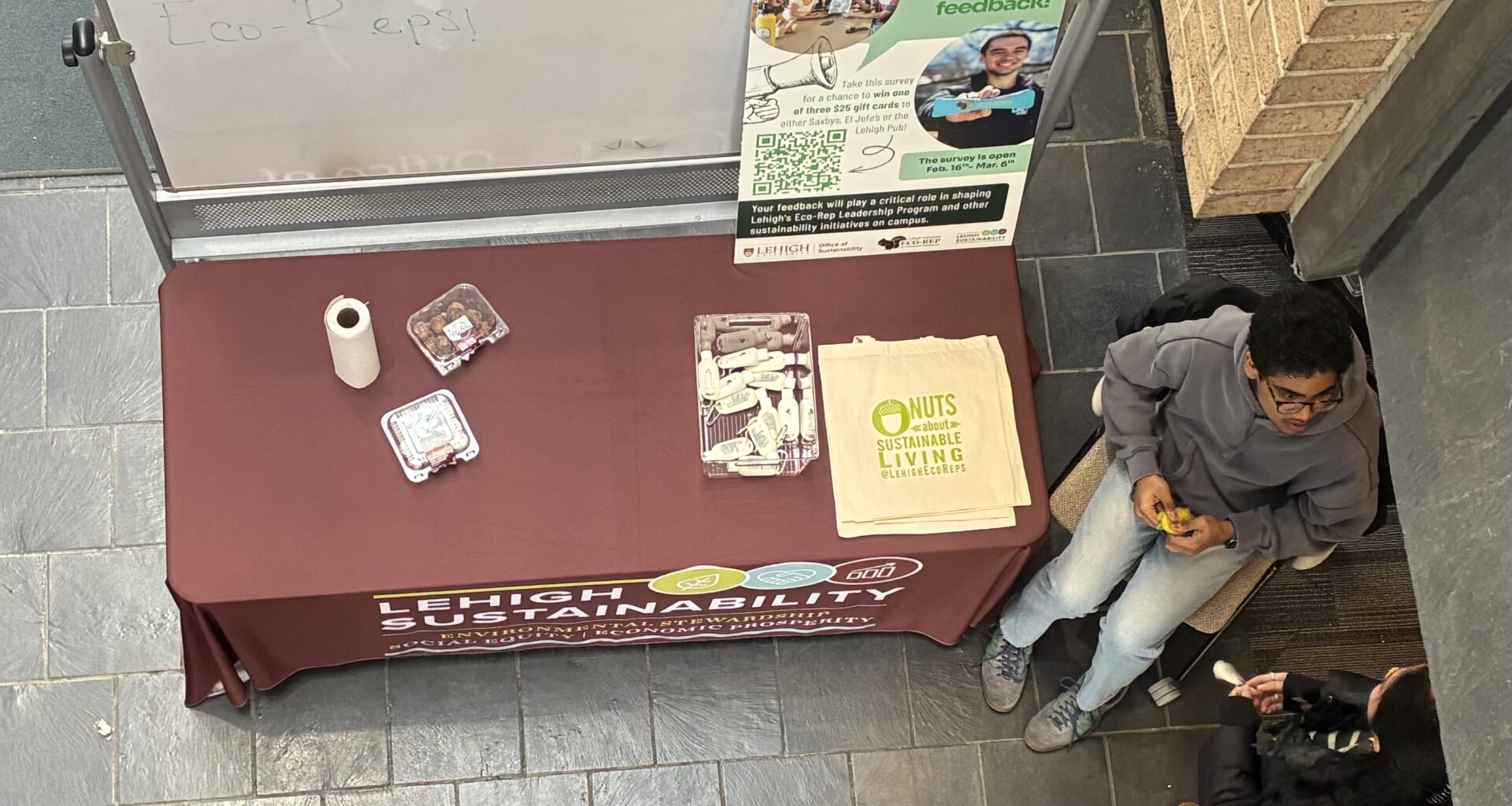
After disbanding last spring, students and the Office of Sustainability are working to rebuild the Eco-Rep Leadership Program, which began in 2010, with the help of student feedback.
The program ceased operations last spring after its previous director left to pursue other opportunities.
While the Eco-Rep Leadership Program isn’t currently in operation, the peer-to-peer educational initiative hopes to return in the 2026-27 academic year.
The program educates students on how to live sustainably on campus by training student leaders to spread awareness about sustainable practices among their peers.
Kelley Versocki, the marketing and engagement manager of the Office of Sustainability, said the program is led by and for the community.
Versocki said the program previously consisted of about 40 student Eco-Reps, including hall and building representatives.
Each Eco-Rep was assigned to an on-campus residence hall or Greek house.
Kyle Ramsingh, ‘26, first joined the program his sophomore year because he wanted to work with the Office of Sustainability.
“Once I applied and got in, I really found a spot for it in my heart,” Ramsingh said. “I felt really passionate about it.”
As an Eco-Rep, Ramsingh hosted monthly meetings in his assigned residence hall, discussing recycling practices. During his time with the program, Ramsingh said he noticed a significant decline in recycling contamination.
Eco-Reps also hosted film screenings, plant-potting events and information sessions.
During her first semester, former Eco-Rep Mackenzie Barlow, ‘28, helped run and advertise these events.
Additionally, Barlow collected data on water fountain use and reported leaks and improper recycling in her residence hall, the McClintic-Marshall House.
Barlow also joined the program to get involved with the Office of Sustainability. Since her first semester at Lehigh, she’s continued to work for the office and the Swap Shop.
“The people that I interacted with did genuinely have a better understanding of different sustainability practices on campus,” Barlow said. “I feel like the biggest impact that I saw through the programming that I did was that people knew more about how to recycle on campus.”
Now, the program is undergoing review ahead of the next academic year. Versocki said the Office of Sustainability is assessing what worked and didn’t, as well as identifying ways to improve the program for the future.
Versocki said the Office of Sustainability recently sent a feedback survey to students asking about the program’s strengths and weaknesses, and how it can be a productive part of campus.
For Versocki, it’s important to understand what made the program impactful for students and for Lehigh’s campus. She said it’s necessary to take into account student insights, not solely rely on numbers and statistics.
Barlow said generating participation in programming can be difficult, and encouraging students to make sustainable decisions on campus often comes down to awareness.
She said she understands that clubs and campus organizations are constantly competing for students’ attention. With classes and workloads, Barlow said it can be difficult for students to find time in their schedules to participate in the program’s events.
Even though he won’t be on campus to see the program’s future, Ramsingh is helping revamp it.
“Once students see other students actively engaged in something it gives them the courage and allows them to want to be involved,” Ramsingh said. “Eco-Reps encourage other people that are passionate about sustainability.”
Barlow believes that being sustainable at Lehigh is easy when students are given the right information. During her two years working for the Office of Sustainability, she said she’s seen the abundance of resources available to students.
As of now, the future of the program remains uncertain.
“We really are relaying very heavily and investing a lot of time and energy in understanding what students have to say about (the Eco-Rep Leadership Program),” Versocki said.