
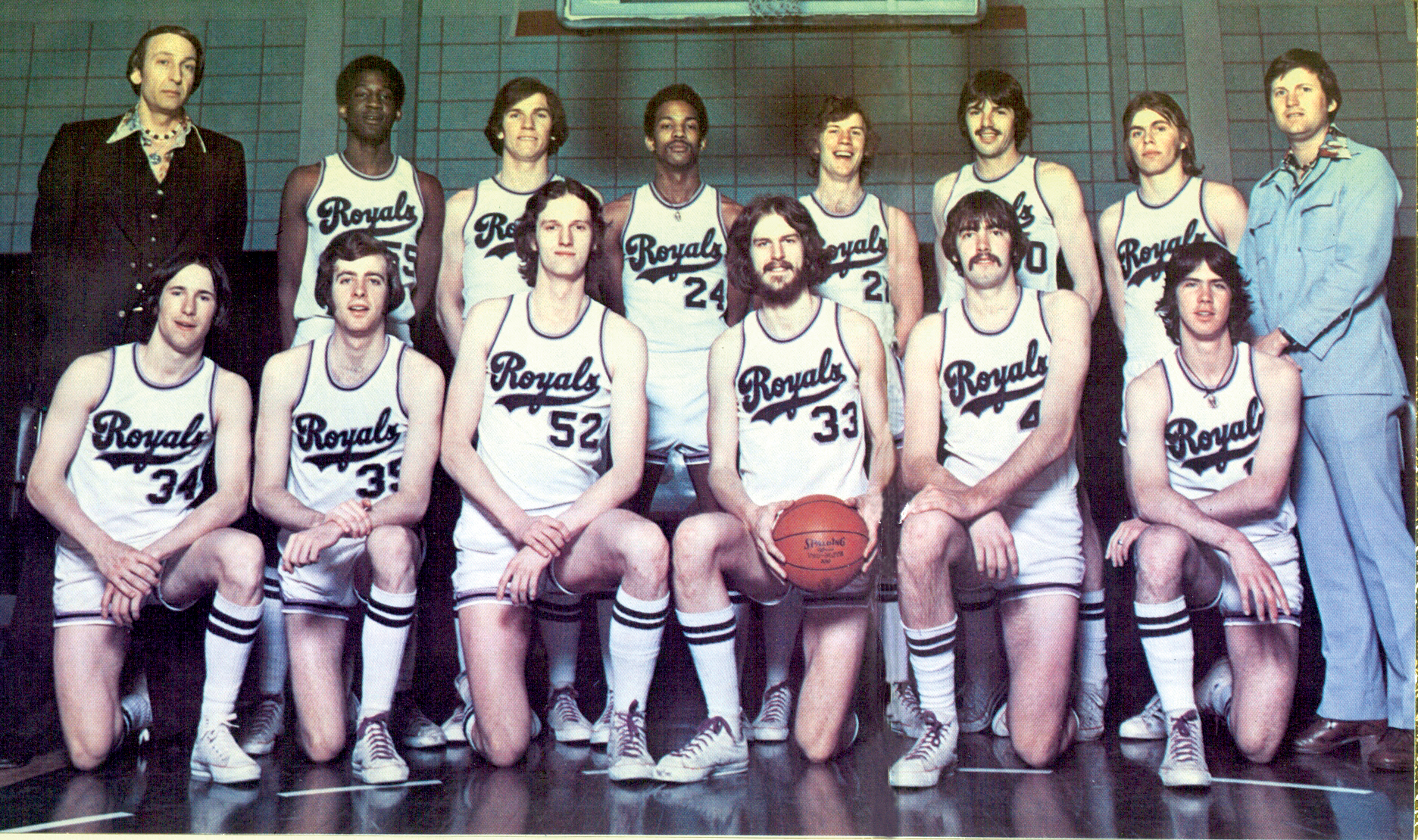
Team photo of the 1976 national champion University of Scranton Royals. Front row, from left: John Williams, Ed Buley, Jeff Hubert, Ed Ehret, Andy Holup, Billy Canny. Back row: Head coach Bob Bessoir, Irv Johnson, Joe Conley, Phil Johnson, Jack Maher, John DeRichie, Paul Miernicki, assistant coach Mike Strong.
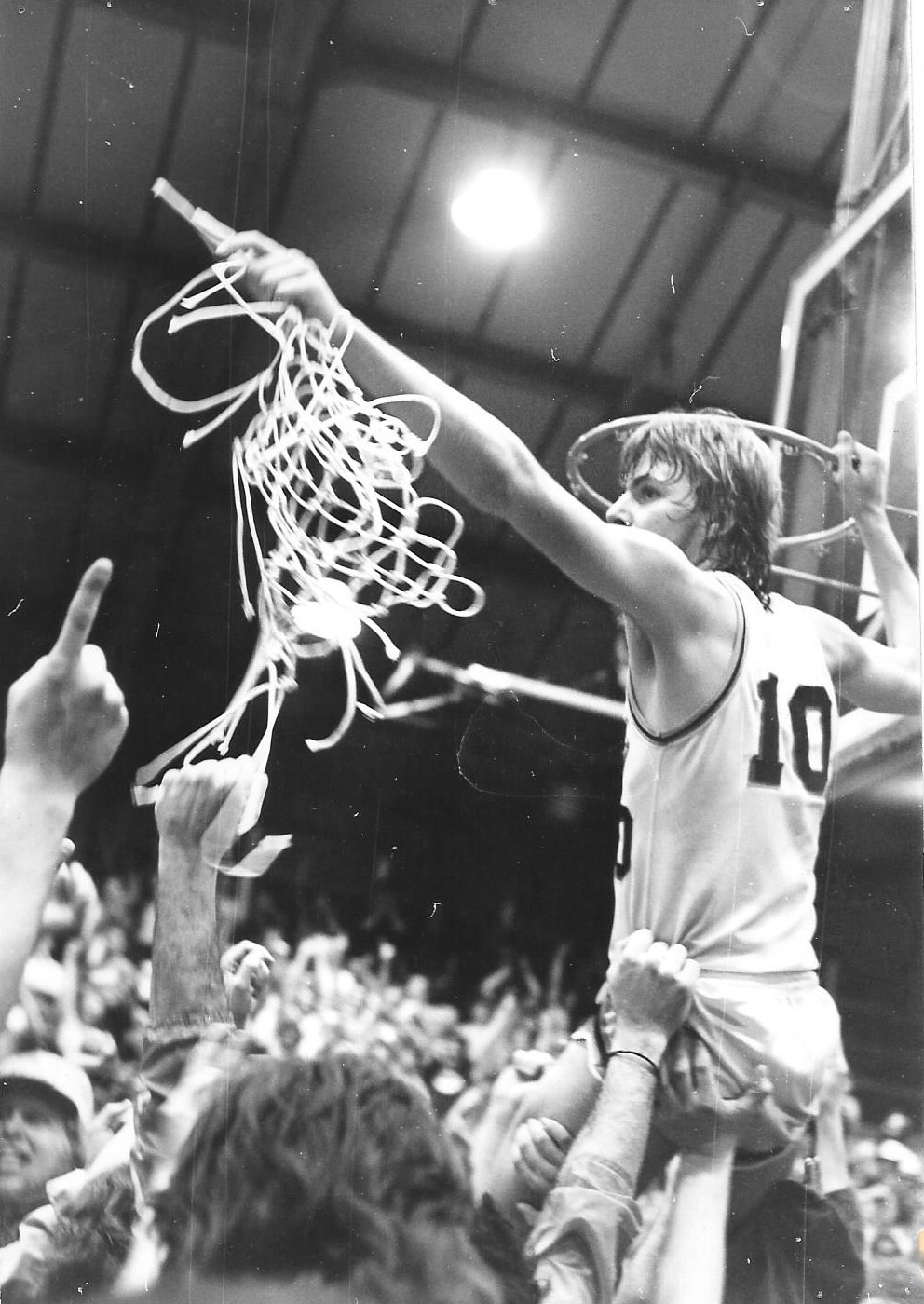
Sophomore guard Paul Miernicki cuts down the net after the University of Scranton beat Wittenberg in overtime, 60-57, in Reading to win the NCAA Division III championship March 20, 1976.
Show Caption
1 of 2
Team photo of the 1976 national champion University of Scranton Royals. Front row, from left: John Williams, Ed Buley, Jeff Hubert, Ed Ehret, Andy Holup, Billy Canny. Back row: Head coach Bob Bessoir, Irv Johnson, Joe Conley, Phil Johnson, Jack Maher, John DeRichie, Paul Miernicki, assistant coach Mike Strong.
March 20, 1976, is a date Jack Maher fondly remembers.
Not only was it the final game of his collegiate career, but it was the day that the University of Scranton men’s basketball team capture its first NCAA Division III championship.
With Maher helping lead the way, the Royals defeated Wittenberg University in overtime, 60-57, at Albright College in Reading. Friday marks the 50th anniversary of that game.
“Winning the NCAA championship in 1976 fulfilled my sports dream, and by winning my last collegiate game there was no hurt to carry forward,” Maher said.
These were the “Rock-and-Roll” Royals, who took the court to the Rolling Stones song “Jumpin’ Jack Flash” and were coached by the flamboyant Bob Bessoir. Fans jammed the John Long Center to watch them play.
“The support from from the people in the city of Scranton and students at the University was outstanding,” Maher said. “The Long Center was completely packed for our playoff games with the aisles full and people sitting all along the floor next to the court. The excitement was sensational and resulted in a great home court advantage. Many Scranton fans also traveled to Reading for the Final Four tournament, continuing the excitement and giving us additional support.”
Maher endured losing seasons his first two years at Scranton. But his junior year, the Royals won 20 games and reached the second round of the NCAA tournament.
Players such as Paul Miernicki, Irv Johnson, Phil Johnson and Jeff Hubert were added, joining veterans Maher, Joe Conley, Ed Ehret, John Breslin, John DeRichie, Billy Canny, Ed Buley, Andy Holup and John Williams. The pieces were in place for the 1975-76 campaign.
Things, however, got off to a bit of a slow start. Scranton was 8-4, including a 57-55 win at West Point on Jan. 5 over an Army team coached by Mike Krzyzewski. A 72-69 loss to Clarion State on Jan. 20 dropped the Royals to 8-5.
They would not lose again, winning their final 19 games. They won the Middle Eastern Collegiate Athletic Association and Middle Atlantic Conference North Division titles. They beat Grove City, Widener and Shepherd in their first three NCAA tournament games to reach the Final Four.
At the pre-tournament press conference, the ever-boastful Bessoir said his team wasn’t just happy to be there, it expected to be there and would win the title.
After defeating Augustana in the semifinals, 76-65, the Royals met Wittenberg in the final. The Tigers took a seven-point lead in the opening nine minutes, but Scranton battled back to lead at halftime, 28-23. Wittenberg rallied early in the second half and the game was tight throughout. A basket by Paul Miernicki with 4:11 left tied the score at 51. Neither team scored for the remainder of regulation and the game headed to overtime.
There, Maher scored the first four points of overtime to put the Royals in front. John DeRichie hit two free throws with 36 seconds left. Miernicki then sank three foul shots in the final 13 seconds to secure the victory and the championship for the Royals.
Finishing with a team-high 16 points, Maher was named the tournament’s Most Outstanding Player. Miernicki added 15 points and Phil Johnson finished with 10.
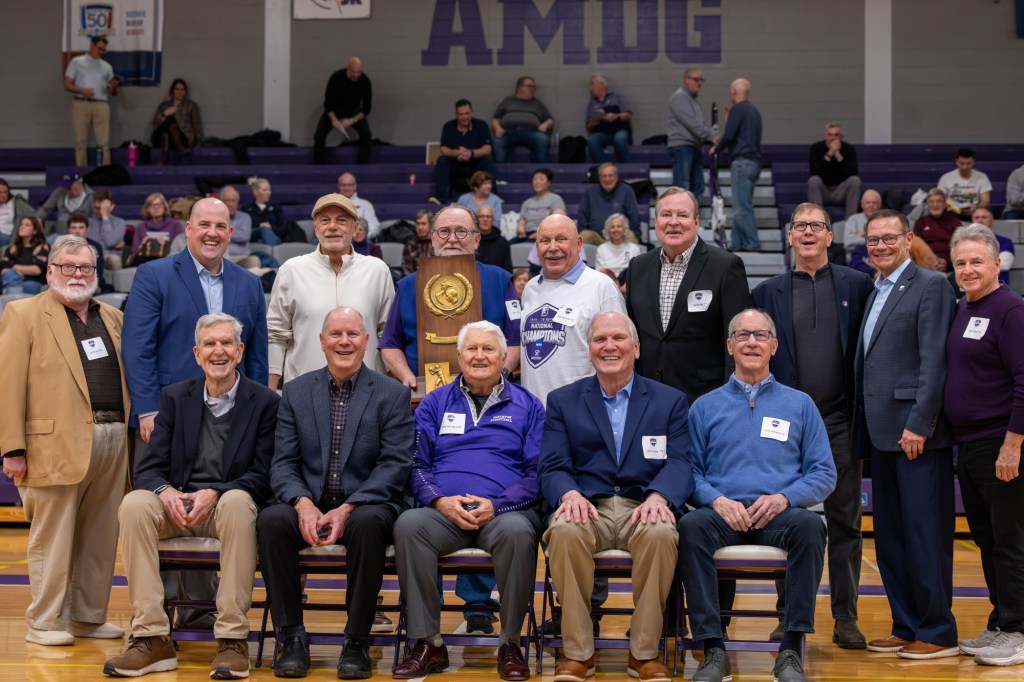
At a Scranton game on Feb. 14, the 1976 team was honored during a halftime ceremony commemorating the 50th anniversary of its championship. All living members of the team attended.
“We became life-long friends,” Maher said. “I believe that the best teams have everyone working for the common goal with everyone contributing in various ways depending upon their different talents. The 1976 Scranton Royals were a great team, from the top players on the court to the last players on the bench. Each player was doing what they could for the good of the team to win, while minimizing what might seem best to maximize his own personal interests.”