
“All through the winter until the birds again return in spring; I do not fear time.” — Nina Simone
👋🏽 Happy spring equinox, friends.
Is it finally comfortable enough to go — and stay — outside again? The Caribbean in me is excited that we’re almost there, though March can be moody. (We’ll get to the weather whiplash in just a moment.)
I’m looking forward to exploring again with you. This newsletter will return regularly to your inbox in the coming weeks, but I wanted to stop by ahead of time as we bloom along with the season. Consider this your sneak peek of what’s to come.
In this special edition:
📫 I’d love to hear from you. What are you looking forward to doing outside again? Did you join any new outdoorsy clubs this year? Let me know.
⛅ Your weekend weather outlook: Seasonable temps with a mix of sun, clouds, and showers.
— Paola Pérez (outdoorsy@inquirer.com)
If someone forwarded you this email, sign up for free here.
We made it.
Just in time for the new season resident weather expert Tony Wood shares a handful of equinox meditations on solar energy, moon shows, and birds making a comeback. Plus:
🌞 More light: Every day, the intervals of time between sunrise and sunset are growing by about two minutes and 40 seconds. (Hopefully, by now, you have recovered from the time change.)
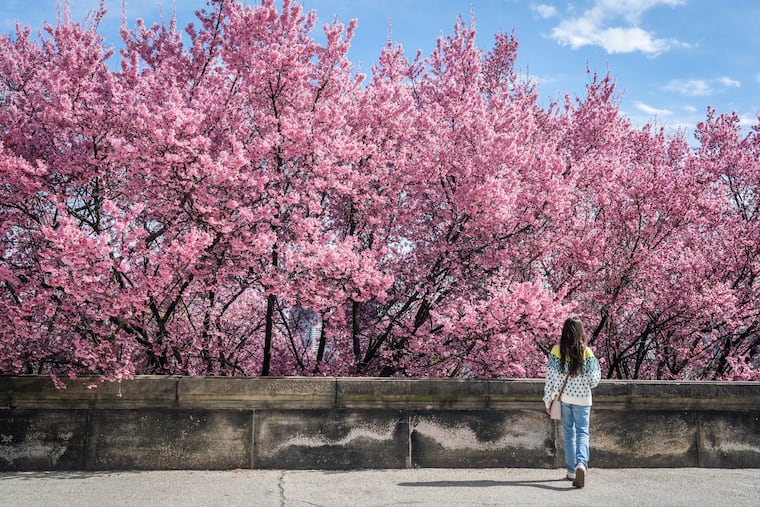
🌸 Not long now: Cherry blossoms, a.k.a. Philly’s natural spring decorators, appear to be on schedule. The peak bloom period for cherry blossoms in the Philadelphia region is likely to occur in early April.
🧊 Before and after: Flashback through some cool satellite images that show how Philly went from snowcapped, to a frozen-solid ice pack, and eventually to a slow thaw.
🌱 Out from under: The harsh winter protected plants in the region, and also took a toll on some. There may be mud in your gardens; horticulturists say it’s best to avoid it.
News worth knowing
🍅 Strong Philly roots
🎤 Now we’re passing the microphone to environmental reporter Frank Kummer.
George Ball stood at the W. Atlee Burpee & Co. booth at the Philadelphia Flower show last week and lifted the company’s artfully designed 150th anniversary seed collection from a wooden rack.
Ball, 74, traced a finger down the list of nine packets of “Historic Breakthroughs” and told stories about some of them: Iceberg lettuce (1894). Big Boy tomatoes (1949). Snowbird sugar snap peas (1978).
Golden Bantam sweet corn (1902) wasn’t an instant hit, Ball noted, despite its sweet, buttery flavor. Americans were accustomed to white corn.
“This is the first yellow sweet corn. Before that, yellow corn was hog feed. The kernels were hard,” Ball said. “This yellow corn was a totally new taste. It’s delicious. But for two years, nobody bought it because to them it was hog feed.”
Only when an assistant coined the phrase “Looks like butter, tastes like butter” did the variety take off.
Burpee has been rooted in the Philadelphia area since its founding by W. Atlee Burpee in 1876. Now, more than a century later, having once teetered on the brink, it’s again thriving and positioned for the future with seed, plant, and product sales in big box stores and online.
“We’re celebrating our 150th” and still selling those same seeds, Ball said. — Frank Kummer
Keep reading to learn how regrowing Burpee became a reality.
A calming view
May the warmth and serenity of this Cape May beach sunset reach you.
🌳 Your outdoorsy experience
We want to hear from you. Where do you go for a moment of calm? What sight takes your breath away? Has an expedition changed your life? In 200 words, tell us about your favorite outdoor adventures or special memories. If you have photos, we’d love to see them — you might even be featured in an upcoming newsletter.
📫 Before you go: What are you looking forward to doing outside again? What kinds of stories or guides do you want to see us feature this season? Did you join any new outdoorsy clubs this year? I’d love to hear all about it. Let me know.
Through this newsletter, we’ll explore the outside world — with confidence. See you again very soon.
By submitting your written, visual, and/or audio contributions, you agree to The Inquirer’s Terms of Use, including the grant of rights in Section 10.