
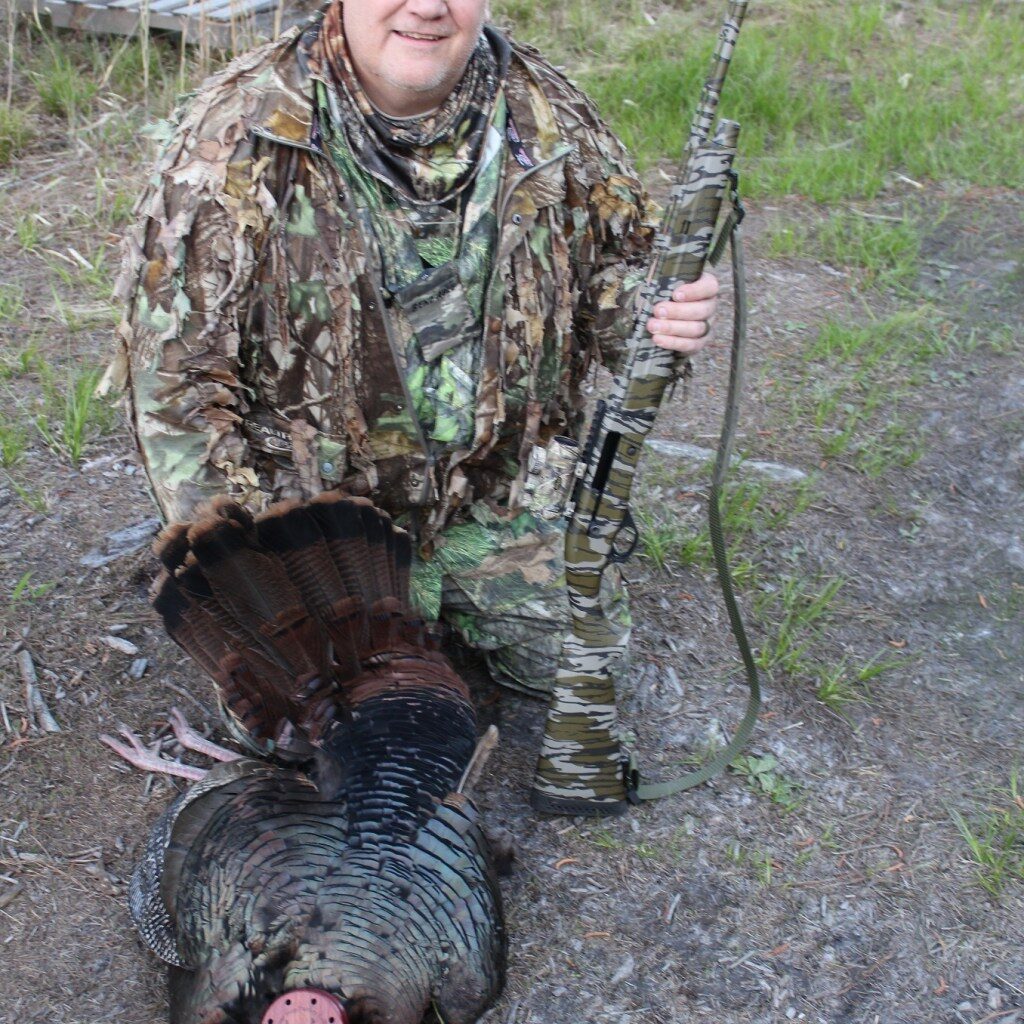
For decades, the question turkey hunters wanted to know when discussing a successful hunt was how close did the bird get into range before being dispatched.
Now, that question has become moot even for the most ethical hunters. With the introduction and acceptance of Tungsten Super Shot (TSS) downing a bird at distances that in some cases have to be seen to be believed have become commonplace in the spring turkey woods.
Well, make that turkey fields.
Almost all of my spring gobbler hunting is in the hardwoods of Pennsylvania and New York, where I’ve been able to meet every challenger with Winchester Long Beard XR shells in my 12-gauge turkey guns. When I hunt with a friend in the Low Country section of North Carolina, however, there are times when I’ve passed on a shot rather than take the chance of wounding a bird.
I have complete confidence in taking a 45-yard shot in the woods with Long Beard XR lead shot, but field hunting is the norm in the area we hunt in North Carolina. As a result, it is common for a gobbler to appear out of the dense pines and set up shop displaying for hens at a distance of 65-75 yards.
That situation presented itself last April and my friend, knowing I had just two more days to fill one of my two tags, told me to take the shot. When I put the red dot of my sight on the gobbler it not only covered its head, but covered the entire body.
There was no way I wanted to take that shot and told my friend, who was shooting TSS shells and still had a tag, it was his if he wanted it. Sighting on the gobbler he touched off the shot and dropped the bird in its tracks.
Neither of us had a range finder, so we carefully paced off the distance to the bird – which was 82 steps from where he shot. There was no way I would have made that, but at least I was rewarded the following afternoon when I took a gobbler at 40 yards.
This year, however, I will be packing TSS loads for the trip to North Carolina after seeing them perform. What makes them so effective is they are ultra-high-density designed for superior, long-range terminal performance in turkey — waterfowl — hunting.
Being 56 percent denser than lead, they allow smaller shot sizes – as in No. 7 and No. 9 — to carry more energy, creating incredibly dense patterns. While expensive, retailing for as much as three times the price of premium lead loads, they offer increased range, higher pellet counts and less recoil.
TSS allows for ethical, clean kills at much longer distances compared to traditional ammunition. It is also ideal for smaller gauges like .410 bore, allowing them to perform like 12-gauge guns, which again I witnessed on last year’s trip when Harold Daub put down a gobbler with his .410 at more than 40 yards.
Because of the tight patterns, specific, often specialized, choke tubes are required to maximize performance without damaging the barrel. While smaller loads can reduce felt recoil, the high-density nature can still produce significant impact.
TSS No. 7 shot at 1200 FPS roughly equals the energy of lead No. 5 shot at the same speed, but with a much higher pellet count, providing better coverage. It is highly recommended to pattern your gun with these shells to ensure the, often, incredibly tight, specialized and expensive ammunition provides the intended results.
While Long Beard XR will continue to be an anchor in the Winchester turkey lineup and undoubtedly popular with hunters wanting an economical and effective choice, TSS is a high-performance option that promises to set the bar even higher when it comes to the performance of a turkey shot shell. Of course, the difference is that Long Beard XR is a lead shot load, and Long Beard TSS is loaded with tungsten, a material significantly more dense than any available shot material.
According to Winchester Product Manager Jimmy Winston, Tungsten’s density measures 18 grams per cubic centimeter, while lead is significantly softer at 11 g/cc. Tungsten is also denser than steel and bismuth and remains the hardest-hitting metal available.
“The density advantage allows us to load smaller shot sizes, which gives higher pellet counts in the shell,” Winston said. “When you’re looking at our 12-gauge Long Beard TSS loaded with No. 9 shot, you’re putting over eight times the pellets into a 10-inch circle at 60 yards when compared to traditional lead No. 5s.”
For those looking to make the switch to TSS loads this spring, now is the time to begin shopping. In spite of the price, finding them in stock can be more challenging than calling a gobbler away from his harem.
(Dietz is a member of the Pennsylvania Outdoor Writers Association. Contact the writer: outdoors@republicanherald.com)