
The Town of Erie on March 20 issued an emergency advisory telling residents to refrain from using sprinkler systems, warning it may shut off water service for those who do not comply.
That same day, Erie escalated its drought status from “normal” to “emergency,” the highest level, with a target to reduce water use by more than 45%. The town’s Parks and Recreation Department has paused all irrigation “to be in lockstep with the community.”
Officials said the town does not have the capacity to handle the “extraordinary early use of irrigation water,” driven by an unusually warm March.
“The Town will be monitoring for irrigation system use and will turn off water systems at the tap if residents cannot comply with the request to withhold irrigation watering,” the alert reads. “This is an extraordinary measure for an extremely precarious situation.
“The Town does not take it lightly turning off water taps.”
Town representatives emphasized that the issue is seasonal and said it plans to reassess its water rules and supply on April 1, once it begins receiving its summer water deliveries, which are about four times larger than winter deliveries.
“It’s because we’re seeing these hot, dry temperatures that have been so persistent for so long that folks are starting to treat it as if it’s the end of May, even though it’s the end of March,” said Dylan King, a sustainability and water conservation specialist for the Town of Erie.
The warning follows a winter of record-low snowpack and a historic March heatwave on the Front Range, with conditions more typical of early summer.
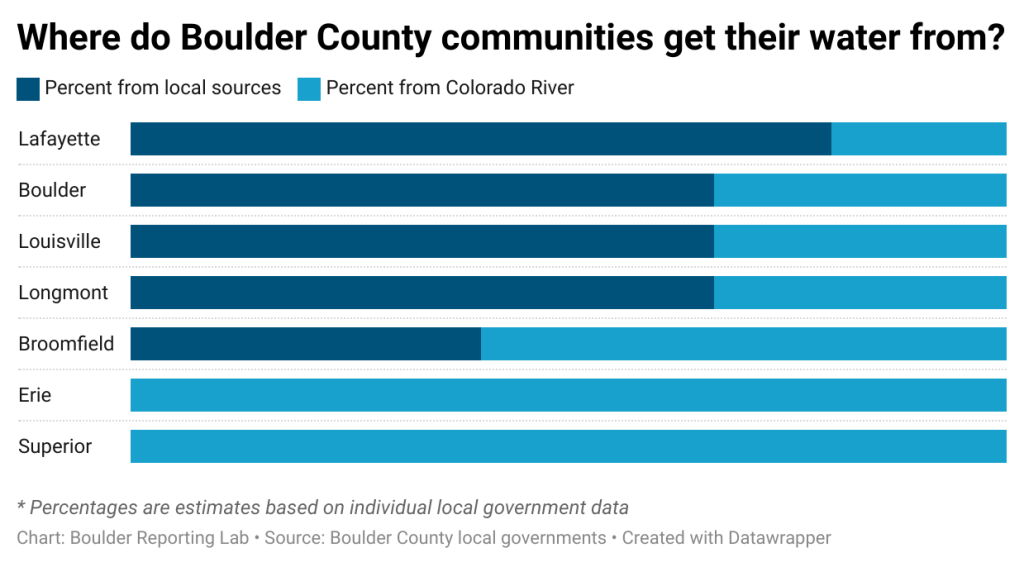
Erie and Superior are among the only municipalities in Boulder County that rely almost entirely on Colorado River water, making them more vulnerable to drought than cities like Boulder and Lafayette, which hold older, “senior” water rights tied to local sources such as Boulder Creek and St. Vrain Creek.
Several Front Range communities — including Erie, Superior, Broomfield, Louisville, Lafayette and Longmont — are jointly funding the Chimney Hollow Reservoir project to store water in wet years for use during drought.
The project was expected to begin storing water in November 2025, but construction was delayed after uranium was detected in granite used in the dam, according to CPR News.
Project managers now expect water deliveries to begin sometime in 2026, though no firm timeline has been set.
Related