
The Keystone Sanitary Landfill will pay Throop $200,000 annually to pipe its treated wastewater 2-plus miles through the borough.
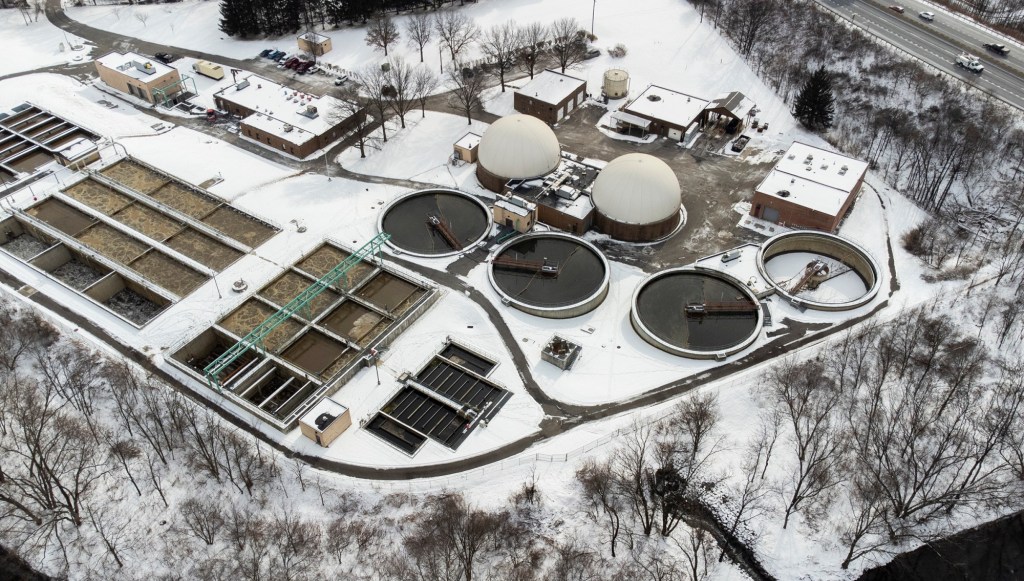
Borough council entered into an agreement with Keystone this month permitting the landfill to build its own dedicated sewer line spanning 12,300 linear feet, or just over 2.3 miles, from Enterprise Road to the Lackawanna River Basin Sewer Authority’s wastewater treatment plant at 145 Boulevard Ave., according to a copy of the agreement. Council approved the agreement, which was signed by council President Rich Kucharski and landfill President Louis DeNaples, during a special meeting March 10, though officials received some pushback from the community, including Friends of Lackawanna urging council to deny the request or table it until the state Department of Environmental Protection completes its review of the landfill’s remanded expansion.
The agreement remains in effect until Dec. 31, 2069, though the landfill has the option to extend it through 2099.
The Louis and Dominick DeNaples-owned landfill in Dunmore and Throop currently pretreats its leachate — the liquid that percolates through garbage piles — through a process called reverse osmosis before discharging it to Pennsylvania American Water’s treatment plant in South Scranton. Reverse osmosis uses pressure to force liquid through a semipermeable membrane, according to the U.S. Environmental Protection Agency.
Keystone will continue to pretreat its leachate using that process when it sends its wastewaster to the LRBSA, according to the agreement.
Testing commissioned by the borough through Pennoni Associates Inc. of Jessup concluded the treated wastewater “did not show levels of contaminants that would pose a risk to public health, as discharged through a dedicated sewer line that does not connect to any homes or businesses.” The one-page letter from Pennoni notes that they tested for 148 substances commonly evaluated in wastewater and found 23 of those substances present, though they did not expand on what those substances were.
“Of the substances that were detected, all were below established safety limits, including limits used for drinking water where those standards exist,” according to the report.
The landfill would discharge up to 270,000 gallons per day, according to an attached Jan. 14 letter from LRBSA Executive Director Mike Matechak to the borough. At peak discharge, the landfill would fill an Olympic-sized pool in just under 2.5 days.
Throop will have the right to sample and test the treated effluent at the landfill’s on-site treatment plant at any time during normal working hours.
To monitor for leaks, the agreement requires Keystone to have flow meters at both its on-site pump station and at the connection into the LRBSA, which would monitor discharge amounts as it leaves the landfill and arrives at the water treatment plant. The landfill will also take flow measurements daily and compile the results in monthly reports to the borough.
Keystone will be solely responsible for all costs and expenses for the construction, operation and maintenance of the sewer line, and the agreement requires that Keystone constructs, operates, maintains, repairs and upgrades its leachate collection system, holding tanks and on-site wastewater treatment plant in order to pretreat its leachate. The line will only convey treated wastewater from the landfill to the LRBSA, and the borough must approve any tie-ins into the line.
To build the sewer line, the landfill will use Throop’s right of way. Attached plans show the dedicated sewer line beginning around the Keystone Thompson warehouse at 200 Keystone Industrial Park Road, connecting onto Bert Collins Drive and Ester Street, and then extending down Line Street along the Dunmore border. The sewer line will then detour down Blair Court onto Edgar Street, veer onto Charles Street and continue along Pancoast Street until the LRBSA plant at Boulevard Avenue.
The sewer line must abide by DEP and LRBSA requirements, and the landfill agreed to post bonds to ensure roads are restored if they’re damaged to install the line. It also requires a DEP Act 537 Sewage Facilities Program permit and a state Department of Transportation Highway Occupancy Permit, according to the agreement. Throop agreed to apply for the permits if and when necessary, with the landfill reimbursing the town for any associated fees.
The landfill initially proposed to use Throop’s existing sewer infrastructure by offering to reline the borough’s entire sewer line over a five-year period, Kucharski said. However, due to age and other issues with the line, it wasn’t feasible, he said. Residents also raised concerns about having pump stations in the town, though there will only be one station at the landfill, he said.
In its letter to the borough, Friends of Lackawanna, which formed in 2014 to oppose the landfill and its expansion, told council it cannot view the proposal in isolation.
The letter repeatedly referenced the Pennsylvania Environmental Hearing Board’s decision last year to remand the landfill’s controversial Phase III expansion approval back to the DEP over odor and excessive leachate issues.
“It must be evaluated in light of the landfill’s extensive regulatory history and the ongoing state review of its operations,” group leader Pat Clark wrote in the letter.
Clark’s letter contended the engineers evaluating the proposal had not reviewed the environmental hearing board’s decision or the landfill’s compliance history, and failing to consider the regulatory history “represents a significant oversight and does not provide borough officials with the full information necessary to evaluate the risks associated with this proposal.”
“The residents of this region have lived with the impacts of this facility for many years,” he wrote. “Decisions with long-term consequences for public infrastructure and environmental protection should therefore be made only after the full regulatory record has been reviewed and state regulators have completed their work.”
Kucharski defended council’s decision by pointing to the sampling results and monitoring system that would automatically shut down the line if it detects a leak.
“We’ve had our own engineer, Pennoni Associates, a national firm, test the clean water,” he said. “In essence, it came back that the effluent would be as clean as, or in some instances, cleaner than drinking water.”
The $200,000 annually will also help offset reduced tipping fees from the landfill, he said. Throop receives just over $2 per ton of garbage hauled into the landfill, and the borough’s total tipping fees dropped from $4 million to about $3.2 million last year, Kucharski said.
“It’s a fairly significant reduction,” Kucharski said. “Anything that we get, we could certainly use.”
The $200,000 annual payments will increase by 2.5% every five years.
Kucharski did not have a construction date, although the landfill wants to begin “ASAP,” he said. Installing the line is projected to take about six months, he said.
Monday Update
THEN: The Keystone Sanitary Landfill addressed Throop Borough Council in January about its proposal to build a dedicated sewer line through the town to discharge its treated leachate to the Lackawanna River Basin Sewer Authority’s treatment plant on Boulevard Avenue. The landfill had previously proposed to use the borough’s existing sewer line.
NOW: Throop council approved an agreement with the landfill this month effective through 2069, with optional extensions through 2099, allowing the landfill to build a 2.3-mile dedicated sewer line to discharge its leachate. The borough will receive $200,000 annually in return.