
Love Philly? So do we. Let’s be friends. Sign up for the Billy Penn newsletter today.
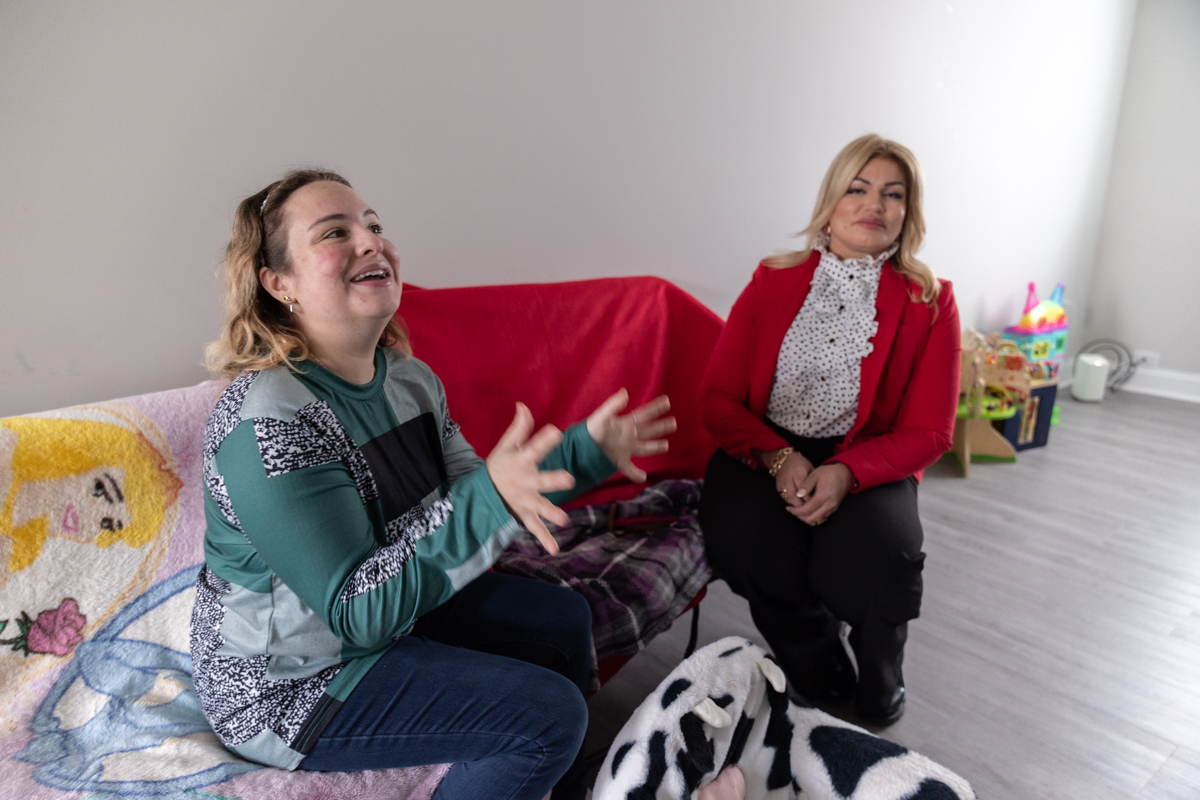
Valerie Diaz Pagan, her husband, and their four children — three of whom are autistic — were living in her mom’s house in Juniata, all six of them staying in one room.
“We had the bedrooms upstairs. One room was basically storage, and the other room was the one we slept in, and my mom slept in the basement,” Pagan said. “So it was a very crowded house for us.”
“My kids used to overstimulate each other and trigger each other, and it was just not a good environment for my kids to be in,” she recalled.
They really wanted to get their own place, but had a hard time coming up with money or even time to house-hunt. While she picked up some hours here and there delivering Amazon Flex packages, the couple were overwhelmed by the demands of caring for the children.
“Since three of my kids are disabled, they need a lot of attention, a lot of therapy. One of my sons has a medical problem, so he goes to a lot of specialists, a lot of appointments. Doing it alone was hard, so my husband had to help me with them,” said Pagan, who is 30. “We were struggling to get a place on our own.”
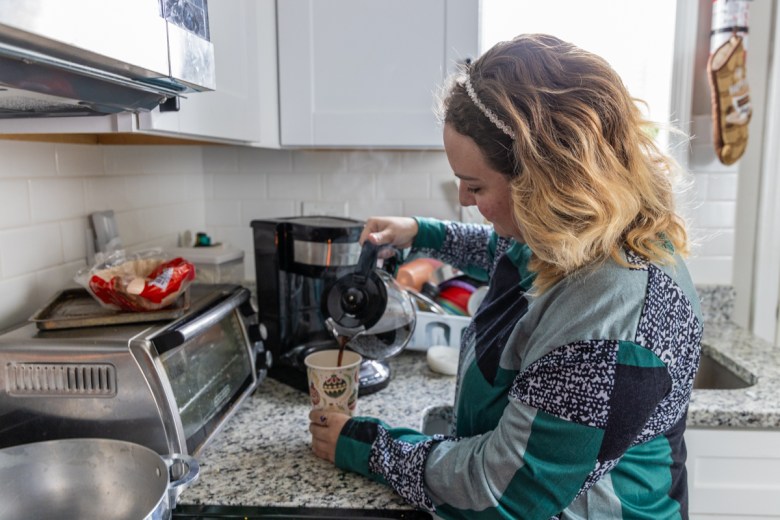 Valerie Diaz Pagan pours coffee in the home she shares with her husband and four children. (Kimberly Paynter/WHYY)
Through her mom she heard about a housing counseling program at Esperanza, a large nonprofit organization in North Philly that does real estate development and other community-building work. A counselor told her she didn’t have good enough credit to buy, but the family’s income qualified them for an affordable rental home in Esperanza’s community land trust.
The week before Thanksgiving, they moved into a newly renovated, five-bedroom rowhouse in West Kensington. The rent is less than $1,000 a month, plus water bills. “That’s amazing, in this economy right now,” Pagan said.
She gave a quick tour of the first floor to a group of visitors who stopped by in January, showing off the plants on her kitchen window sill, a futon she bought at a thrift store, the kids’ toys piled in a corner. They didn’t have a dining table yet, but that will come eventually, she said.
“Even though we don’t have everything, as long as we have each other, that’s all we need,” she said. “I feel like a lot of families — that’s all they need at the end of the day, is each other.”
“A population at risk of displacement”
Esperanza has been renovating and building affordable housing in North Philadelphia for three decades, but Pagan’s home is one of the first to come out of a new approach to managing rising housing costs, said Maritza Ortiz, vice president of construction and property management.
In eastern North Philadelphia — a five-square-mile area with about 100,000 residents, 67% of them Hispanic or Latino — families face significant displacement pressures, according to research the organization conducted in 2024 with Drexel’s Nowak Metro Finance Lab and other partners.
While costs in the area are still relatively low, private real estate development and other inflationary factors were beginning to have an impact, the study found. In the previous five years, rents had increased by more than 25%, compared to 16% citywide. In parts of the neighborhood sale prices were also rising faster than in other sections of Philadelphia.
At the same time, the area’s median household income remained “extremely low,” at $27,000 in 2019, versus $46,000 across Philadelphia as a whole.
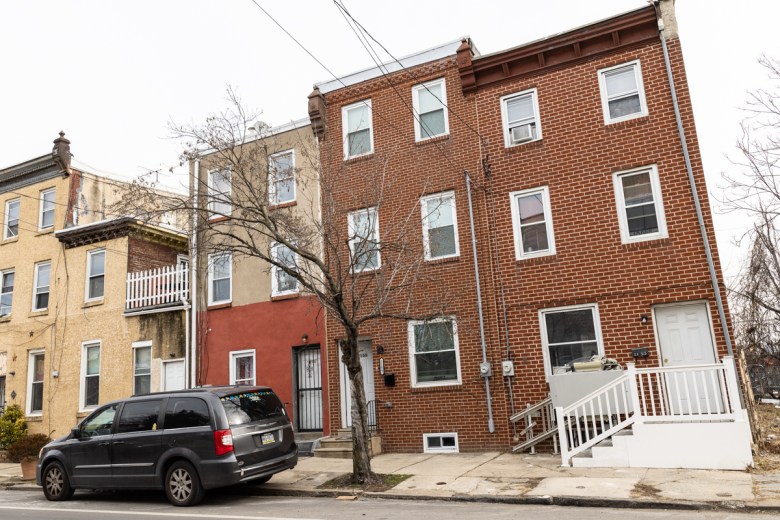 The home of Valerie Diaz Pagan, which she rents from the Esperanza community land trust. (Kimberly Paynter/WHYY)
The project’s analysis “shows limited signs of gentrification but does find characteristics of a population at risk of displacement should housing prices continue to rise,” the authors wrote. To blunt the impact of the economic changes, they proposed creating the Stable Affordable Rental Trust, or START.
With long-time residents being “pushed out because of increasing rents, we decided we need to create a land trust and try to protect our community, and start acquiring properties and trying to keep them, not only for now, but for long-term future of the residents,” Ortiz said.
During the visit with Pagan, she noted that several other vacant homes have been snapped up on the block recently, and are being renovated for sale or rent at market prices. “They’re developing a lot more properties in this area,” she said.
“Across the street!” Pagan said with a laugh. “They’re doing it fast.”
Meeting demand for affordable rentals
Community land trusts, or CLTs, are typically nonprofits that build affordable homes and sell them to qualifying low-income families. However, they differ from most housing organizations in a few ways.
Buyers agree to price restrictions if they ever sell their houses. The nonprofit maintains ownership of the land under the homes, and leases the land to the homeowner for a nominal fee. Those terms help ensure the properties remain permanently affordable, while still allowing the owners to build up some equity and family wealth.
CLTs have been around for decades, and have become more popular in recent years as a strategy for preserving affordability and stabilizing neighborhoods. Philadelphia has a number of trusts, including projects run by the Women’s Community Revitalization Project, HACE, Mt. Vernon Manor CDC, and other organizations.
“It’s definitely a growing trend in Philly,” said Rick Sauer, executive director of the Philadelphia Association of Community Development Corporations. “If your goal is long-term affordability and ensuring that future households can have access to existing affordable housing, that’s a pretty effective model.”
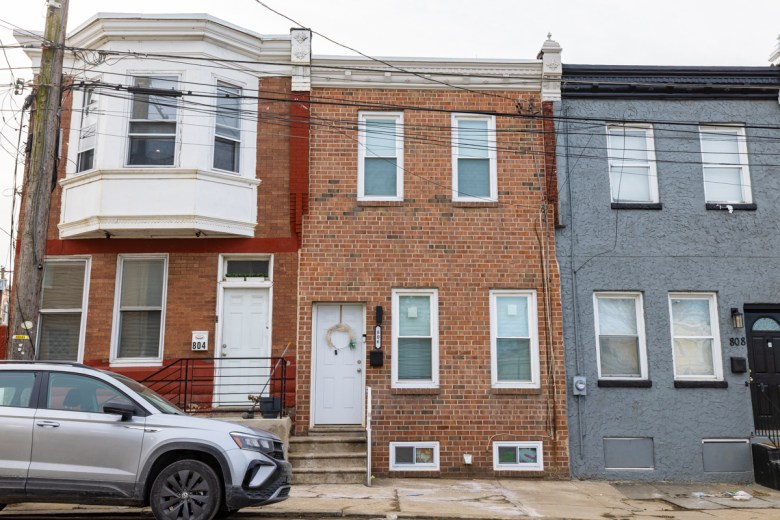 The rowhome in East Tioga that the Rivera family rents from the Esperanza community land trust. (Kimberly Paynter/WHYY)
Most are homeownership projects, although WCRP’s properties include rent-to-own townhome developments and an all-rental development. Similarly, Esperanza’s new CLT includes only rental units.
Ortiz noted the organization has developed more than 100 homes for sale over the past few decades, and its counselors frequently advise families on saving for down payments and accessing federal assistance. But many people who come in are a long way from being able to buy, creating a need for affordable rentals as they work to improve their finances.
“The numbers of people knocking on our door who want to purchase a home are very low. They can’t afford the down payment,” Ortiz said. “The sale prices are sky-high, so they’re looking for rental. It’s actually more affordable for them because, with homeownership, they’ve got to maintain them.”
“There’s pathways to homeownership, and ultimately that’s the goal for people. But you’ve got to be able to get to that,” said Walter Toliver, Esperanza’s senior vice president and general counsel. “Being able to provide quality, safe, affordable rental properties as people are starting out on their journey is what we’re trying to do.”
Esperanza’s trust also differs from most CLTs in that it isn’t governed by a community board, made up of residents and other community members, as most trusts are. Instead, its governing board is made up of administrators and officers from the parent organization. Toliver said he wasn’t sure how the board will evolve in the future, but it could expand as the trust matures.
Targeted to prevent homelessness
In response to the critical need for more affordable rentals, the nonprofit has focused on applying for grants and using the funds to renovate older buildings in North Philadelphia.
START’s first phase comprised Pagan’s future home and six others, which the Philadelphia Housing Authority donated from its extensive stock of decrepit, crumbling older buildings. During a recent visit to one of the houses, on a quiet residential street in East Tioga/Franklinville, Ortiz recalled the site’s poor condition when it was acquired in 2024.
“This was a shell property, bones, and it had squatters coming in and out,” she said. “This is one of the houses that I had to visit, to get rid of them.”
She walked into the house and surveyed the tidy, pristine living room. “Brand-new drywall, vinyl flooring, recessed lighting, refrigerator, stove — all stainless steel — washer and dryer hookups, white molding, brand-new windows, new electrical panel, new plumbing, new heating system, as well as new roofs,” she said.
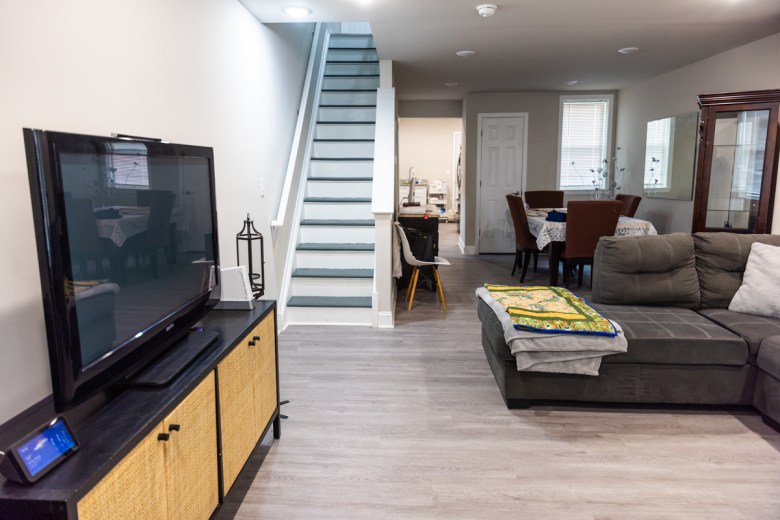 The Rivera family’s living space in their North Philadelphia home which is rented from the Esperanza community land trust. (Kimberly Paynter/WHYY)
“I never had a house with central air,” marveled Elizabeth Rivera, who moved into the home in December with her three kids. Before, “everything was heaters, and a lot of times my kids would get sick from the other houses. It’s beautiful and brand new.”
Funding for the work came in part from the Federal Home Loan Bank of Pittsburgh, a federally chartered institution where Esperanza’s CEO, Rev. Luis Cortés Jr., previously served on the board. The bank provided a $750,000 grant toward the project’s projected $1.8 million cost.
Under the terms of the grant, all the households must earn less than 60% of the area median income. Three units are reserved for families under 50% of AMI, and two units for households under 30%, or $35,800 for a family of four.
Applicants are eligible if they have experienced domestic violence, have chronic illnesses or special needs — like Pagan’s family — or have been at risk of homelessness, as Rivera was.
Ortiz noted that some of the tenants also receive various types of subsidies through Esperanza, PHA, the nonprofit Congreso de Latinos Unidos or other agencies, either on a monthly basis to help pay their rent or as one-time assistance when they first move in.
“I didn’t want no other house but this one”
Rivera, a single mom, previously lived in Kensington for 14 years — “you know, over there, it’s not so good,” she said — but had recently begun to fear she would lose her home.
“The rent was too, too high, maybe $1200 a month, and it was too much for me, and I couldn’t afford it,” she said. “I’m low-income, I’m disabled, and I couldn’t afford it, and I had three kids, and I didn’t know what to do, so either I was going to be in a shelter or in the street.”
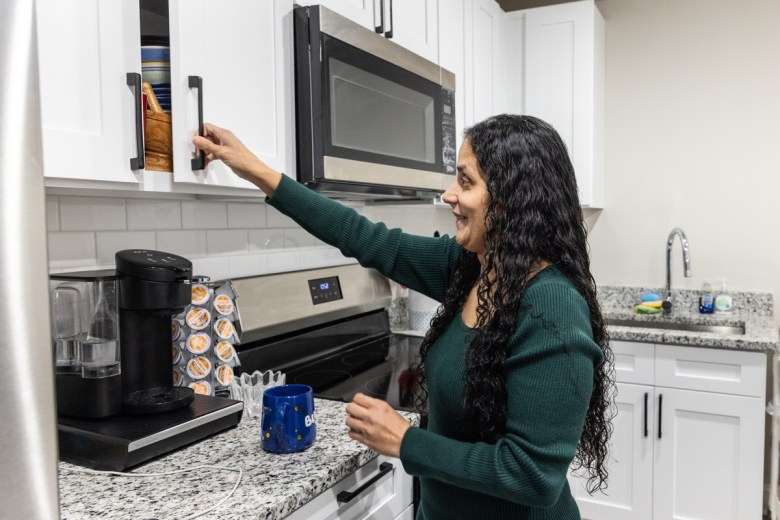 Resident Elizabeth Rivera in her home in East Tioga, which she rents from the Esperanza community land trust. (Kimberly Paynter/WHYY)
She sought help from Congreso, which referred her to Esperanza. Property manager Mabel Santiago interviewed her, saw that the family met the Federal Home Loan Bank’s guidelines and took her to see the rowhome in East Tioga. “At that moment, she said, ‘This is mine. This is my house,’” Santiago recalled.
“When I settled in, I just cried,” Rivera said. “I didn’t know that I was going to have such a beautiful home, and I fell in love with this house as soon as I seen it. I didn’t want no other house but this one.”
She gave a tour of her home, starting in the large basement, where she stood amid shiny ductwork, the new washer and dryer, and a tall pile of storage bins and plastic trash bags stuffed with the family’s belongings. She pointed to the ample space still remaining for future projects.
“Excuse the mess,” she said. “In the summer, we’re going to do a gym area right here. And in this part, we’re going to do, like, for the kids to come down and hang out.”
Upstairs, the second floor has the bathroom — “my kids love it the most,” she said — and three bedrooms: one for her, one shared by her sons, age 10 and 17, and a snug space for her 15-year-old daughter. On the first floor, she showed off her “really cute” kitchen, with marble countertops and stainless steel appliances, and pulled open the door to the backyard.
“It’s very big and beautiful. The kids could run around, and I could put a pool in the summer back there, and a trampoline, which they want,” she said.
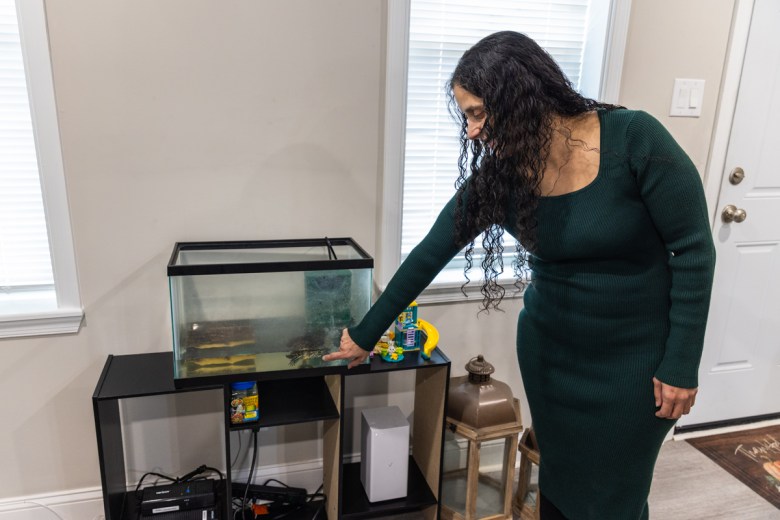 Resident Elizabeth Rivera greets her pet turtle, April, at her North Philadelphia home which she rents from the Esperanza community land trust. (Kimberly Paynter/WHYY)
In the main living room, the family put their dining table toward the back and a sectional and TV up front, along with aquariums for their two turtles, April and Luke. Rivera said the turtles had been living in the basement, but it got too cold, so she moved them upstairs.
April peered up from a corner of her tank, and River tapped a greeting on the glass.
“She’s wild. She runs around the floor. We be having her on the floor, running around. And then this one’s just laid back,” she said. “They’re really good pets.”
Government aid helps keep rents down
Esperanza launched START in 2023, and formed the Esperanza Community Land Trust as a separate nonprofit the following year. That structure will make it easier to find new funders and meet their requirements, Toliver said.
“Sometimes it’s more advantageous for Esperanza to apply and pass on the funds, other times it’s the land trust,” he said. “Some funders will look at budgets and say either you’re too big, or they’ll say, your budget is too small for what we want. It depends on the criteria of the particular funding source.”
The organization moved some of its pre-existing rental portfolio into the trust, which now has 24 units in several locations. Other properties remain under the parent organization, including a 38-unit development Esperanza opened in the former Roberto Clemente Middle School in Hunting Park in 2018, following a major renovation of the building.
 Resident Elizabeth Rivera greets her pet turtle, April, at her North Philadelphia home, which she rents from the Esperanza community land trust. (Kimberly Paynter/WHYY)
With the former PHA homes now rented out, START is moving into its next phase.
The CLT is purchasing nine homes, most of which haven’t been vacant as long and won’t need as much work. The Federal Home Loan Bank of Pittsburgh awarded the project a $1.35 million grant towards its projected $1.75 million development cost. Ortiz said renovations are slated to start in May.
The federal and state governments are also helping fund the trust. An appropriations bill President Trump signed last month includes a $750,000 grant, and Pennsylvania’s Neighborhood Assistance Program, which gives state tax credits to businesses that make contributions to neighborhood-preservation groups, will provide $377,000.
Applying for grants, getting donated properties, and purchasing homes that are less expensive to rehab are among the strategies the CLT uses to keep its expenses down and maximize the units’ affordability, Toliver said.
“The goal is to create a portfolio of properties that are available to renters” at low cost, he said. “We’re looking at any and all options, because the goal is to get to a spot where — you’re not going to stop development, nobody wants to do that — but you want to carve out enough of a subset so people have access.”